


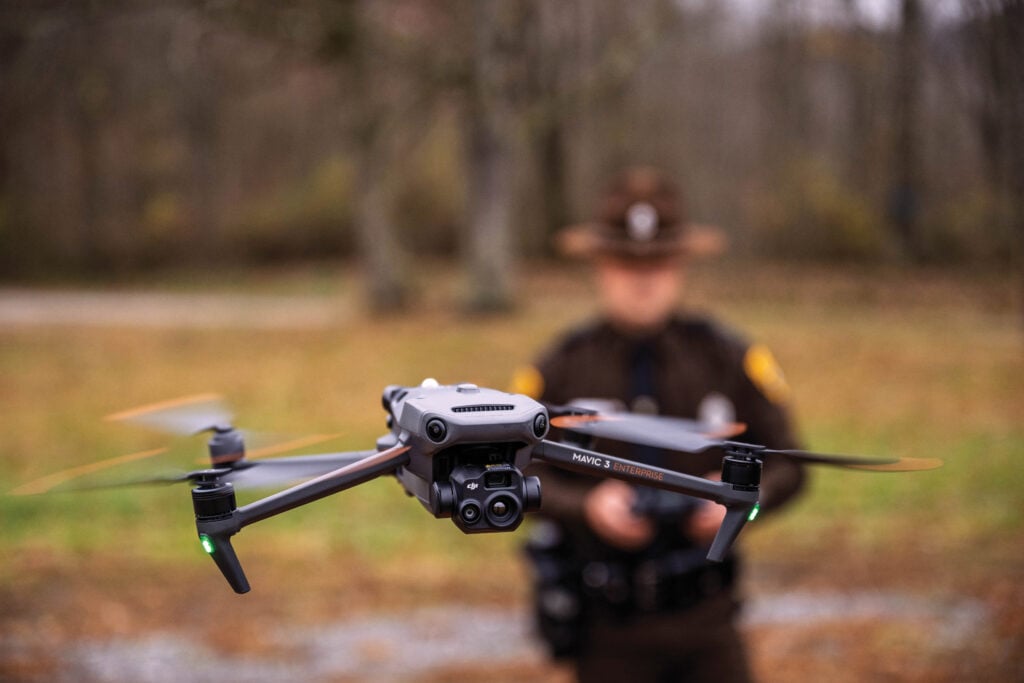
How drones are changing WVDNR Law Enforcement operations.
This story was originally published in the January 2026 issue of Wonderful West Virginia. To subscribe, visit wonderfulwv.com.
Written by Mason Jack
Photos Courtesy of West Virginia Department of Commerce
Picture this: It’s late afternoon in Monongahela National Forest. A distress call comes in—a hiker’s gone missing somewhere beyond a tangle of ridges. Not long ago, a search might have meant hours of boots on the ground, fanning out through brush, and guesswork. But now, officers launch a drone. It glides silently above the treetops, thermal camera sweeping the canopy. A warm outline flickers on the HD screen. It’s the hiker—shaken, tired, but alive.

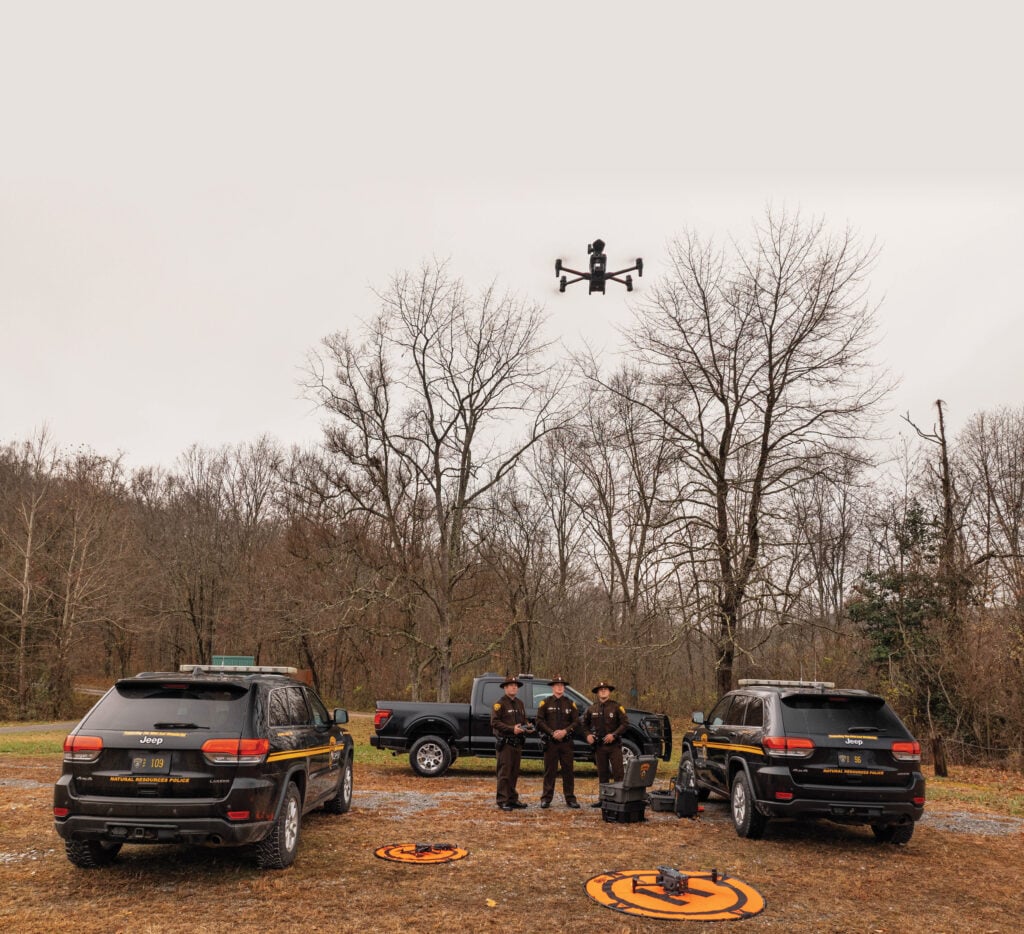
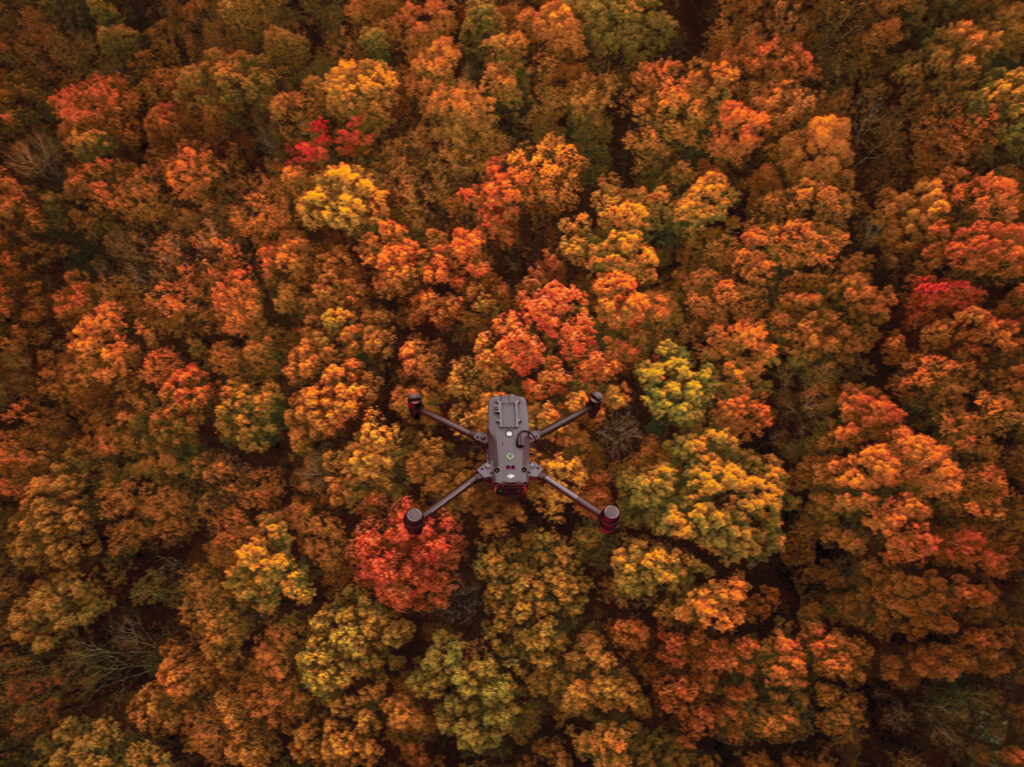
It’s just another day for the West Virginia Division of Natural Resources (WVDNR) Law Enforcement Section, also known as the Natural Resources Police. And it’s all thanks to their growing fleet of aerial, underwater, and rescue drones. These tools are preserving evidence, protecting officers, and saving lives.
Prior to Launch
Believe it or not, West Virginia’s drone program didn’t start with high-stakes rescues or nighttime manhunts. It started in the corn.
“One of our jobs is bear damage,” explains Major Woodrow Brogan. “We would go out and assess how much damage bears had done to cornfields, which could range from 50 to 350 acres.” Bears tend to flatten out patches of corn and eat it straight off the cob. “The only way the officer could assess that damage was to literally walk through it.”
Officers realized there had to be a better way. One officer tried using a personal drone to fly over the crops, and the results were instantly positive. “We ended up talking to our folks in the Wildlife Resource Section about the bear damage fund. They said, ‘Yes, we would be interested in purchasing a drone if it’s going to help our officers be more efficient,’” Brogan says. That was back in 2019. By 2020, they had drones in the air and a training program underway.
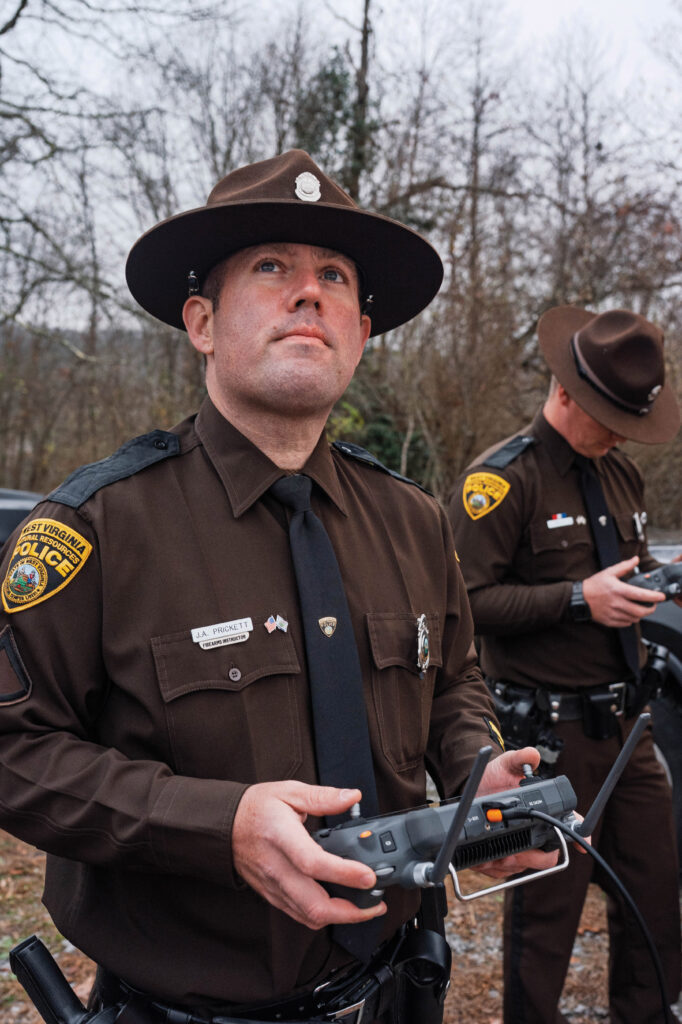
Operating a drone in law enforcement isn’t just about joystick skills. Every WVDNR Law Enforcement drone pilot has to be certified by the Federal Aviation Administration under Part 107. “In preparation for taking the Part 107 test, the officers take a course on required knowledge in areas of federal regulations, airspace classifications, aviation weather, aeronautical decision-making, airport operations, and more—some of which is the same required knowledge for a person with a private pilot’s license,” says Officer Joshua Prickett, one of 18 certified drone operators and the statewide drone program coordinator.

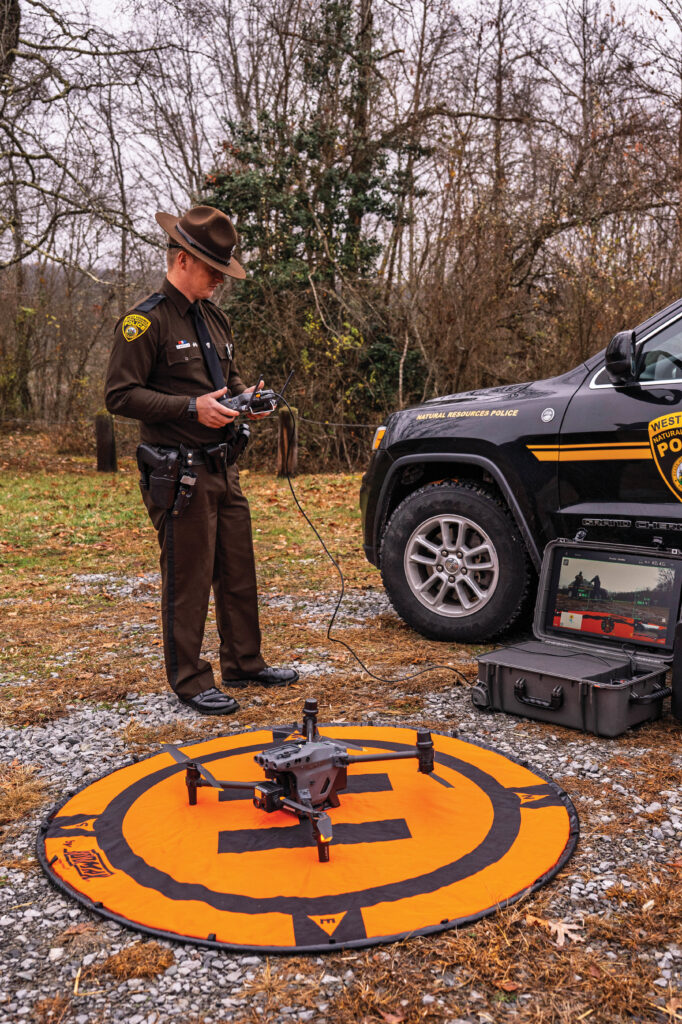
But passing the test is only step one. New pilots are trained through a left seat/right seat approach, learning side-by-side with experienced pilots and getting hands-on time until they’re confident enough to fly missions solo. Today, the Law Enforcement Section uses a yearly evaluation program and is even incorporating a proficiency test based on national standards developed by the National Institute of Standards and Technology.
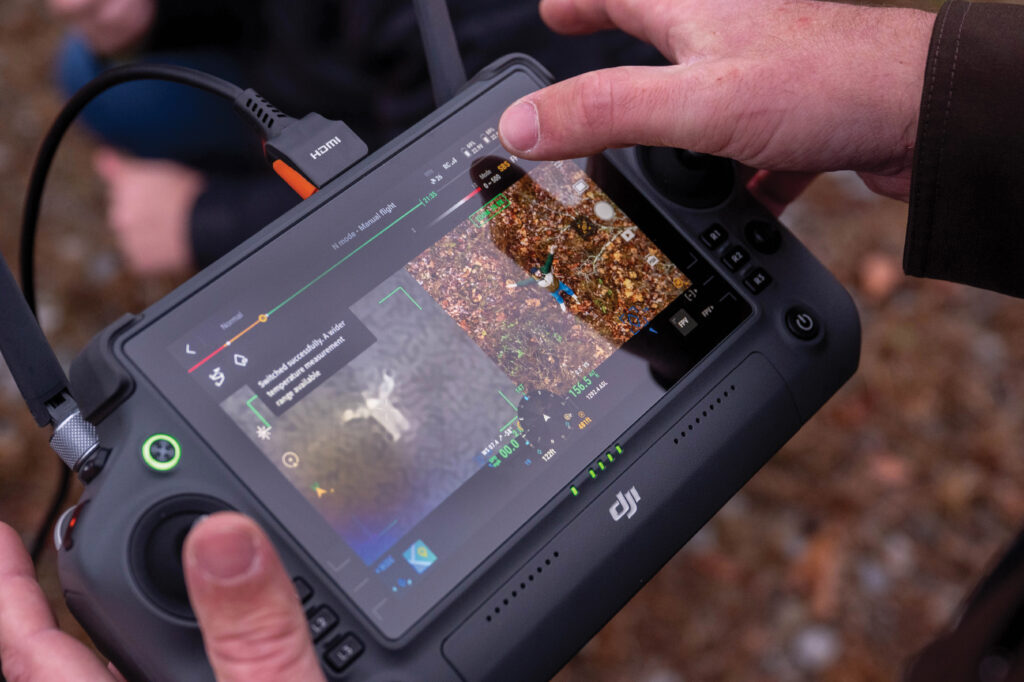
And the gear? It evolved fast. “We started with drones where your smartphone was the screen,” says Brogan. “Now we’ve upgraded them to where we’ve got a drone pilot flying the drone, and then we’ve got an observer sitting and watching.” The screen is much bigger these days, about 20 inches wide, and has multiple viewing modes. “He’s doing the search, switching back between thermal imaging or any other type of imaging to get the best vantage point and view.”
Thermal imaging is a game changer, especially in the dark. “Across the state, we have 12 aerial drones in the field that are equipped with thermal capability,” says Prickett. “It gives a massive technological advantage when searching for missing hunters in the dark or other night operations.”
And it’s not just for finding the lost hunters. That same heat-signature tech can also spot illegally killed wildlife. “We’ve had cases where someone claimed they didn’t shoot anything, but officers flew the drone over and spotted a deer lying in the field 120 yards away,” says Brogan. “I go over to investigate and it has a bullet wound. Through my training, I know this is a fresh gunshot wound, and I probably just sat and watched the individual that fired the shot, and now we have evidence of the crime.”

But drone tech isn’t just helping WVDNR Law Enforcement—it’s strengthening coordination with other agencies. During flooding in Ohio County in May 2025, for example, the drones were requested by other departments. “We coordinate airspace so that no two drones are flying in the same area or altitude,” says Prickett. “On local levels, we also train and practice with fire departments and other agencies that have drones.”
This results in smoother collaboration and fewer delays. “If you have a situation where you can get a drone in the sky, this can give your officers situational awareness and enhance officer safety,” says Brogan.
Going Where We Can’t
Drones aren’t just for the sky. The WVDNR Dive Team also operates underwater drones. According to Brogan, the team has 10 divers, but only three or four might be available to work a scene, and their time in the water is limited based on depth and temperature. “That’s where the underwater drone comes in.”
These Remote Operated Vehicles (ROV) are equipped with sonar and high-definition video, perfect for murky water, tight spots, or high-risk areas. “You might be searching under ice, around debris, or through a car that’s rolled into a creek,” says Brogan. “The drone can go in first and identify what’s there, and we can plan exactly where to send the diver.”
They’ve used the underwater drones in evidence searches too, thanks to an equipped grapple—though not as dexterous as a human hand—and GPS capability that allows searchers to pinpoint and mark exact locations.

underwater drones dive beneath the surface when humans canʼt.
Aerial drones can be equipped with life-saving equipment, too, and officers are trained to calculate wind speed and drift as well as how high they need to be from the subject in order to hit their target with life preservers or other necessary gear. These types of drones can also carry radios, give directions to people trapped in floodwaters, and even serve as the only communication lifeline. “If someone’s hypothermic and clinging to a branch, we can fly a drone to them and talk to them through a two-way radio,” says Brogan. “It could be the critical communication piece that may save this person’s life.”
Still, flying in West Virginia isn’t without its hurdles. “The biggest challenges are weather and terrain,” says Prickett. “High winds or low visibility can shut us down. And mountain ridges can limit how far a drone can fly.”
Battery life has to be calculated carefully, too, given the 30- to 45-minute maximum. “The worst scenario is leaving it up too long, running out of battery power, and watching your drone fall out of the sky,” Brogan says.
Looking Up
In just six years, the drone program has gone from a handful of cornfield surveys to an integrated, statewide asset. “Ten years ago, I can’t recall hearing of any agency or department in West Virginia having an aerial drone—certainly not one with thermal and other systems we have now,” says Prickett. “Our program has come a long way in a relatively short amount of time, and I believe, with the support of all those involved, it will continue to grow.”
For Brogan, it’s about keeping up the momentum. “It’s been an obstacle growing this program and keeping our officers trained. But it’s one of the most important things we’re doing for public safety right now.”
Technology helps, but it’s only as good as the people behind it. Brogan knows that better than most. “Some officers were nervous at first. You’re handing them a piece of gear that costs almost as much as their patrol truck,” he says. “But we looked for that hybrid officer, someone with both hands-on and technology skills, and we built a program around that.”
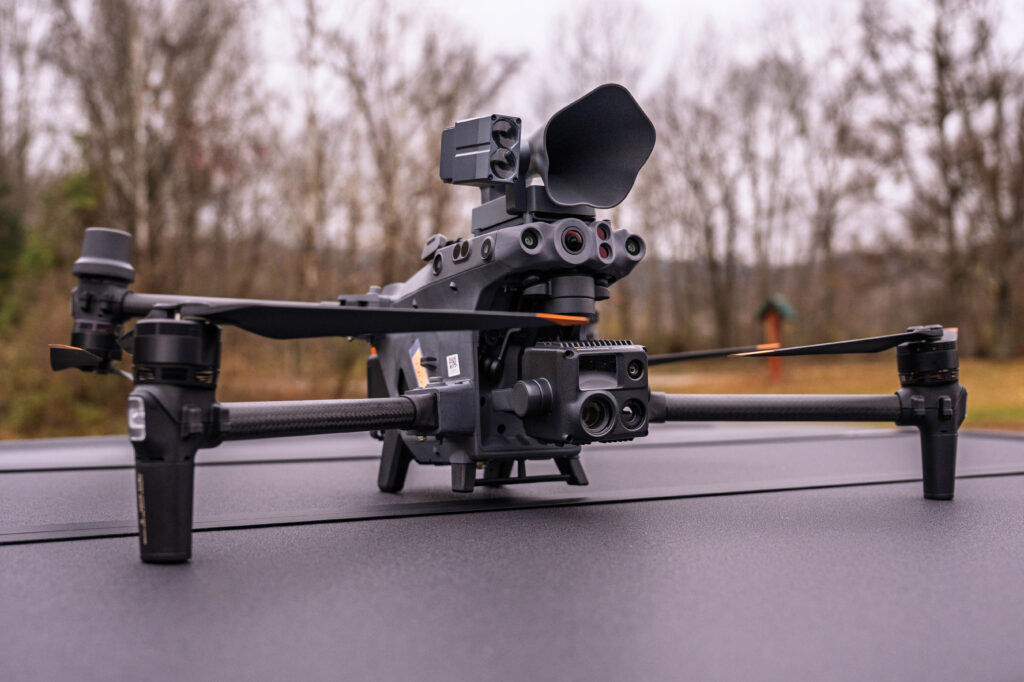
And when it works, it really works. “We had some hikers lost in Dolly Sods. And if you’ve ever been to Dolly Sods, you know it’s one of our more remote and rugged areas in West Virginia,” says Brogan. “By the use of our thermal drones, we were able to locate these individuals and get folks to assist quickly with the situation at hand.”
Drones certainly aren’t replacing people. But they’re giving West Virginia’s Natural Resources Police Officers new tools to do what they’ve always done—protect the land, wildlife, and people of this state. Whether it’s locating a lost hunter, scanning flooded areas for signs of life, or documenting evidence in a poaching case, one thing is clear: These eyes in the sky, and under the water, are here to stay.