


The nation’s 250th birthday is a great time to remember the structures that anchored settlement through early conflicts in western Virginia.
This story was originally published in the June / July 2026 issue of Wonderful West Virginia.
Subscribe here.
Written by Stan Bumgardner
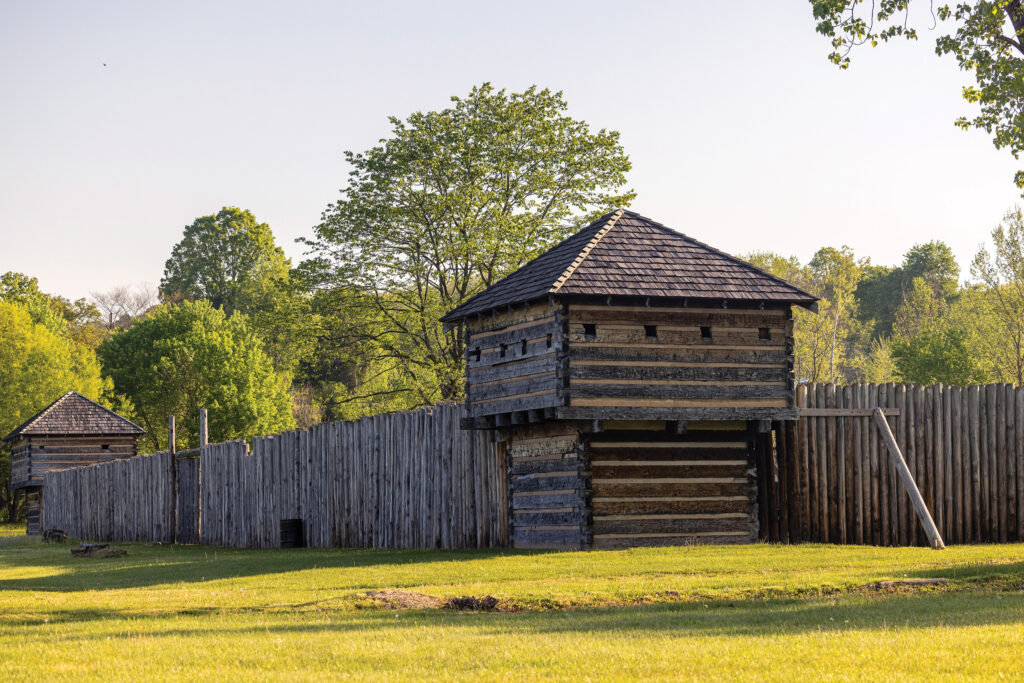
Featured Image: A replica of Fort Randolph stands tall in Point Pleasant. Photo Courtesy of West Virginia Department of Commerce

The American Revolutionary War brings to mind large battles and artillery bombardments. But on the western Virginia frontier—today’s West Virginia—warfare looked very different. Fighting here was smaller-scale, less frequent, and largely guerrilla in nature. Indian tribes, while sometimes divided in the broader war, were more unified in opposing western Virginia settlers, who had steadily encroached on their hunting grounds.
On the frontier, forts became focal points of both defense and conflict. The forts were built by settlers and by militias composed of citizens serving part-time military duty in the mid- to late 18th century, from the time of the French and Indian War (1754–1763) through the Revolutionary War (1775–1783), and they functioned less as military strongholds and more as places of refuge. While the earlier war pitted the British, with colonial American support, against the French and their Indian allies, the Revolutionary War shifted to primarily British versus American forces. Native groups fought on both sides or remained neutral, although most aligned with the British.
The French and Indian War and Early Forts
The first line of frontier forts was established in the 1750s during the French and Indian War by a young George Washington, commander of Virginia’s forces. These forts, spaced roughly 15 miles apart along the crest of the Alleghenies, were intended to protect settlers from attacks by tribes allied with the French. Examples included Maidstone in Berkeley County, Buttermilk and Pleasant in Hardy County, Pearsall in Hampshire County, and Cocke in Mineral County.
Civilians also constructed their own forts, which varied widely in design.
Forts served as safe havens for residents in times of danger. Most deterred major attacks, although notable failures occurred at forts Upper Tract and Seybert in Pendleton County in 1756.
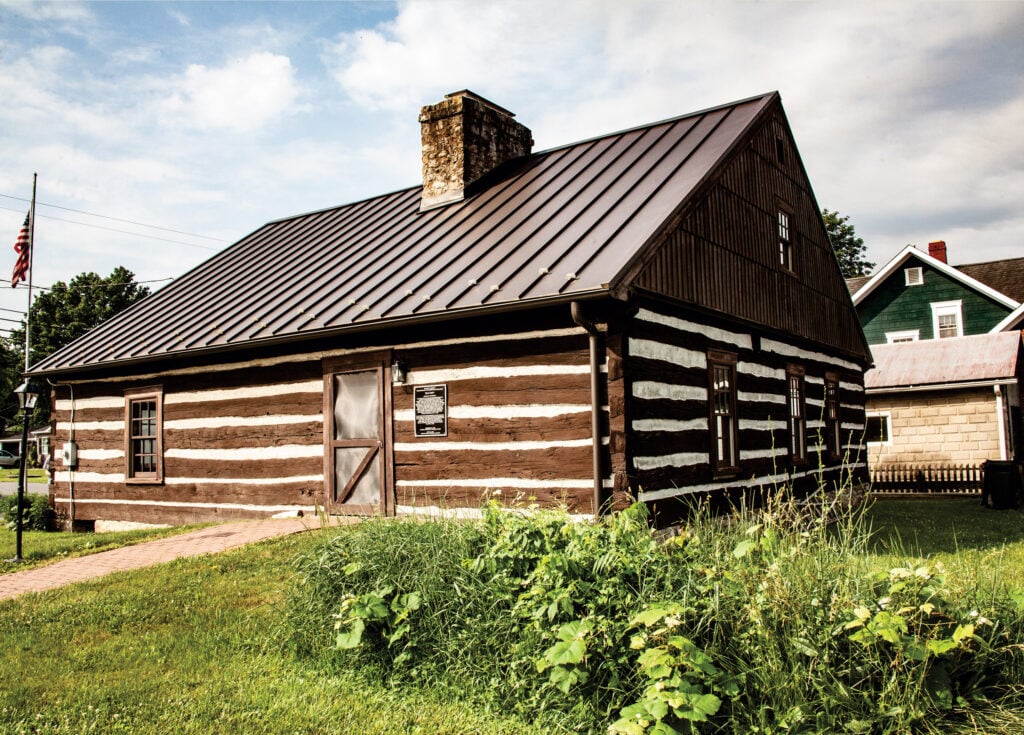
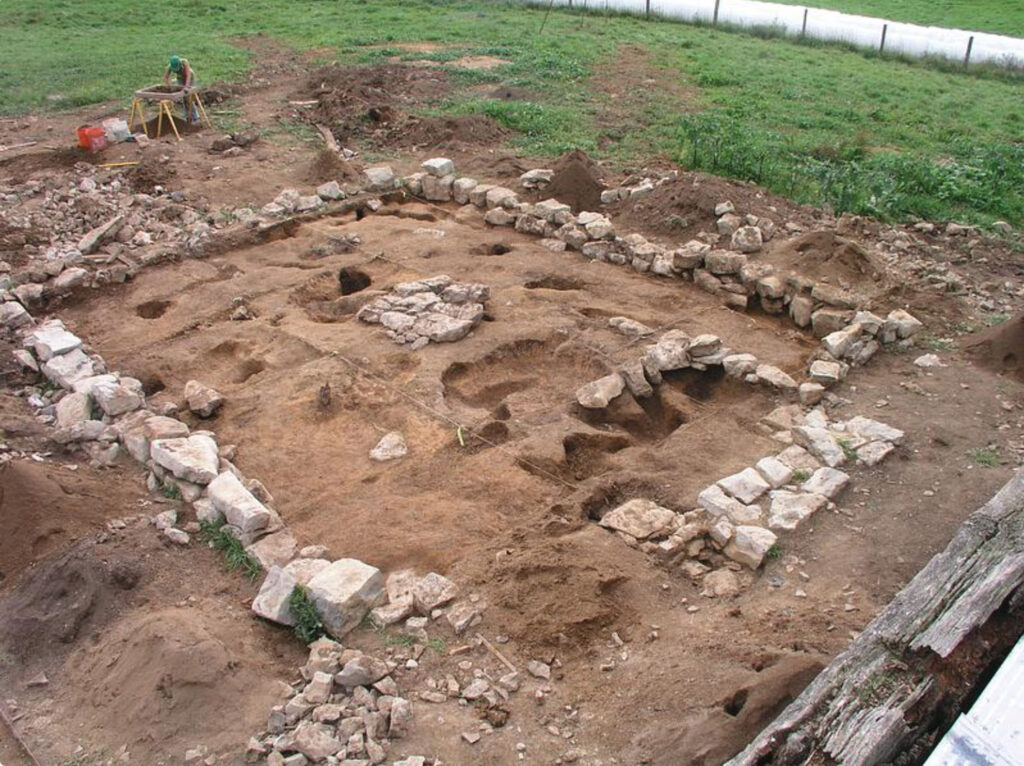
Another key site, Fort Ashby in present-day Mineral County, includes a surviving log structure once believed to date to this era. But archaeologists Kim and W. Stephen McBride, who have studied frontier forts since the 1980s, determined that two earlier forts—one French and Indian and one Revolutionary—predated the existing building, based on dendrochronology, or the dating of logs.
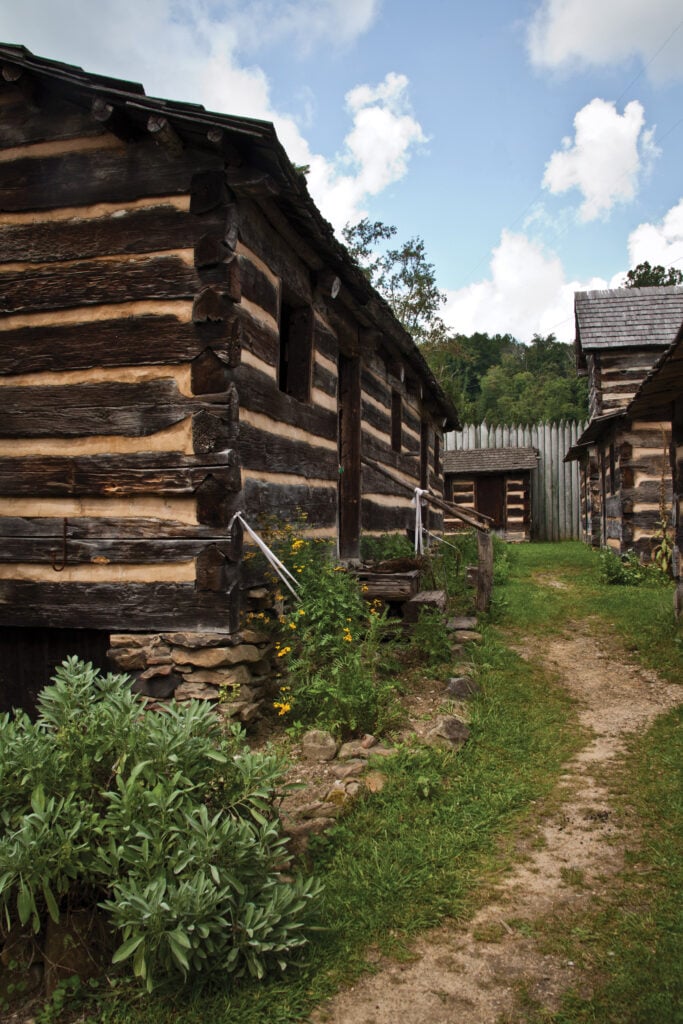
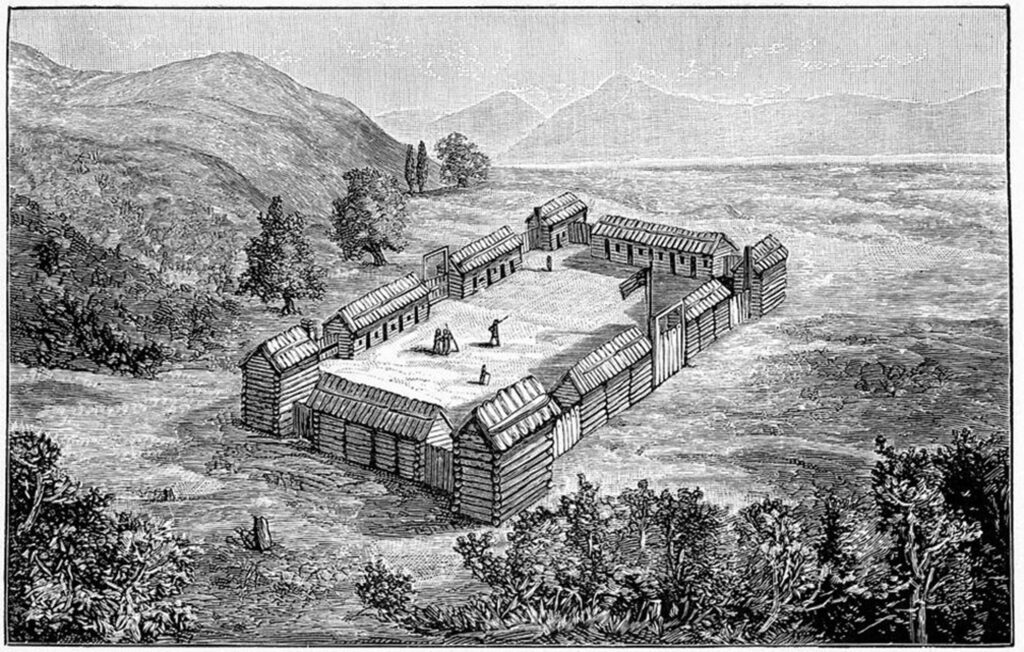
In the early 1800s, historian Joseph Doddridge described a typical frontier fort as a cluster of cabins surrounded by a stockade, often with a central blockhouse and corner bastions—protruding fortified sections that allowed defenders to fire in multiple directions. Some forts incorporated existing homes into their defensive walls. The McBrides’ work indicates that militia-built forts often included underground storage areas for food and ammunition.

Most forts offered a sense of protection, even though true safety was uncertain. County militias were not well-trained for battle, while Native warriors excelled at surprise and deception. Few forts were manned full-time. Instead, scouts provided advance warning of danger, allowing militiamen to rush to forts with their firearms. Settlers would grab essential belongings and gather inside the nearest stockade for days or even weeks, nervously awaiting an attack that might never happen.
Life inside the forts could be difficult. Crowded conditions—especially during peak danger seasons, spring through fall—often led to rapidly spreading diseases. So while forts offered a sense of security, that protection was sometimes more psychological than real.
Rising Tensions and the Revolutionary War
Western expansion slowed briefly in the 1760s after the British victory in the French and Indian War, but tensions reignited in 1774 after the murder of Mingo leader John Logan’s relatives in present-day Hancock County. Logan’s retaliation intensified the conflict and led Virginia’s royal governor, Lord John Dunmore, to declare war on Indian tribes in the Ohio Valley, culminating in the Battle of Point Pleasant.
Amid this unrest, settlers pushed farther west, and several forts that would play roles in the Revolutionary War were constructed. These included Henry in Wheeling, Arbuckle’s and McCoy’s in Greenbrier County, Culbertson in Summers County, and Pricketts in Marion County.
New taxes imposed on the colonies helped spark the American Revolution. In western Virginia, British strategy aimed to push settlers back eastward. Indians in the Ohio region likewise sought to halt expansion and create a buffer zone for their homelands.
The “Bloody Sevens”
The year 1777 marked the height of violence. Remembered as “the year of the bloody sevens,” it saw Indian raiding parties strike settlements and forts, including Arbuckle’s, Van Bibber’s in Summers County.

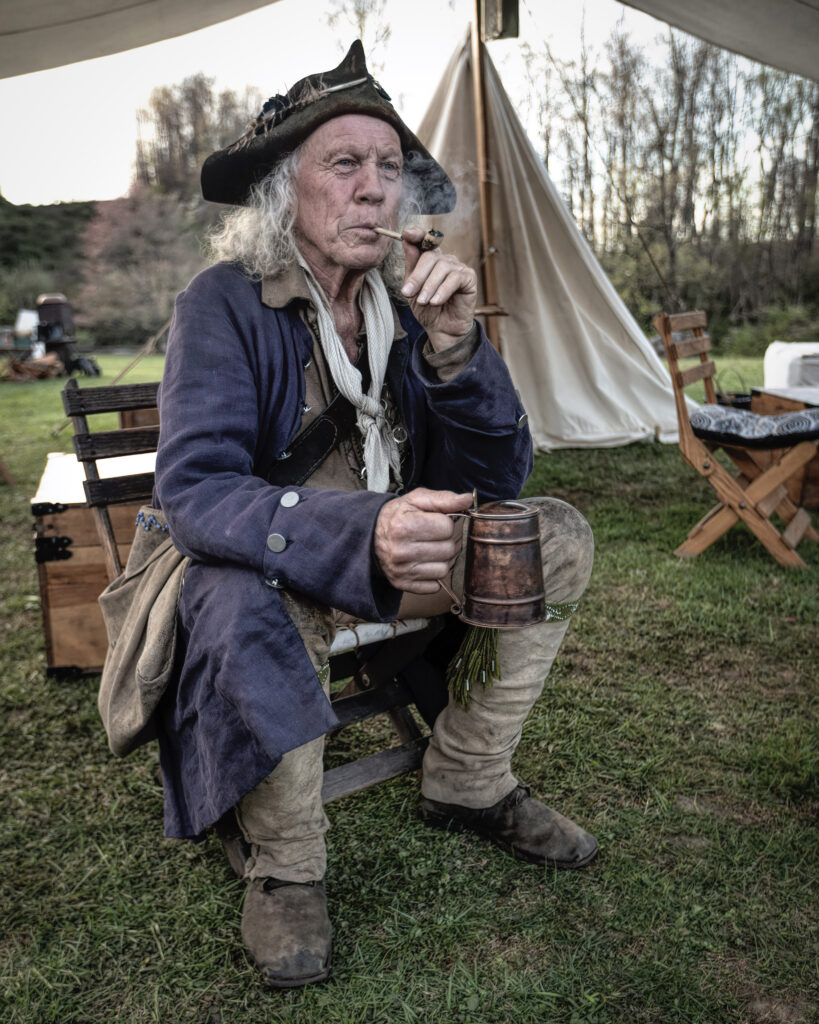
These assaults were typically small, surprise raids rather than full-scale offensives. Native warriors relied on mobility and stealth, targeting isolated settlers rather than well-defended positions. As Stephen McBride notes, while the British supplied their Indian allies with weapons and resources, “they did not plan these smaller assaults.”
One of the largest engagements was the siege of Fort Henry at Wheeling in September 1777. Native forces lured many defenders away from the fort before attacking the remaining garrison. During the battle, Major Samuel McCulloch made a dramatic horseback escape down the steep slope of Wheeling Hill—an event remembered as McCulloch’s Leap.
Escalation and Retaliation
Just weeks after that, Chief Cornstalk attempted to warn militia at Fort Randolph in Point Pleasant of a potential alliance between the Shawnee and the British. Having witnessed the brutality of frontier warfare, he hoped to prevent further bloodshed. Instead, he, his son Eliniscipo, and sub-chief Red Hawk were killed in retaliation for two recent militia deaths. Cornstalk’s murder triggered more of the violence he had hoped to avoid.
In spring 1778, Indian forces launched coordinated attacks, including an unsuccessful siege of Fort Randolph. Scouts Phillip Hammond and John Pryor rode nearly 200 miles eastward from Point Pleasant to warn settlers of the approaching threat. Kim McBride says they made the journey safely because “they were supposedly disguised as Native Americans.”
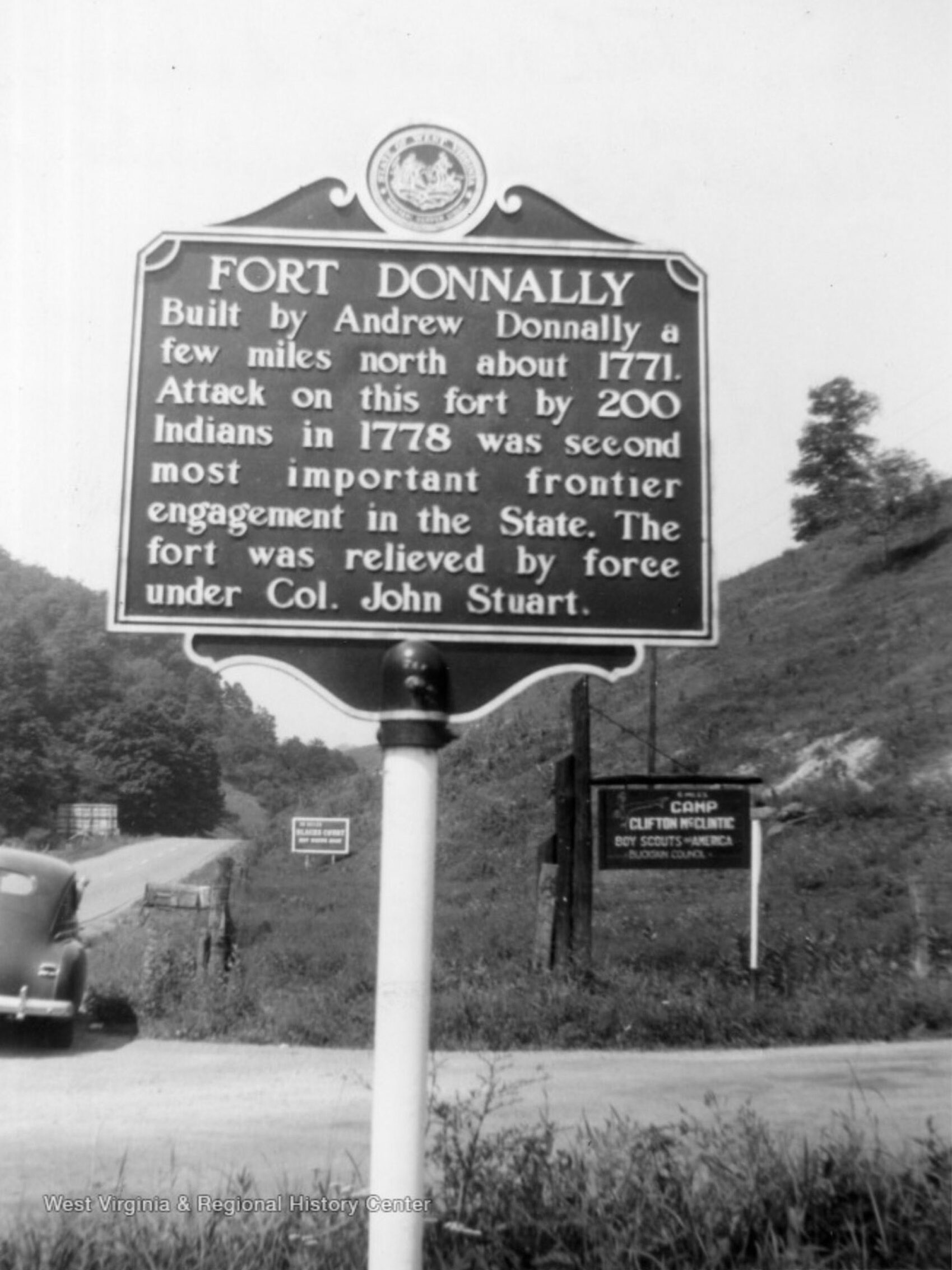
Soon, at Fort Donnally in Greenbrier County, about
20 militiamen and 60 women and children prepared for attack. In the early morning hours of May 29, Hammond and another defender held off attackers until militiamen awoke and reinforcements arrived. These successful defenses helped stabilize the Greenbrier Valley for the remainder of the war.
Despite these fierce clashes, Indian forces generally lacked the numbers needed to capture and hold forts. Their primary objective was to instill fear and discourage settlement. As Kim McBride notes, forts themselves became targets in part because they concentrated populations in otherwise sparsely settled areas.
The War’s End and Legacy of the Forts
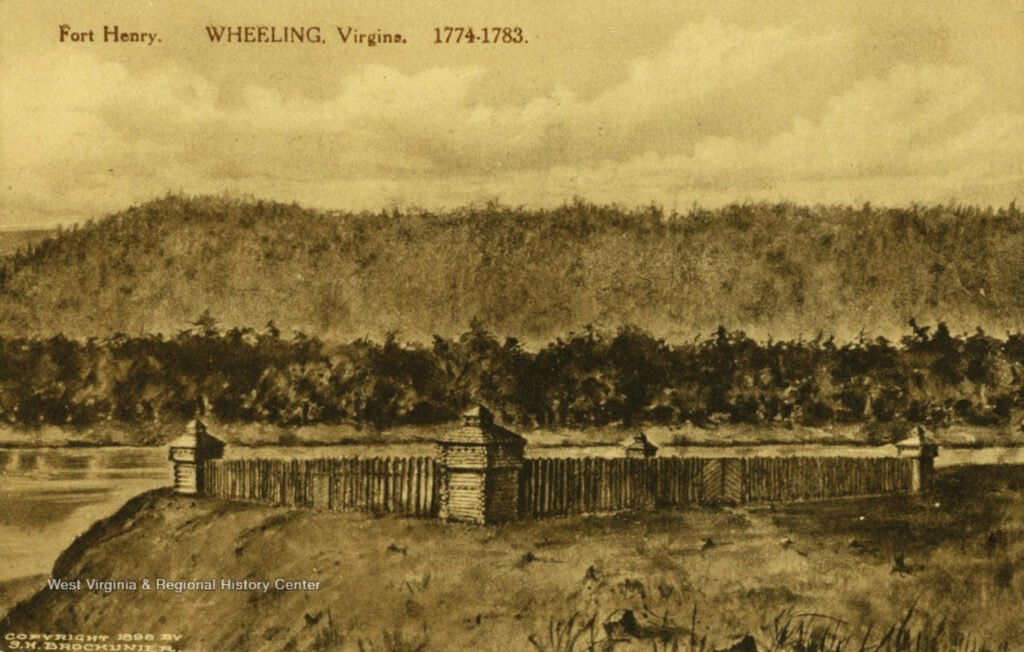
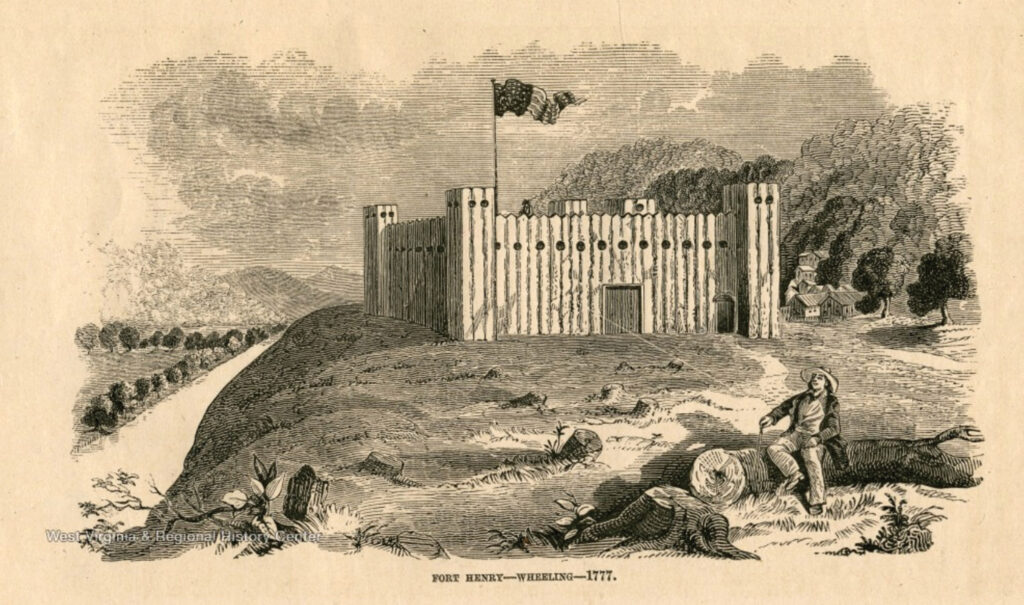

The last major conflict in present-day West Virginia occurred on September 10, 1782, nearly a year after the British surrender at Yorktown. Indian forces and British allies launched a final siege of Fort Henry at Wheeling, strikingly similar to the attack five years earlier. During this battle, Betty Zane, daughter of Wheeling’s founder, made a famous dash under fire to retrieve gunpowder and fend off the attack. Her act was later immortalized in local lore and in the writings of distant descendant Zane Grey.
America’s victory in the war weakened Indian resistance and accelerated westward expansion. Settlers started pouring into river valleys, protected by new stockades such as Fort Lee at Charleston. Sporadic attacks continued until the American victory at the Battle of Fallen Timbers in Ohio in 1794.
For the first time in decades, peace settled over the western Virginia frontier. Forts gradually fell into disuse and decay as settlement expanded. Yet the consequences of expansion remained profound, as the displacement and mass killing of Indians continued farther south and to the west.
Over time, many former fort sites grew into towns, including Charleston, Clarksburg, Fairmont, Lewisburg, Moorefield, Morgantown, Point Pleasant, and Wheeling. By the early 19th century, present-day West Virginia was no longer part of the frontier—it was the population center of the young United States, shaped largely by the legacy of its early forts.
Frontier Forts Today
In the 1970s, two of West Virginia’s frontier forts were reconstructed: Pricketts north of Fairmont and Randolph at Point Pleasant.
The Pricketts Fort replica was constructed in 1974 as close as possible to the original site, and it opened as Pricketts Fort State Park during the 1976 American bicentennial. The reconstructed fort spans 110 feet by 110 feet, and it’s enclosed by 12-foot-high log walls with blockhouses at each corner. Along the stockade walls sit sleeping cabins with earthen floors, while a meetinghouse and storehouse occupy the central area.
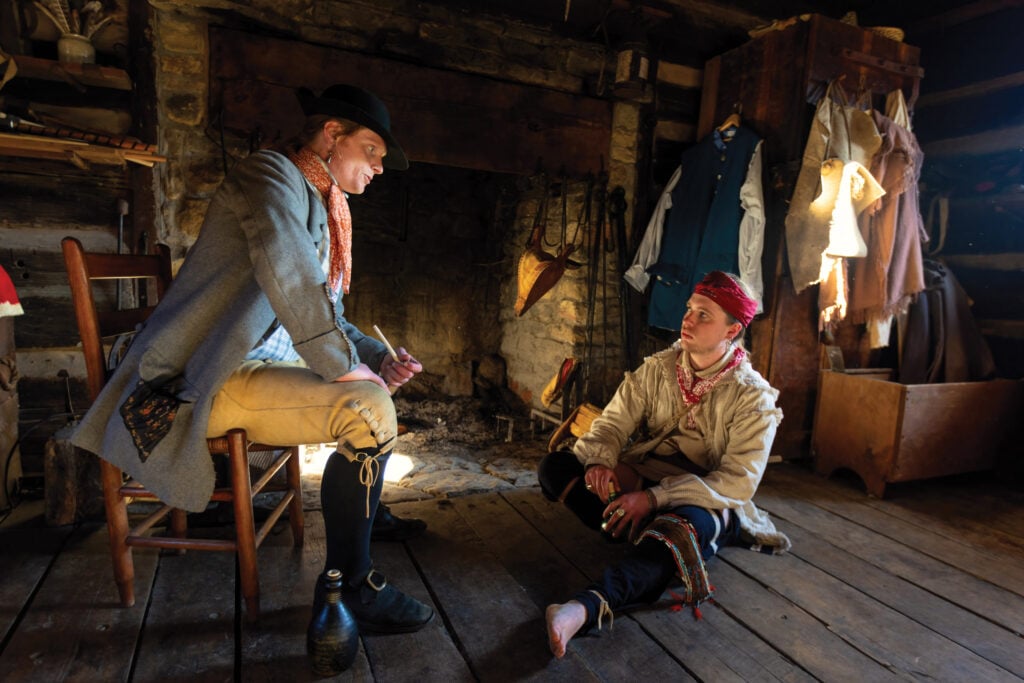
Pricketts Fort State Park is open regularly from mid-April through October, with special events in the off-season. Visitors can watch skilled interpreters in period clothing make frontier-era crafts and demonstrate folklife traditions. A visitor center features an introductory exhibit and a gift shop.
Today’s Fort Randolph is located in the city of Point Pleasant, within the scenic Krodel Park, about a mile from its original site. It hosts public events celebrating local and national American heritage and offers self-guided tours on weekends during the summer. It’s open for self-guided tours Memorial Day weekend through Labor Day weekend and for special events.