


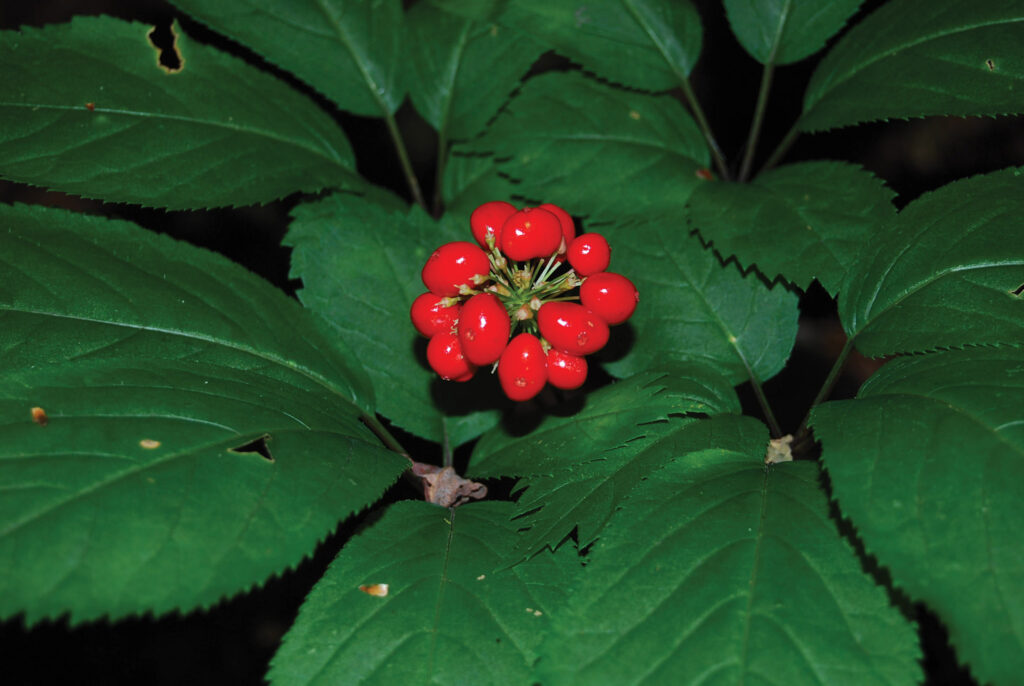
Over the centuries, West Virginia’s ginseng harvest and traditions have changed little.
This story was originally published in the October / November 2026 issue of Wonderful West Virginia.
Subscribe here.
Photographed by Gary Kauffman / USFWS
It’s not just any old root. It’s history. It’s medicine. It’s even been Appalachian currency, and that’s a lot of responsibility for an inconspicuous, 18-inch-high plant. But ginseng is more than that—it’s a storied tradition, and each fall, harvesters make their way to the forests to dig for this grubby West Virginia gold.
Ginseng grows wild in North America and Asia and has long been incorporated into teas and soups. Valued for its medicinal properties, the root is used to treat illnesses like fatigue and inflammation while supposedly boosting immunity and increasing vitality. And while it’s commercially grown here in the U.S., digging it up out of the autumn ground is West Virginians’ preferred way to reap the benefits of these old-timey remedies.
In a West Virginia Public Broadcasting interview, Luke Manget, then–assistant professor of history at Dalton State College in Georgia, noted that there has been a high demand in East Asia and China for ginseng since the early 18th century. It turned out that Appalachian ginseng was a good substitute for the Asian variety, and a young America’s first trade relationship with China was built mostly on the plant. Thus, a long economic story began with the exchange of one West Virginia export. Trade happened here at home, too. In a region where coin wasn’t always abundant, ginseng sometimes served as currency in the young Appalachian economy, and the bartered root moved from rural country markets to bigger stores in bigger cities, catching on in popularity as it went.
Ginseng season runs from September 1 through November 30. These three short months are monitored closely by the West Virginia Division of Forestry (WVDOF), which has some rules to keep the tradition alive for the long haul. Digging on state forest land is prohibited, as is digging on private land without permission. You can, however, dig on your own land during the official season.
A sustainable hunt will leave plenty of bounty for future generations of hunters and ginseng lovers. The plant is a slow grower, and conscientious practices include harvesting only the leaves for teas while leaving the root entirely undisturbed in the ground, allowing it to safely mature. If you do harvest the root, West Virginia law strictly requires you to replant the fertile red seeds at the exact site of the dig to protect future generations. Plants can be dug starting at 5 years old, once they have three or more prongs with no fewer than 15 leaflets. The base of the plant stem will display bud scars, and a five-year-old root will have at least four.
Once you’ve got your ginseng, you have until March 31 of the following year to sell it to a registered West Virginia ginseng dealer. Or, you can get the roots weight-receipted at WVDOF weigh stations. And then? Let the forest work its magic so you can do it all again next year.
Visit wvforestry.com/ginseng-program for detailed rules and regulations.