


The science and spirit of West Virginia’s Mountaineer Heritage hunting season.
This story was originally published in the January 2026 issue of Wonderful West Virginia. To subscribe, visit wonderfulwv.com.
Written by Holly Leleux-Thubron
Photos Courtesy of West Virginia Department of Commerce
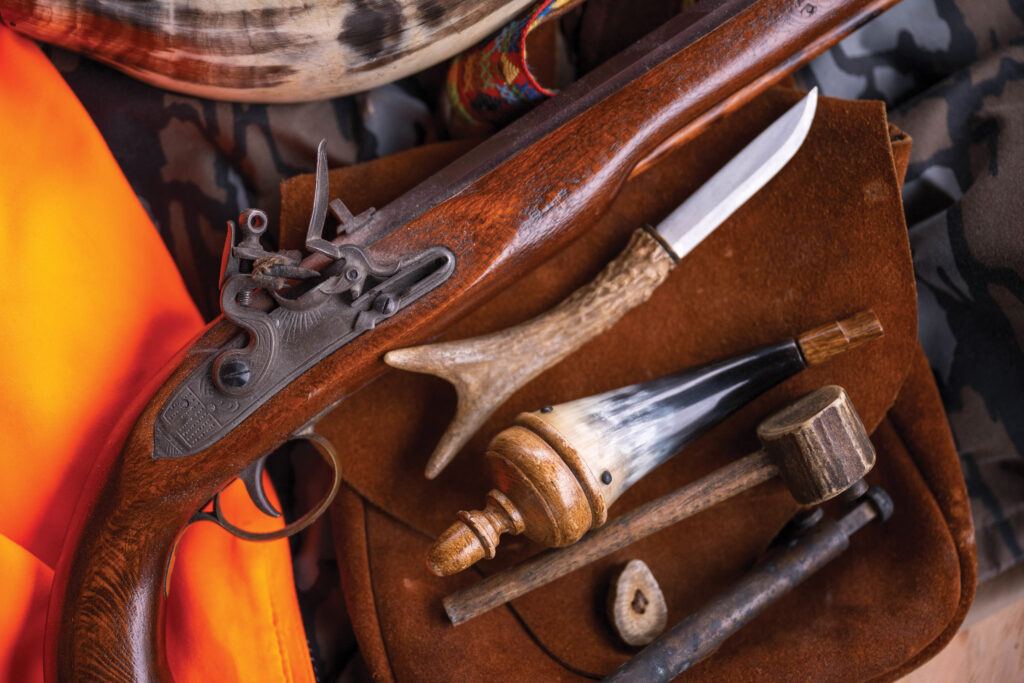
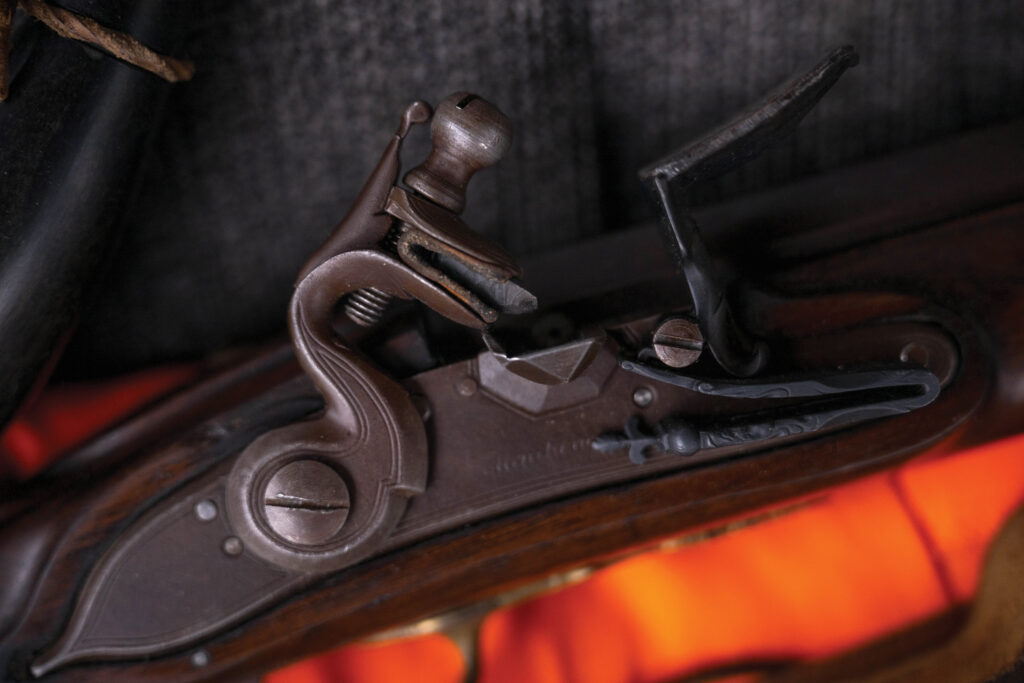
On a still January morning in West Virginia, the first thing a hunter might notice isn’t the cold—it’s the quiet. Then comes the flint’s spark and a cloud of smoke. It’s the kind of smoke that once meant dinner for families across this wild, rugged terrain.
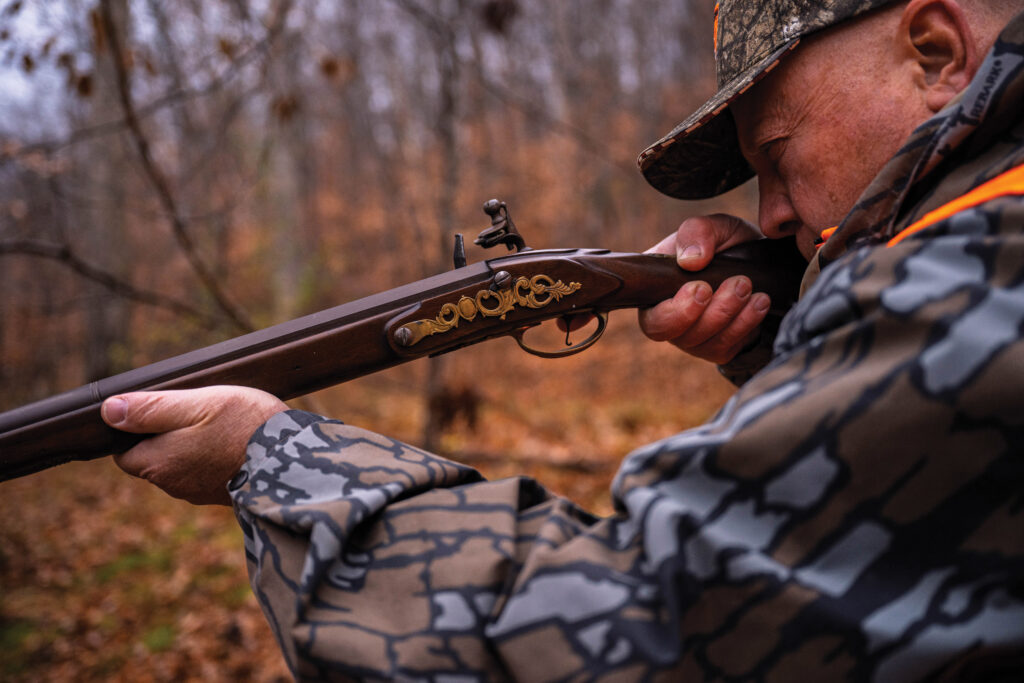
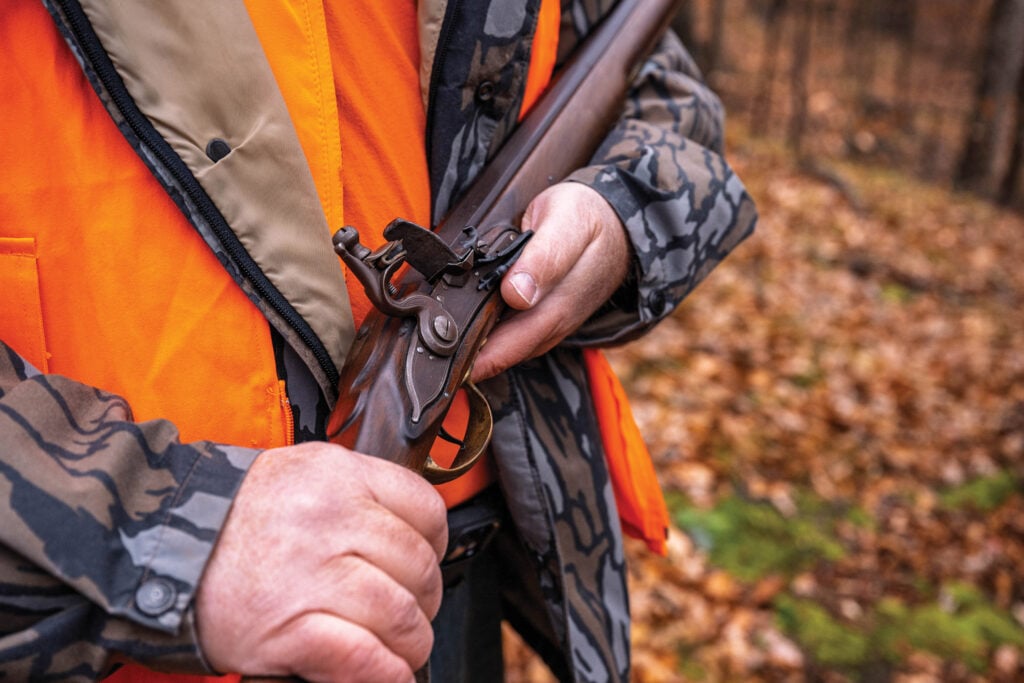
The Mountaineer Heritage hunting season—West Virginia’s late-winter, primitive-weapons window—was created to honor that older way of hunting, and it does so with specific limitations: open sights, single-shot flintlocks, sidelock muzzleloaders, longbows, recurve bows, and four short days to make it count.
This is not just another deer, bear, or turkey season. It’s a four-day winter throwback to doing things just like the native people and frontier families who were focused on gathering protein to survive the winter because there wasn’t a Kroger had to do them.
Lieutenant Colonel David Trader, a 36-year veteran of the West Virginia Division of Natural Resources (WVNDR), helped champion the concept of a primitive weapon season from the early days of his career. “To be able to participate in this kind of special hunt is really satisfying on so many levels,” he says.
A Heritage Season Reimagined
The original muzzleloader season came about at the request of West Virginia Muzzleloader Association members in the late ’70s, according to Trader. Back then? Sidelock muzzleloader. Open iron sights. One round to make the shot. Then technology kept creeping in. So when the WVDNR rolled out the new Mountaineer Heritage Season in January 2019, it was a very intentional reset.

“The main objective of the Mountaineer Heritage Season was to create a unique and challenging hunting opportunity that paid homage to the pioneer settlers of West Virginia,” says Ethan Barton, a state wildlife biologist who proposed the season in 2017 with the late WVDNR Wildlife Biologist Rich Rogers. Barton has also studied the season’s performance and ecological footprint since its inception. “It was envisioned as a winter season with weapons limited to those most similar to hunting weapons that would have been in use around 1850 and before.”
January delivers challenges, not least of which is minimal cover for camouflage. The cold, often wet conditions complicate using traditional black powder guns, and the game animals are focused on conserving every calorie.
Barton says that all animals are moving less at this time of year. Bears, especially pregnant sows, are typically denned by January, and deer rely far more on woody forage. Turkeys prefer easy food and warm cover.
“Effective range for most deer hunters using a flintlock or caplock is going to be inside 75 to 100 yards, depending on their skill level,” Barton says. For archers shooting recurves or longbows, realistic shot distances are even tighter, often under 30 yards.
Trader knows the gear’s quirks firsthand.
“Moisture would be the biggest issue for the ignition system of any muzzleloader. The old adage ‘Keep your powder dry’ is still relevant today,” he says. “Hang fires and misfires are best avoided by protecting priming powder, caps, and black powder or substitutes from moisture.”
What the Numbers Say
Because the season is meant to be challenging, harvest totals are modest and stable. “With regard to deer, harvest has averaged 692 over the last five years,” Barton says. “The lowest we’ve seen is 599 in 2020 and the highest 834 in 2023.” Participation, he adds, is closely tied to weather across the four-day window, especially over the weekend. “Extreme cold, deep snow, or wintry weather can lead a number of hunters to stay at home by the fire.”
Deer harvest trends are highest in Districts 1 and 3, with Nicholas, Preston, and Upshur consistently among the top counties. At the other end, the four southern, archery-only counties—Logan, McDowell, Mingo, and Wyoming—predictably post the lowest deer numbers, because only archery equipment is legal there.
Bear and turkey? They’re much more rare.
“Bear harvest has averaged two per season statewide,” Barton says. Roughly half have come from the southeast District 4, but numbers are too small to define a “hot spot.” “It takes a lot of luck to run into a bear in January, and even more luck to get into traditional archery or black-powder range.”
Turkeys were added in 2022, and the last three seasons averaged 29 birds statewide, most of them gobblers, with black powder the predominant method. Since 2019, only 11 bears have been taken in the Mountaineer Heritage Season and 87 turkeys in the past three years.
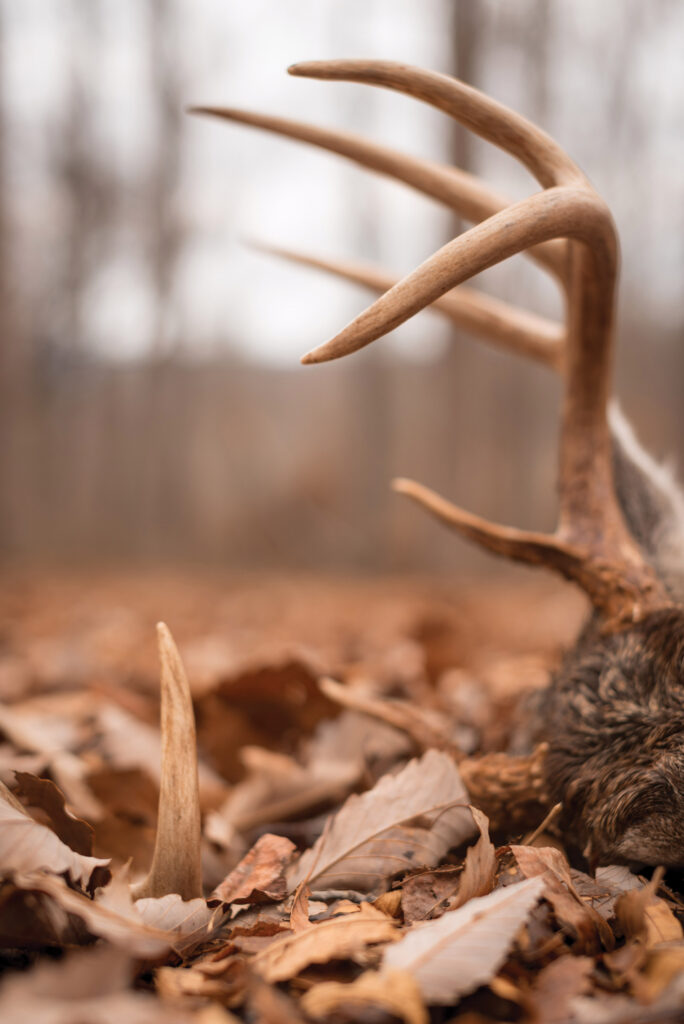
The composition of the deer reports underscores the season’s role as a gentle tap on the population rather than a significant impact. In 2019, about 96% of harvest was on private land; in 2025, about 95%. Antlerless deer made up 87% of the harvest in 2019 and 85% in 2025. Shed-antlered bucks typically account for 3–4%. Nonresidents represent a small but growing segment—from approximately 3% of the harvest in 2019 to 7% in 2025—hinting at increasing interest in what is, regionally, a rare experience. According to Barton, few neighboring states offer a statewide, traditional weapons-only hunting season for multiple game species.
The challenge of hunting in the Mountaineer Heritage Season is apparent in the deer harvest numbers, Barton explains. In Randolph County alone, crossbow hunters in the 2024 archery season harvested 147 more deer than the entire statewide Heritage Season deer harvest in January 2025.
“This season was more about providing a unique opportunity,” he says. “We didn’t devise it to try to effect any substantial amount of population control.”
Hunting Smart as the Clock Ticks
Heritage Season success rates are low by design. Barton points to other states’ primitive seasons, where reported success often falls below 20%, and likely lower for newcomers. Because there’s no separate license or stamp for the season, participation is inferred from surveys and harvest reports rather than easy transactional data. Still, a revealing blip appeared when the first Heritage Season launched.
“We saw a significant jump in hunting license sales comparing December 2017 and January 2018 to the same period spanning 2018 and 2019,” Barton says, suggesting hunters were gearing up to participate in the inaugural hunt.
With only four days to try, and with weather that can erase a weekend, the most precious commodity becomes available time in the field. Adverse conditions can remove a quarter to half of the season in one storm, pushing that success curve even steeper.
Wounding loss is a concern in any season, but Barton hasn’t seen red flags specific to Heritage. Snow can actually aid recovery. During a multi-county deer project from 2021 through 2025, WVDNR staff didn’t recover any wounded deer lost by Mountaineer Heritage Season hunters. That doesn’t mean it never happens. It does mean the season’s limitations don’t appear to broaden that risk beyond norms, especially when hunters respect the gear’s range and practice beforehand.
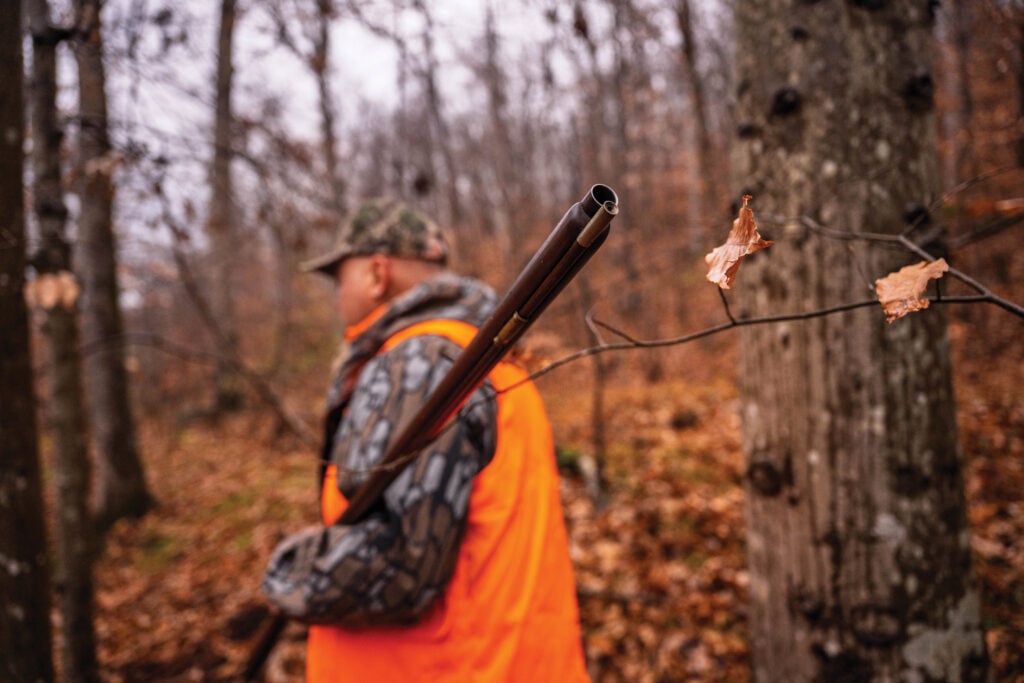
Blaze orange—400 square inches—is still required during the Heritage Season. Equipment violations are rare but do occur; caliber limits for black powder guns and minimum cutting diameters for broadheads exist to ensure ethical lethality.
“Getting permission to hunt on private land that is posted, fenced, or enclosed is not only lawful but represents good, responsible sportsmanship,” Trader says. “Private landowners and access are keys to successful wildlife management. Developing trustworthy relationships with them is crucial for all hunters.”
Culture and Identity
If there’s a unifying theme, it’s that how you hunt can be as meaningful as what you hunt.
“Method hunting implies importance on how the game was taken,” Trader says. “Maybe you’re the type of person that builds your own muzzleloader, bow, or arrows. Knowing that you were able to put game on the table with the skill set passed down through generations is a different level of hunting satisfaction and represents the true Mountaineer spirit.” This approach to hunting is mostly about the journey, the preparation, and the personal investment in every aspect of the hunt, from crafting the tools for some to understanding the environment.
Barton echoes that sentiment from a management angle. By keeping the tools and timing intentionally hard, it invites both seasoned muzzleloader shooters and curious newcomers to reengage with the old ways. It’s a deliberate move away from the instant gratification often associated with modern hunting, pushing participants to hone their instincts and cultivate patience.
The Mountaineer Heritage Season is a paradox that works: a modern regulation designed to make hunting feel older and harder than it’s been for a long time. The result is a carefully developed experience where the weather has a say and the gear keeps you honest. It’s also a deliberate step back in time, offering an authentic experience that connects hunters to their ancestors and the timeless traditions of the chase—a testament to the idea that true satisfaction often comes from overcoming genuine challenges.
For many Mountaineers, that kind of pure connection is enough to let the smoke roll.