


Myths and legends are a fun and fundamental part of the state park experience.
This story was originally published in the October 2025 issue of Wonderful West Virginia. To subscribe, visit wonderfulwv.com.
Written by Laney Eichelberger and Pam Kasey
Photos Courtesy of West Virginia Department of Commerce
West Virginia’s state parks are great places to relax and reconnect with nature. But our parks hold more than scenic beauty—they’re alive with folklore that’s been passed down for generations.
“It’s common to find myths and legends all throughout Appalachia and West Virginia, including in our state parks,” says Jason Burns. A Pendleton County native who has been a professional storyteller and a member of the West Virginia Storytelling Guild for over 20 years, Burns has collected more than 600 stories of monsters, ghosts, and more from across the state. “We’ve got life, death, and everything in between and beyond—our stories are part of what makes our culture so rich.”
In some cases, the landscape of a state park hints at a legend, but we’re left to imagine it for ourselves—like at Stonewall Resort State Park, where 150 stone cairns can be found, ranging from tidy stacks to messy piles to intricate towers. “The story of the cairns, we will probably never know,” says Burns. “It’s a historical mystery.” But hiking Stonewall’s Cairns Trail, it’s irresistible to imagine prehistoric people marking their paths, burials, and sacred places with the stones.
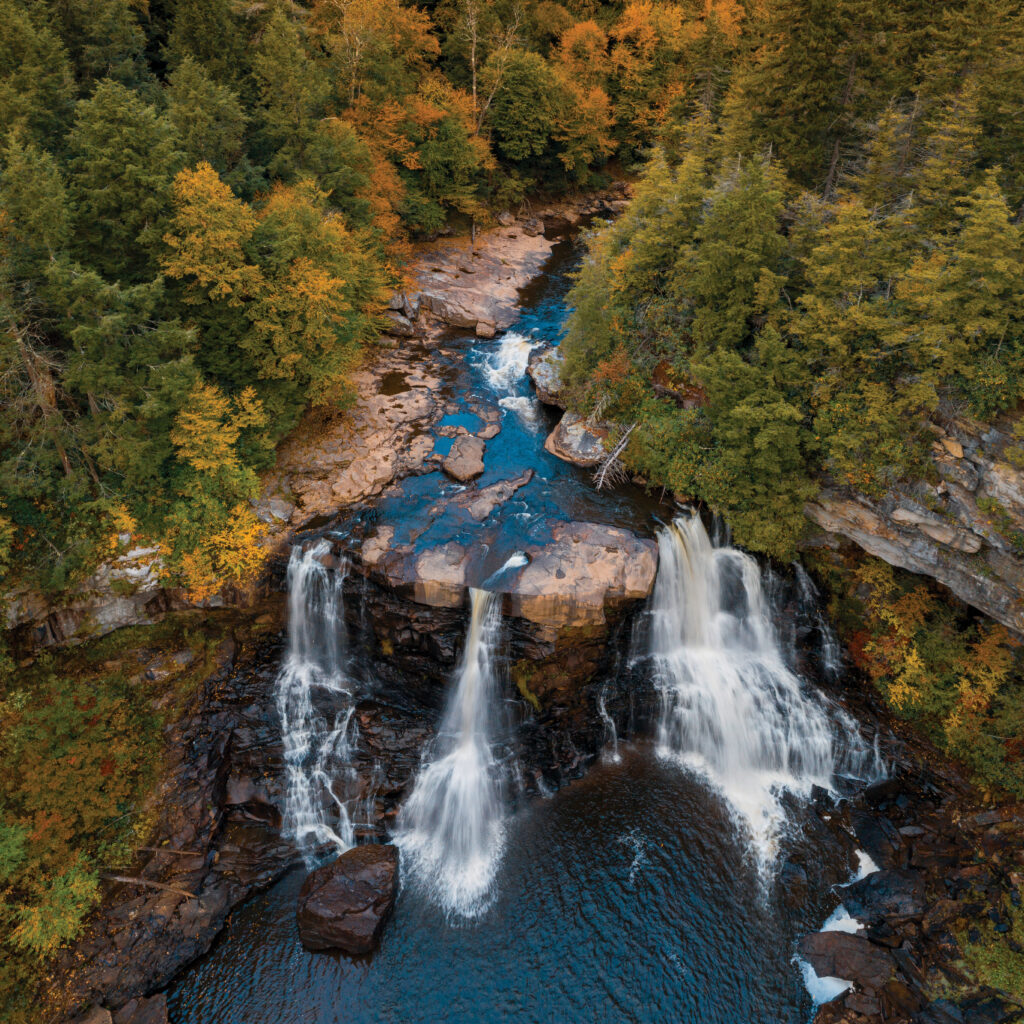
Some state parks are surrounded by such vast wilderness that monsters could credibly roam them. In the 1960s and ’70s, there was a rash of Bigfoot sightings near Blackwater Falls State Park, according to Theresa Racer-Cheshire’s long-standing blog Theresa’s Haunted History of the Tri-State. And Bigfoot is seen in the region from time to time: a high-quality “Class A” 2008 sighting in Tucker County is documented by the Bigfoot Field Researchers Organization.
“I remember hearing these stories when I was a kid, and I thought they were the silliest thing because I had a lot of relatives who looked like Bigfoot—are you sure you didn’t just see my uncle out there walking around?” Burns says with a laugh. “Maybe bigfoots are real. I think they’re a wonderful addition to the bestiary of West Virginia.”
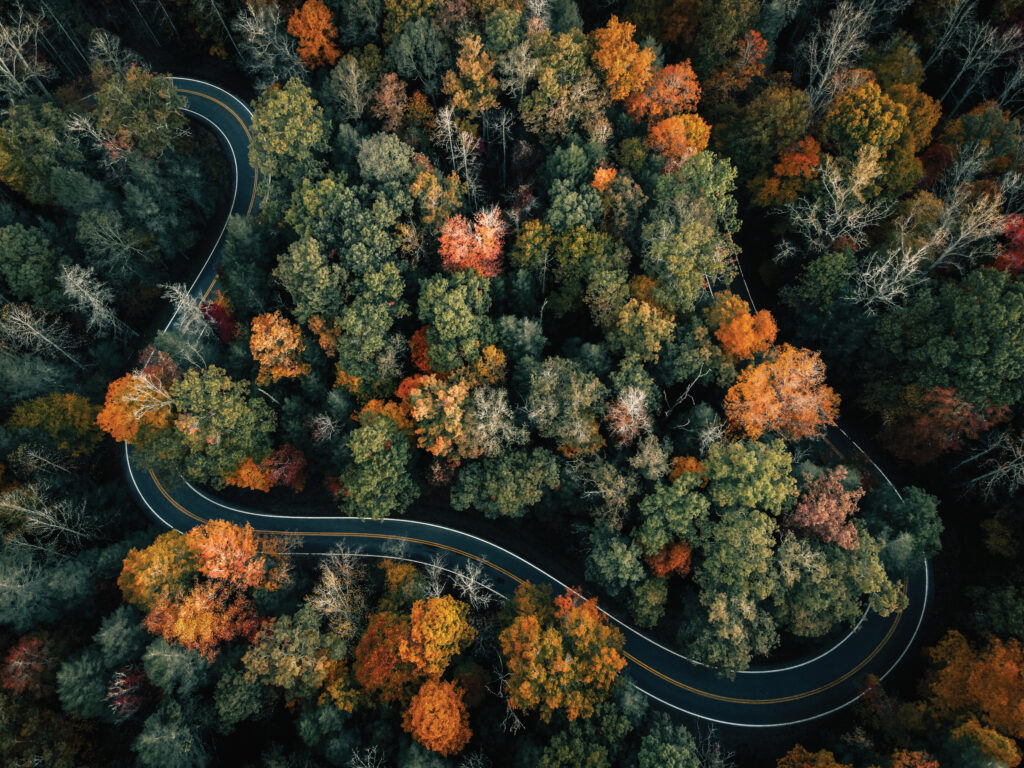
A lesser-known Mountain State cryptid is the Polk Hollow Monster, said to inhabit the densely forested hills around Twin Falls Resort State Park. The first reported sighting was at Polk Gap, just north of the park, in the fall of 1942. Out shooting a box of shells in the familiar woods around his house, Big Jim McMoore approached his favorite perch on a beech limb, the story goes. But he spotted someone already there—a much-too-tall someone who had a man’s face but gray-white hair everywhere else. McMoore raced home chased by the creature, which stopped only when it reached his fence line. In the 80 years since, there have been occasional reports of unusual animal sounds and at least one sighting.
The Polk Hollow Monster sounds like a version of Sheepsquatch, in Burns’ view. “And Sheepsquatch itself goes back to the White Thing, recorded by West Virginia folklorist Ruth Ann Musick when she was researching stories in the coal camps in the mid-20th century,” he says. “The White Thing came with our ancestors from Europe and probably mixed with a few Native American and African American legends, because Appalachia is a mix of all three.”
Some of the most elaborate tales—and Burns’ favorites—are the ghost stories. Here are just a few.
Blennerhassett Island Historical State Park
Many West Virginians know about the infamy of Blennerhassett Island. The mansion that Harman and Margaret Blennerhassett completed on the Ohio River island in 1800 was renowned for its uncommon elegance and cultured hospitality. But when the couple allowed Aaron Burr to use the island as headquarters for his plot to establish an independent nation in the American West, a Wood County militia ultimately raided the mansion, and Burr and Harman Blennerhassett were charged with treason. The charges didn’t stick—but the couple lost their river paradise. Margaret Blennerhasset later published a poem about the island home she dearly missed.
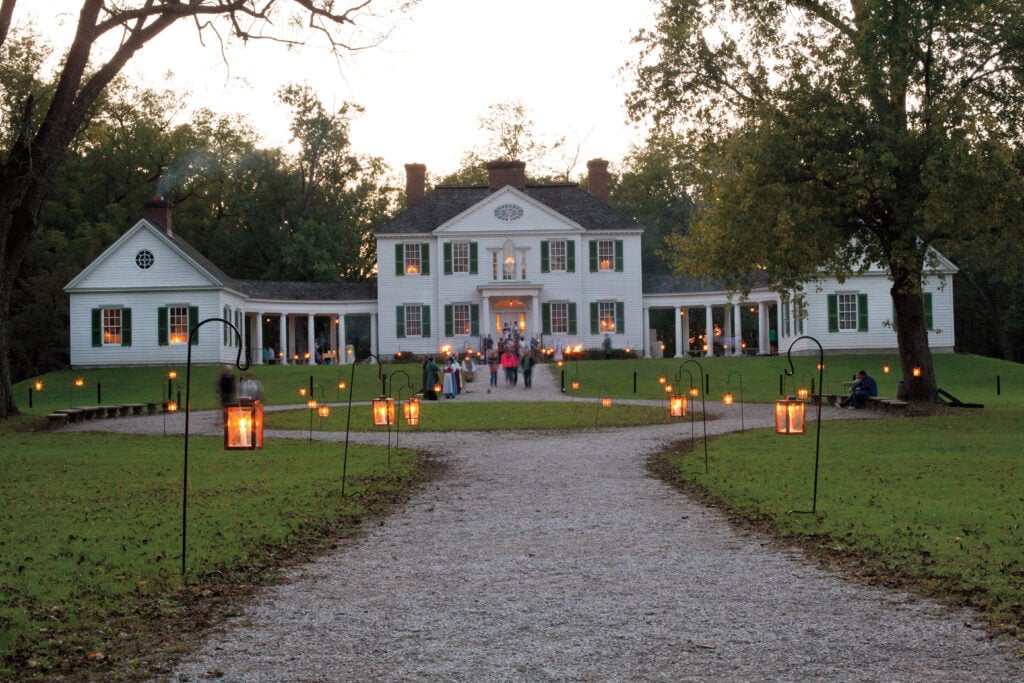
Although it burned down in 1811, the mansion was reconstructed in the 1980s by the State of West Virginia and, in 1996, the remains of Margaret Blennerhassett and middle son Harman Jr. were relocated from New York City to the island. Over the years, sightings of an ephemeral female figure have been reported in the reconstructed mansion and, another time, reading a camper’s book. Children’s likenesses have also been seen, only to have then vanished.
“Margaret Blennerhassett is one of my favorite historical figures,” says Burns. “Writing about how the island was her home that she loved and, even after she left, her heartstrings were pulled when she thought about it. She is one of the first people to put that feeling down in writing that’s so familiar to West Virginians. It’s no surprise to me that she now haunts that island.” blennerhassettislandstatepark.com
Silver Run Tunnel on the North Bend Rail Trail
The North Bend Rail Trail follows a stretch of the former B&O Railroad corridor between Clarksburg and Parkersburg. Along its 72 miles, it features 10 tunnels—including the Silver Run Tunnel, said to be haunted by a woman in a white dress. “This is another story that I’ve always enjoyed,” Burns says. “It’s a ghost with a sense of humor, and it cracks me up every time.”
According to local legend, a bride traveling with her groom fell or was pushed from the train and died. Engineers who later saw her standing on the tracks near the tunnel would stop their trains in alarm, only to find no one there. The ones who initially fell for it learned to continue without stopping.
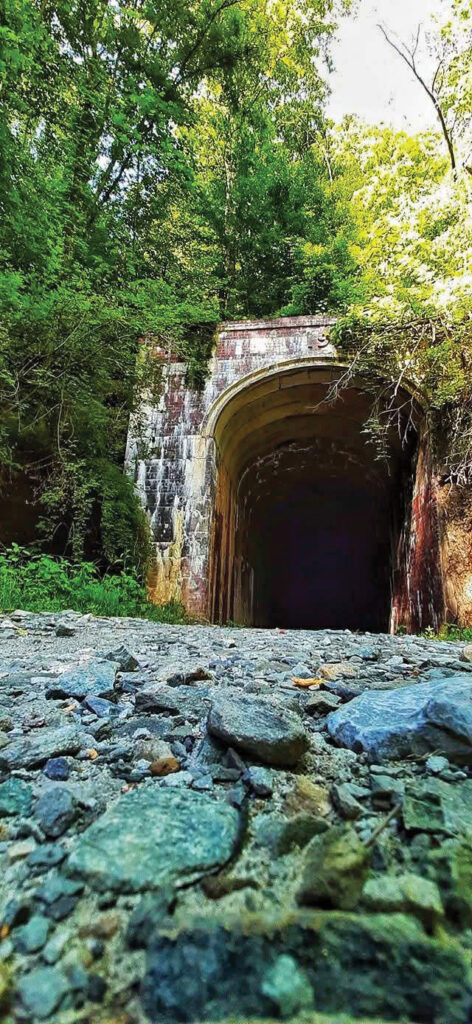
“This one engineer, she appeared to him every time, and he got so fed up that he would literally go faster every time he saw her just to get past her,” Burns recounts. “So one time, there were people at the houses along the tracks waving frantically at the train, laughing and pointing. And when he finally got to his destination, there was a little crowd of people who had followed him, excited for the train to stop. He was like, ‘What the heck is going on?’ And they said, ‘We wanted to see the lady who was doing the trick.’ Apparently, the ghost had jumped on the cowcatcher and had ridden it clear to his last destination, waving at people in the houses and towns. I think it’s cute—she’s dead, but she’s having the time of her afterlife.” WVstateparks.com/north-bend-rail-trail
Droop Mountain Battlefield State Park
Droop Mountain Battlefield was the site of the last major Civil War battle in West Virginia—a bloody November 6, 1863, conflict in which dozens of men from both sides died.
Sixty-some years later, Droop Mountain Battlefield State Park was established as West Virginia’s first state park. Trenches from the heat of battle still mark the landscape, and stones and monuments mark Confederate and Union resting places. Park visitors have long reported seeing apparitions of soldiers in the park and hearing bugle calls, shouted commands, and gun and cannon fire.
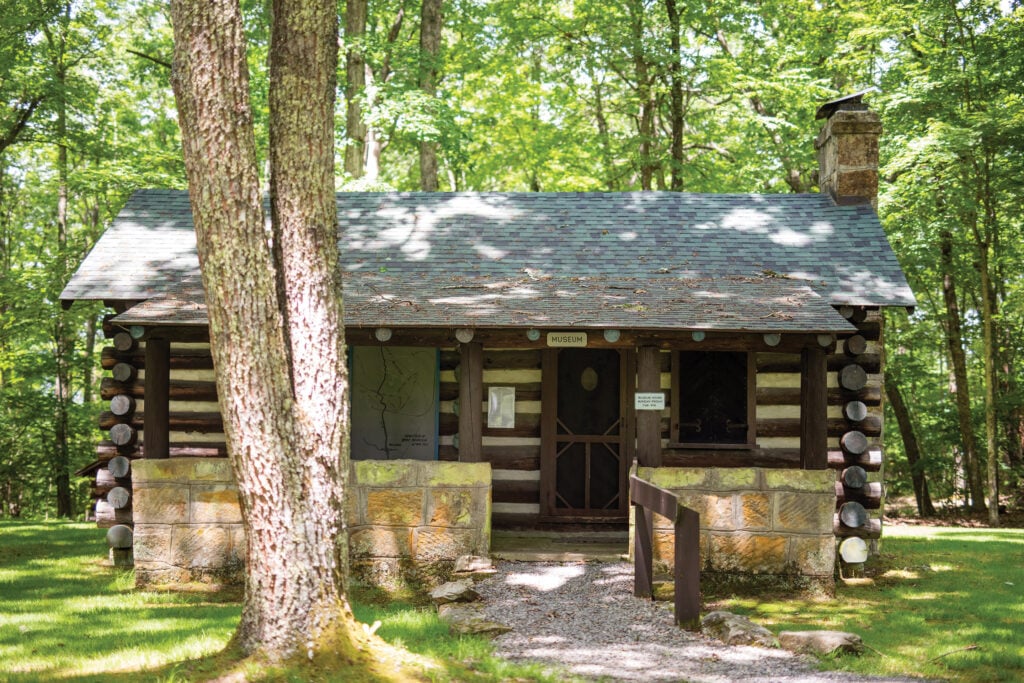
Burns, who grew up in nearby Pendleton County and visited the state park as a kid, remembers another eerie element. “The park has sort of a curse behind it,” he says. “There are stories of people finding artifacts from the Civil War there, like bullets. They take them home, but then the spirits follow them home and freak them out until they return the artifacts to the battlefield. The curse reminds us that the state park is not just a place of relaxation and vacation—it’s also a place where something very hard and heavy happened, and we need to respect that.” So, aside from it being against the general rules and regulations of the State Parks system, it’s probably in your best interest not to take anything from a state park that you didn’t bring with you or purchase in the gift shop.
Droop Mountain Battlefield State Park is part of the 16-state Civil War Discovery Trail, and park staff host re-enactments of the battle in October of even-numbered years. droopmountainbattlefield.com
Myths, Legends, and the State Park Experience
Asked whether he believes any of these stories, Burns says he wants to believe. And maybe just as importantly, he wants the opportunity to believe.
“How many people believe in Robin Hood or the Loch Ness Monster?” he says. “I really don’t want to live in a world where the Loch Ness monster is proven to be fake. I want to believe in that part of existence that’s just a little outside what we know. I want there to still be mystery and the possibility of discovery.”

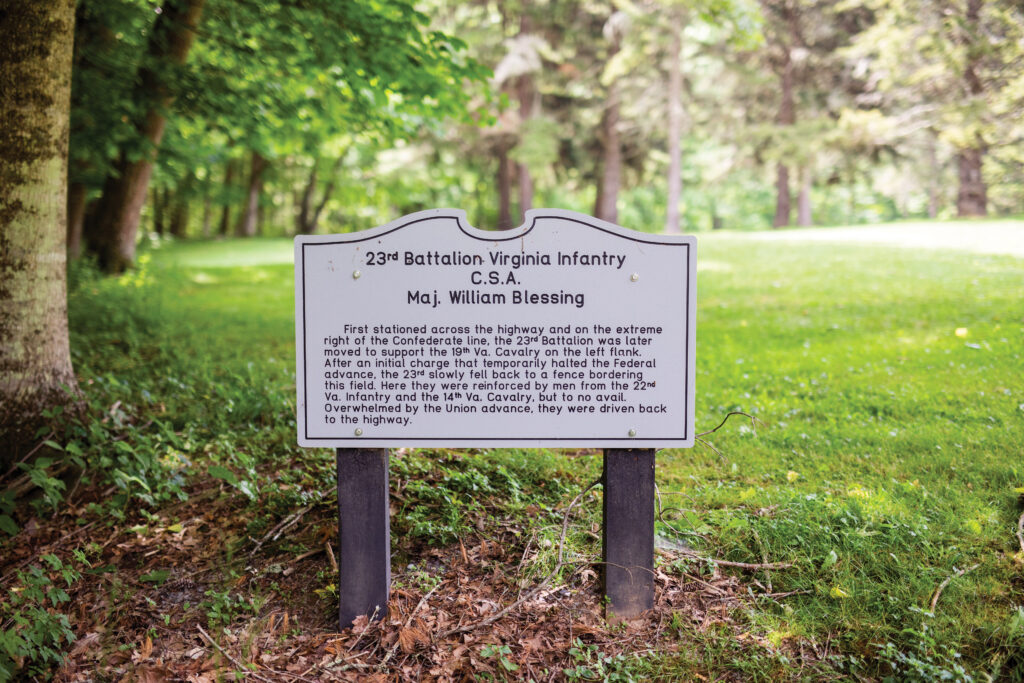
But you don’t have to believe these myths and legends to enjoy them and learn a little about West Virginia history and culture from them. They add a layer of richness to the state park experience, Burns says. “At Droop Mountain, not only are you hearing the story, but you can be looking around you thinking about how horrific it must have been to be on this mountainside in the middle of nowhere, God knows how far from home, fighting, not knowing if you’d come back or how many friends you might lose.”
When you plan a visit to a West Virginia state park, Burns recommends doing some research to see if there are any stories associated with the region. Of course, he particularly recommends the supernatural stories. “Ghosts are an awesome addition to a state park visit.”