


How a forgotten West Virginia apple found its place at Stonewall Resort State Park.
This story was originally published in the October / November 2026 issue of Wonderful West Virginia.
Subscribe here.
Written by Sam England
Featured Photo Taken by Steve Shaluta
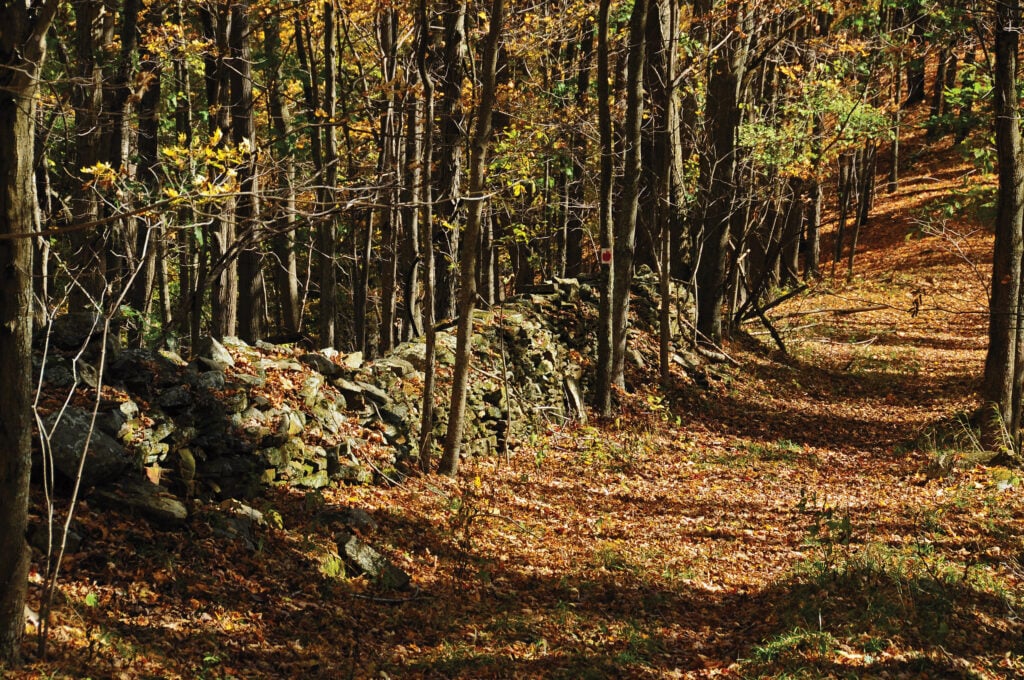
Caption: The story behind the Hevener’s Orchard Trail at Stonewall Resort State Park is not widely known but lives in the minds of the people who lived it and those they shared it with.
In the hills of Lewis County, where the waters of Stonewall Jackson Lake settle into long, quiet coves, there is a story that ties together a golf course, a family cemetery, a hiking trail, and one remarkable apple. It is a story that nearly disappeared—until an elderly woman with a shawl, a cup of coffee, and a lifetime of memories pointed across a cove and said, “And over there is where the tree was.”
I did not know then that her words would lead to the rediscovery of the first apple ever patented in West Virginia. But that is how history often reveals itself in this state: not through grand announcements, but through the gentle recollections of people who live connected to their home in West Virginia.
A Superintendent at the Start of Something New
My connection to the West Virginia Red York apple began in 1998, when I became the park superintendent at Stonewall Resort State Park. At that time, the resort amenities had not yet been built—the lodge, cottages, and golf course existed only on paper and in the imaginations of planners and engineers. For a young superintendent, being part of such a major development was an extraordinary privilege. Few people get to watch a state park grow from the ground up.
Construction of the golf course was well underway by the spring of 2000. As is typical in golf course development, topsoil was removed and stored so the land could be shaped into fairways, greens, and bunkers. But that spring brought unusually heavy rains. The clay soils became so saturated that even walking across them was nearly impossible. Equipment bogged down. Work slowed. And the timing could not have been worse.
Within the footprint of the emerging golf course sits a small family cemetery, quiet and unassuming on a hill. As Memorial Day approached, I realized that the Hevener family—who had tended loved ones there for generations—would not be able to reach the cemetery. I had the unfortunate responsibility of telling them that the conditions made access impossible.
By the next Memorial Day, the shaping of the course had changed the route to the cemetery. A year had passed, the golf course was growing in, and I felt a new responsibility to help the Heveners return. I offered to escort Mrs. Barbara Hevener and her son Bobby to the hilltop.
After decorating the graves, Mrs. Hevener sat down on a small stool, wrapped a shawl around her shoulders, poured herself a cup of coffee, and began to talk. Her voice was unquestionably that of one who had spent a lifetime in the cove below us. She pointed out where families had lived, where fields had once been plowed, and where orchards had grown. Then she pointed and said, “And over there is where the tree was.”
I asked her what tree she meant.
“Well, honey,” she said, “the West Virginia Red York tree. The first apple ever patented in West Virginia.”

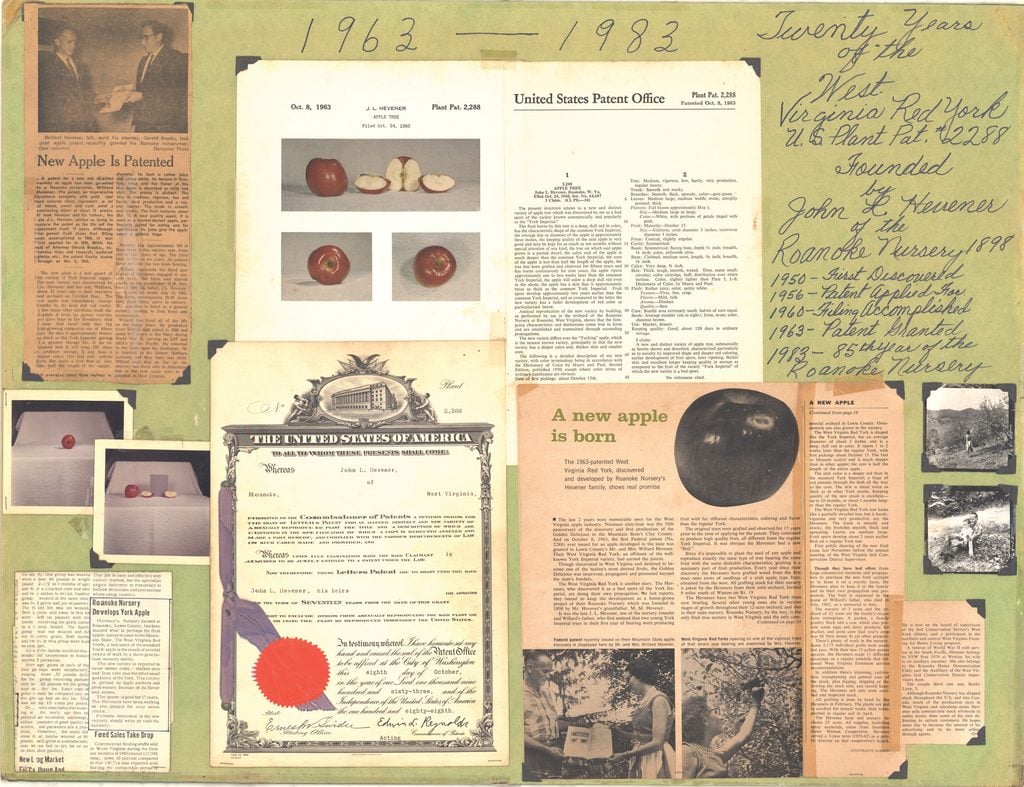
I had never heard of it. She promised to bring me information, and a few days later, Mrs. Hevener returned with a carefully crafted poster. It included a brief history of the apple, the patent certificate, an article from The Cooperative Farmer, and several newspaper clippings. She had preserved these items for decades, and she graciously allowed me to borrow the poster so the park could make copies.
The story it told was remarkable. The Hevener Orchard was established in 1898 by John L. Hevener and later operated by his son Willard, the late husband of Barbara. After World War II, the U.S. Department of Agriculture encouraged nurserymen—people who cultivate plants such as trees and shrubs for profit—to develop and patent new fruit varieties for various commercial and consumer advantages. Small family farms were still common in West Virginia, and the Heveners had a possible new apple.
Around 1945, the Heveners discovered a “bud sport” on one of their York Imperial apple trees, often common on apple trees. The WVU Extension Service described it as a bud mutation. Scientia Horticulturae notes a bud mutation as a “spontaneous mutation that produced fruit with distinct characteristics.” But this one was special enough to earn a federal patent. According to the document, these sweet apples were roughly 3 inches in diameter with a thick yet smooth, waxed skin in a deep red color. Inside, the “satiny white” fruit was firm and juicy with a rich flavor and distinct aroma best used for desserts.
In a state known for the Golden Delicious—arguably West Virginia’s most famous apple, though never patented—and the Grimes Golden, also unpatented, the Red York seems to stand alone. It is the first apple variety from West Virginia to be formally patented. The main reason for this was the passage of the Plant Patent Act of 1930, which made it possible for farmers to patent and protect new variants of fruits, flowers, and vegetation, a tool not available for the Golden Delicious or Grimes Golden.
Although efforts to salvage trees from the original orchard were unsuccessful—time, disease, and age had taken their toll—the story does not end there. The Red York apple may not be commercially available today, but the enterprising orchardist might find the trees at regional nurseries.
A Valley of Stories
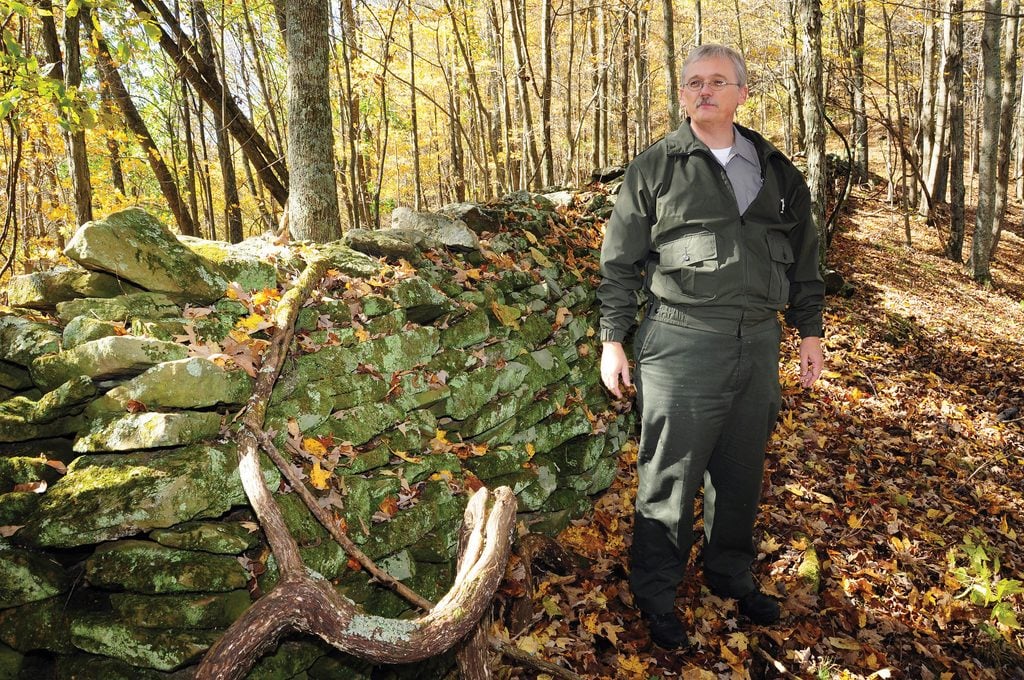
At the same time as we were learning about the Red York, Stonewall Resort State Park was completing its first hiking trail, much of it hand-built by two AmeriCorps volunteer teams. The trail did not pass through the old orchard, but it overlooked the area where the Heveners’ orchard was located.

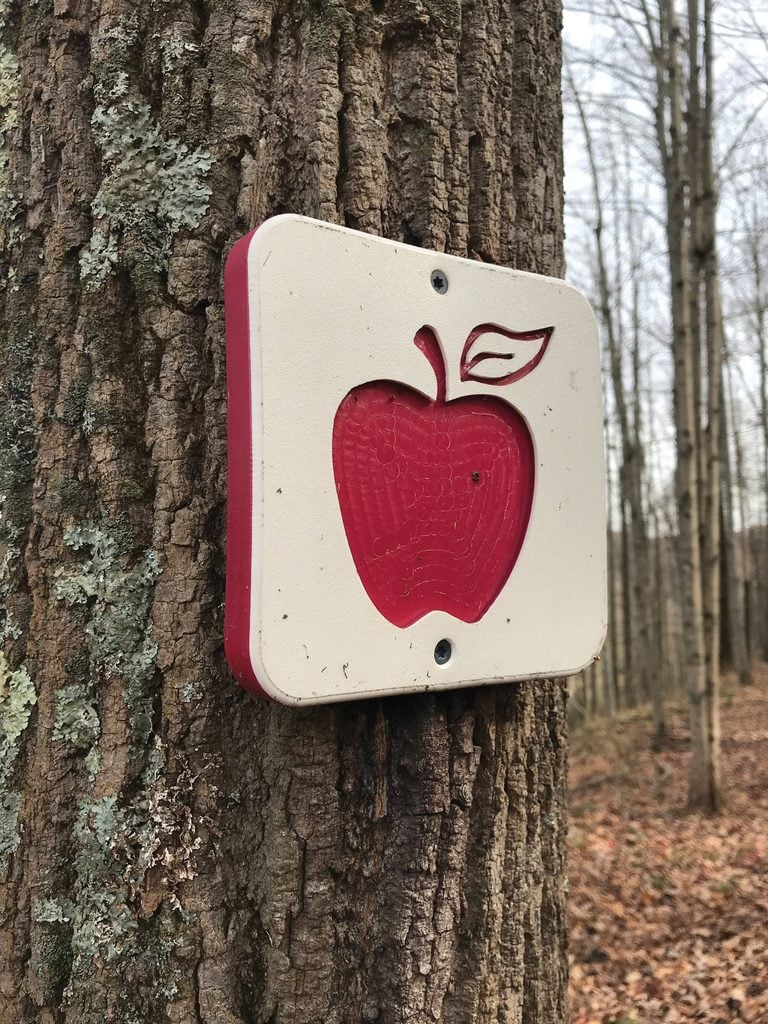
As we discussed names for the new trail, the choice became clear. The story of the Red York apple—and the family who had preserved it—deserved a place in the landscape. Naming the trail the Hevener’s Orchard Trail in their honor felt like the right way to ensure the apple’s legacy would not be forgotten.
Today, copies of Mrs. Hevener’s poster hang in the Stonewall Resort State Park Lodge and the park office—the history of an apple with significance that once grew within the park. The Hevener family’s quiet stewardship, Mrs. Hevener’s willingness to share her memories, and the rediscovery of the patent documents ensured that the Red York apple would not be lost to history. Instead, it has become part of the story of Stonewall Resort State Park—a reminder that even as landscapes change, the heritage rooted in them can endure.
West Virginia’s landscapes are full of stories like this—stories that tie together families, farms, parks, and the land itself. The Red York apple is not just a piece of horticultural history. It is a symbol of the ingenuity of nurserymen, the resilience of rural communities, and the way a memory can preserve what might otherwise be forgotten.
When visitors hike the Hevener’s Orchard Trail overlooking the old orchard site, they walk through a landscape shaped by both natural forces and human hands. They can get a glimpse of the hilltop cemetery where Mrs. Hevener once sat with her coffee and her memories. And they move through a park that continues to honor the people who lived, worked, and cultivated the land long before Stonewall Resort State Park existed.
The West Virginia Red York apple may no longer grow in the Hevener Orchard, but its story remains rooted in a cove along Crooked Run—and in the hearts of those who remember it.
The Apple(s) of Her Eye
The West Virginia Red York apple received its official plant patent in 1963, rooting itself into state history as the first apple to be patented within these mountains. However, it shares a portion of its fame with two other apple varieties close to the hearts of Mountaineers across the region.
Grimes Golden
One of the first apple varieties with West Virginia origins, the Grimes Golden can be traced back to the Brooke County farm of Thomas Grimes in the early 1800s. What was once just one tree—one that bore fruit for over 100 years before falling in 1905—soon grew into a whole orchard and, eventually, widespread fame.
Golden Delicious
Believed to be connected to the Grimes Golden, the Golden Delicious apple was discovered in 1912 by the Mullins family on their farm in Clay County. Amazed by the flavor and quality, Stark Brothers Nurseries purchased the tree and helped introduce it to the world. The Golden Delicious would go on to become the official state fruit of West Virginia.