 By
By 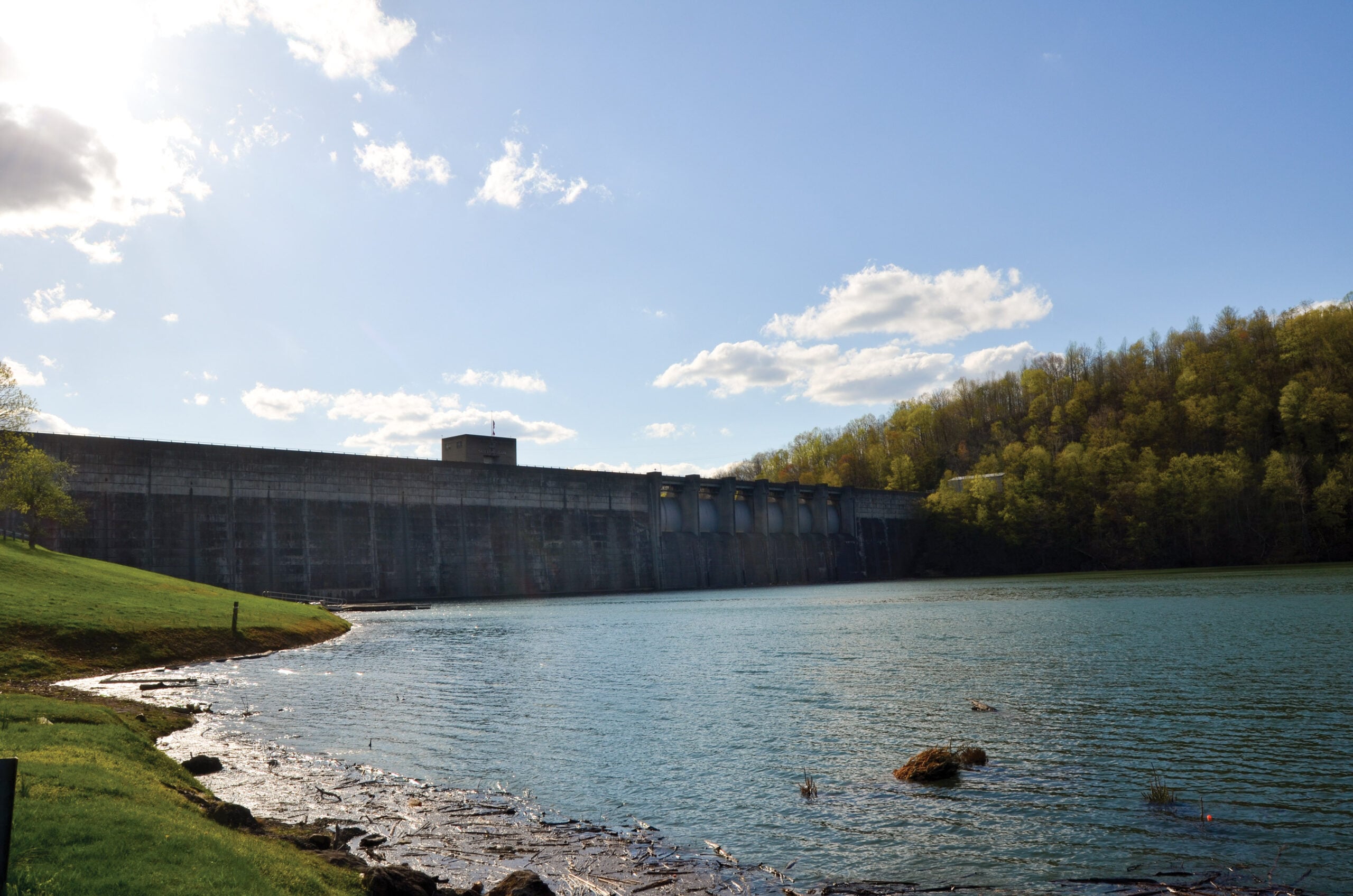
The Sutton Dam area is an all-in-one destination for fishing, floating, hunting, and adventuring.
This story was originally published in the October 2025 issue of Wonderful West Virginia. To subscribe, visit wonderfulwv.com.
Written by Laura Jackson
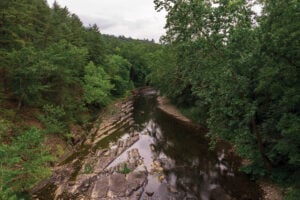
In the heart of Braxton County, a monstrous slab of synthetic rock sits astride the Elk River. This engineering marvel, known as the Sutton Dam, is 210 feet high, 1,178 feet long, and 195 feet wide. Over 500 square miles of watershed lie behind it, draining through the Elk and Holly rivers and into the quiet waters of Sutton Lake. Below the dam, the Elk River flows southwest toward Charleston.
Completed in 1961 as a flood control tool and operated by the U.S. Army Corps of Engineers, the imposing structure serves its purpose well. When heavy rains fall, Sutton Lake fills to spare downstream communities from costly disaster. But the Sutton Dam is more than a collection of facts and figures, and it does more than just hold the Elk River in check. It’s worth a visit, because this mighty manmade mountain has created expansive opportunities for fishing, boating, and hunting.
Cold Water, Hot Action
The area below a dam is known as its tailwaters, and Sutton Dam’s are a great place to find trout, according to Jim Hedrick, fish hatchery program manager with the West Virginia Division of Natural Resources (WVDNR). Hedrick and his team are responsible for the release of the five types anglers will find in the Elk: brown, rainbow, golden rainbow, brook, and tiger trout. Tiger trout are a sterile hybrid, the result of a cross between a female brown trout and a male brook trout. And golden trout are a variety of rainbow trout and the focus of the annual West Virginia Gold Rush, which stocked more than 50,000 golden rainbows in lakes and streams around the state in 2025.
From February to April, the Sutton Dam tailwaters are stocked bi-weekly, with one last session in May. However, anglers don’t have to wait until a stocking day to pull out their tackle.
“I would actually recommend not doing that,” Hedrick says. “They usually don’t bite very well the first day. But from February on, anglers can expect excellent fishing there and have a high probability of being successful.”
The pool beneath Sutton Dam is large, deep, and cold, so trout tend to remain nearby. Some research shows that trout can go long distances, but the first mile of the Elk River below the lake and dam probably offers the best opportunities.
Anglers can thank the Bowden State Fish Hatchery in Elkins for the favorable odds. Nevertheless, Hedrick says most anglers aren’t aware of the effort behind each stocked fish. “It takes a year and a half to culture them, so we babysit the trout. The staff are on night duty, feeding, monitoring, and caring for them. When you’re an angler, it seems pretty simple, like we just go out and throw the fish in the water. But you don’t get to see what happened a year and a half before that.”
Thanks to recent renovations and expansions at the hatchery, anglers can expect even more trout in coming seasons. The WVDNR not only stocks more fish than most states, but it also stocks bigger ones.
Warm Waters, Wild Variety
Trout aren’t the only dam-dwellers. According to WVDNR fisheries biologist Jim Walker, the Sutton Dam tailwaters are a great warm water fishery.
“It’s got largemouth and smallmouth bass,” he says. “There’s a lot of big, beautiful walleye caught there, and large muskies. And of course, panfish and catfish.”
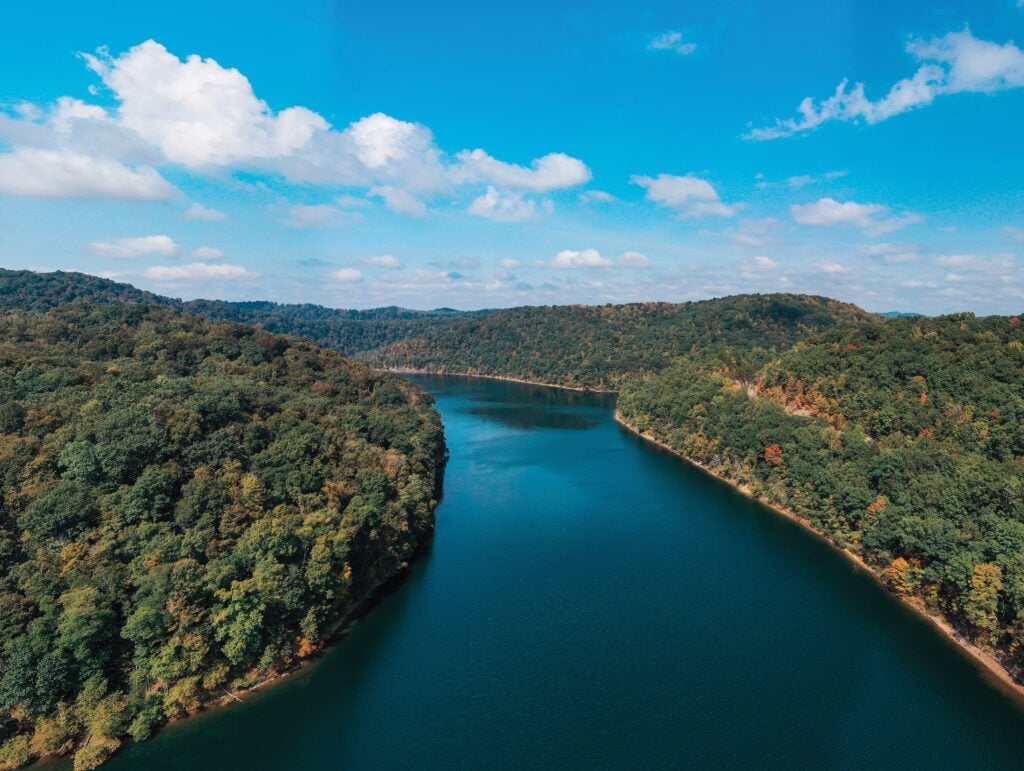
Because Sutton Dam blocks upstream migration, fish naturally congregate at its base, making the area a hotspot for anglers targeting larger species. The WVDNR has also invested in improved access, with boat launches every 10 miles or so along the Elk.
For those with a kayak or small boat, the dam’s launch ramp offers easy water access. A short paddle can turn into an all-day float downstream through one of West Virginia’s most biologically diverse rivers.
“The Elk River has got a huge number of fish species in it, including some endangered fish like the diamond darter,” Walker says.
Occasionally, anglers and biologists encounter a true aquatic oddity: the paddlefish. With a body like a catfish and a rostrum—snout—nearly one-third its length, the paddlefish is a living fossil, surviving since the Cretaceous Period. These filter-feeders, protected by law, sometimes make their way up the Elk from the Kanawha River.
Above the dam, Sutton Lake is a haven for many of the same warm-water species, and hunting grounds for the tournament anglers in their pursuit. And despite the conveniences of four boat launches, two campgrounds, and a full-service marina, visitors will likely find plenty of space.
“Other places can be crowded,” Walker says. “For example, summer at Stonewall Jackson Lake is very, very busy. But Sutton Lake is a little more laid-back. Lots of locals go there.”
In winter, when the lake is drawn down, crews build fish habitats using recycled Christmas trees. These tiny underwater forests become fish attractors when spring arrives.
Into the Hills
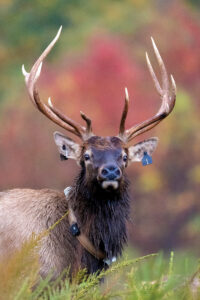
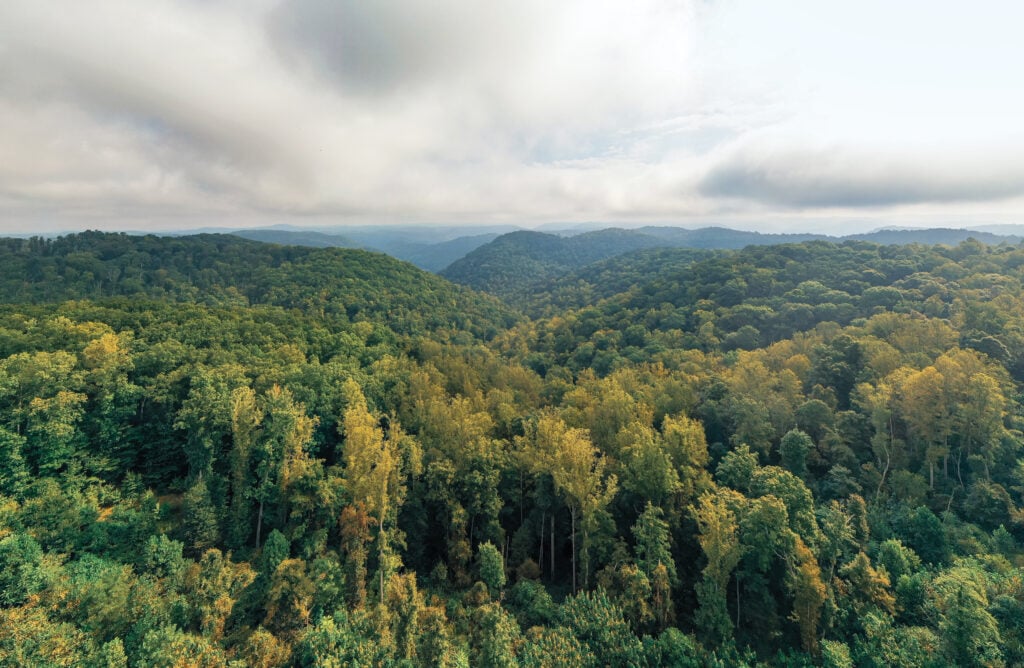
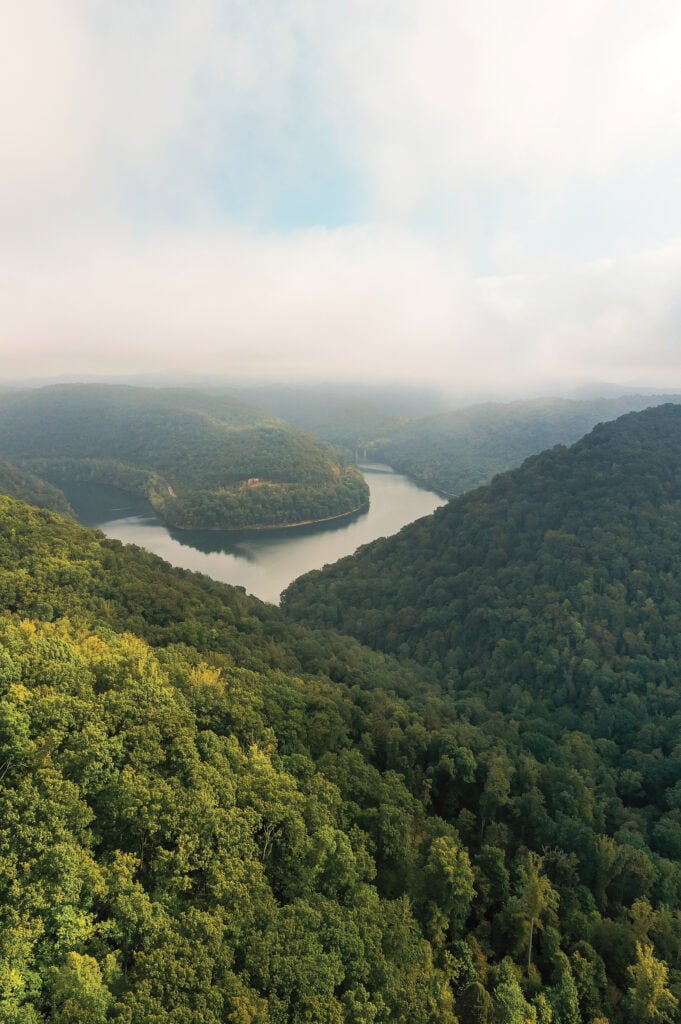
While anglers can stay busy at the Sutton Dam, there’s a drier way to spend a day nearby. Kaylee Pollander, a wildlife biologist with the WVDNR, says the Elk River Wildlife Management Area (WMA) offers 19,600 acres of terrain for land-based recreation. Extending from Sutton Lake’s southern shoreline deep into the forested hills, this public land is a patchwork of mature timber, regenerating forest, and open meadows.
It’s a hunter’s dream come true. “It’s one of our most accessible WMAs,” says Pollander. “So many county roads crisscross it. You can pull off and find a good spot without much effort. We don’t have that in a lot of other places in the district.”
Wildlife thrives at the WMA, in large part because of the ongoing efforts of the WVDNR. For the past 15 years, the WVDNR has practiced active timber management in the area, at times offering timber sales. The process of thinning out the forest gives wildlife biologists like Pollander an opportunity to create a diversity of habitats.
The area has long consisted of old, mature timber. Cutting, however, creates new expanses of young forest or, alternatively, permanent openings in the canopy that offer home to a suite of wildlife species.
Admittedly, the first year after a timber cut often looks desolate and barren, but the land is very much alive. Soon enough, lush, green vegetation appears, though it remains small and low, at roughly knee-height, for some time.
“But by year five, it’s going to be a wall of vegetation,” Pollander says. “Only wildlife will be able to get into it. It’s going to be over head high.” As the growing vegetation begins to block out the light, the smaller, herbaceous growth in the understory dies back and gives way to a thick density of saplings. It may be another 40 years before the timber is mature again.
“It adds something new that the general landscape around there doesn’t have,” she says. “We’re regenerating forests, especially now that we’ve got some timber cuts that are close to 20 years old, and it adds a level of diversity and habitat that doesn’t exist on the landscape otherwise.”
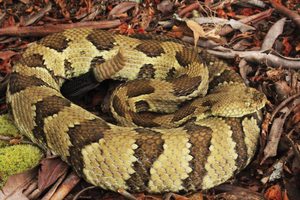
While deer are ubiquitous and flourish most anywhere, other species thrive in the ecosystems created by timber cutting. “Those cuts create huge thickets of blackberries for 10 years afterwards,” Pollander says. “It’s perfect for black bears. We’re also creating nesting habitat for turkey. The cover protects hens on their nests. We’re trying to create habitat that’s good for poults—baby turkeys—as well, because that’s really the linchpin of producing the next generation.”
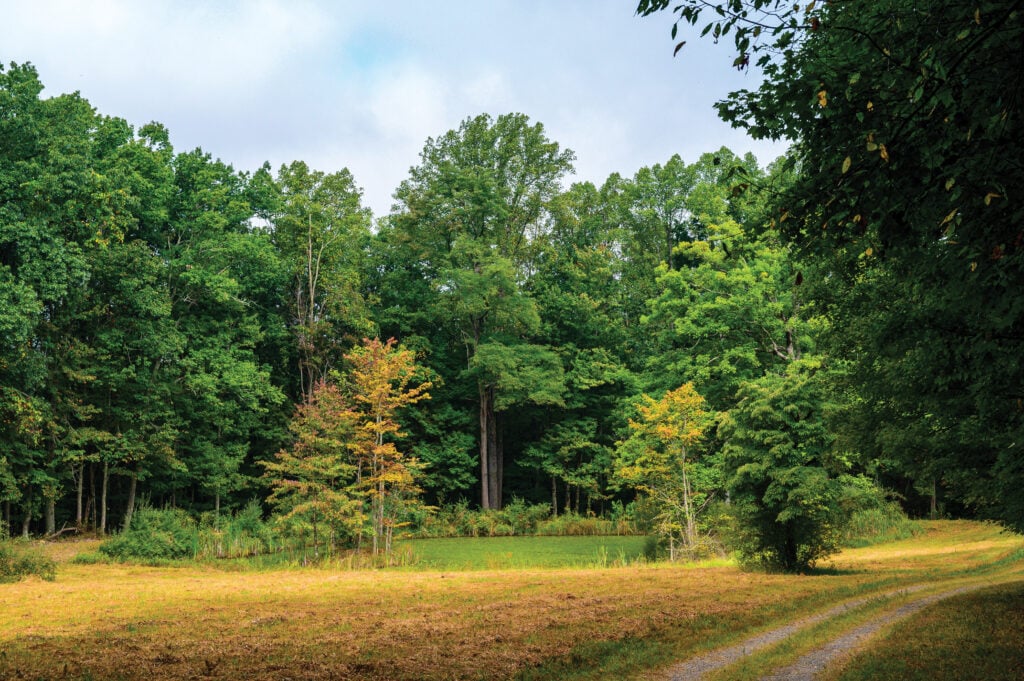
Wildlife watchers will have a good chance of spotting animals near the shoreline, like mink, otter, raccoon, and beaver.
The WMA also hosts two public shooting ranges, one near Flatwoods and another off Centralia Road, open 365 days a year. Visitors can use the WVDNR interactive online maps to scout terrain, find parking areas, and explore recent imagery of the landscape. Pollander recommends this often-overlooked tool, accessible via the WVDNR website or at mapwv.gov/huntfish. It’s helpful for trip planning, whether the goal is game or something tamer.
“We focus on wildlife-related recreation,” Pollander says. “But you can absolutely go for a walk and appreciate the land management or the wildlife, or just get some exercise.”
Warm Water Weirdo: The Prehistoric Paddlefish
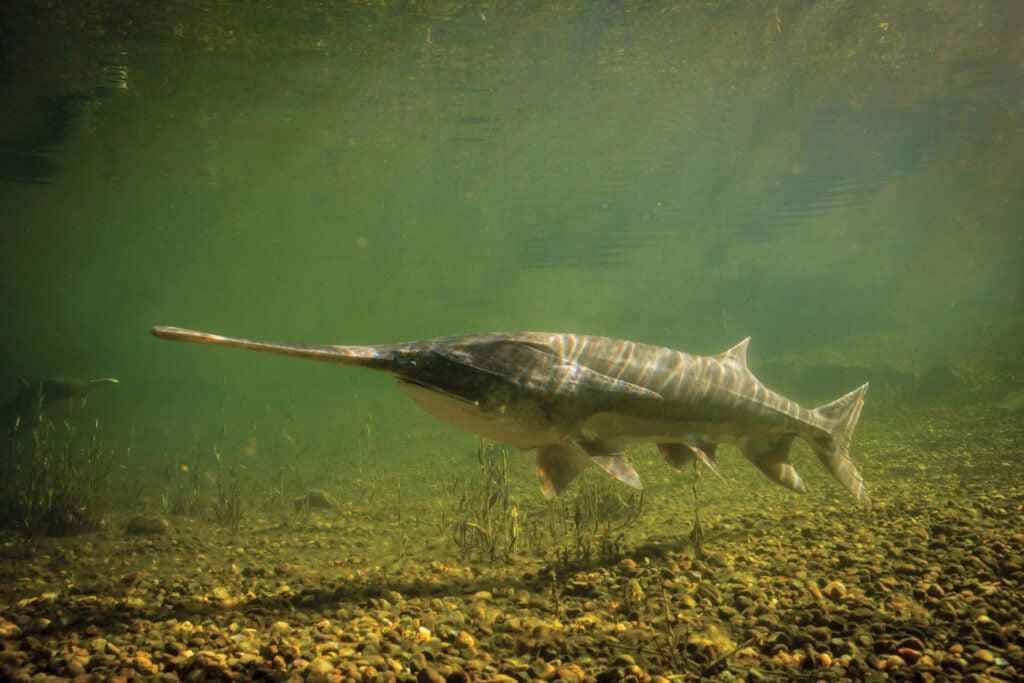
- Although they are rare, paddlefish may swim up the Elk from the Kanawha River and are protected under state and federal law.
- Fossils date back to the early Cretaceous Period, 125 million years ago. Today’s paddlefish is the only species remaining.
- They’re related to sturgeons and can live up to 30 years.
- The paddlefish’s snout, called a rostrum, is one-third of its body length and is covered in sensory receptors for finding food.
- Paddlefish are filter feeders. Like whales and whale sharks, they swim with open mouths and collect plankton.
 By
By 
 By
By