 By
By 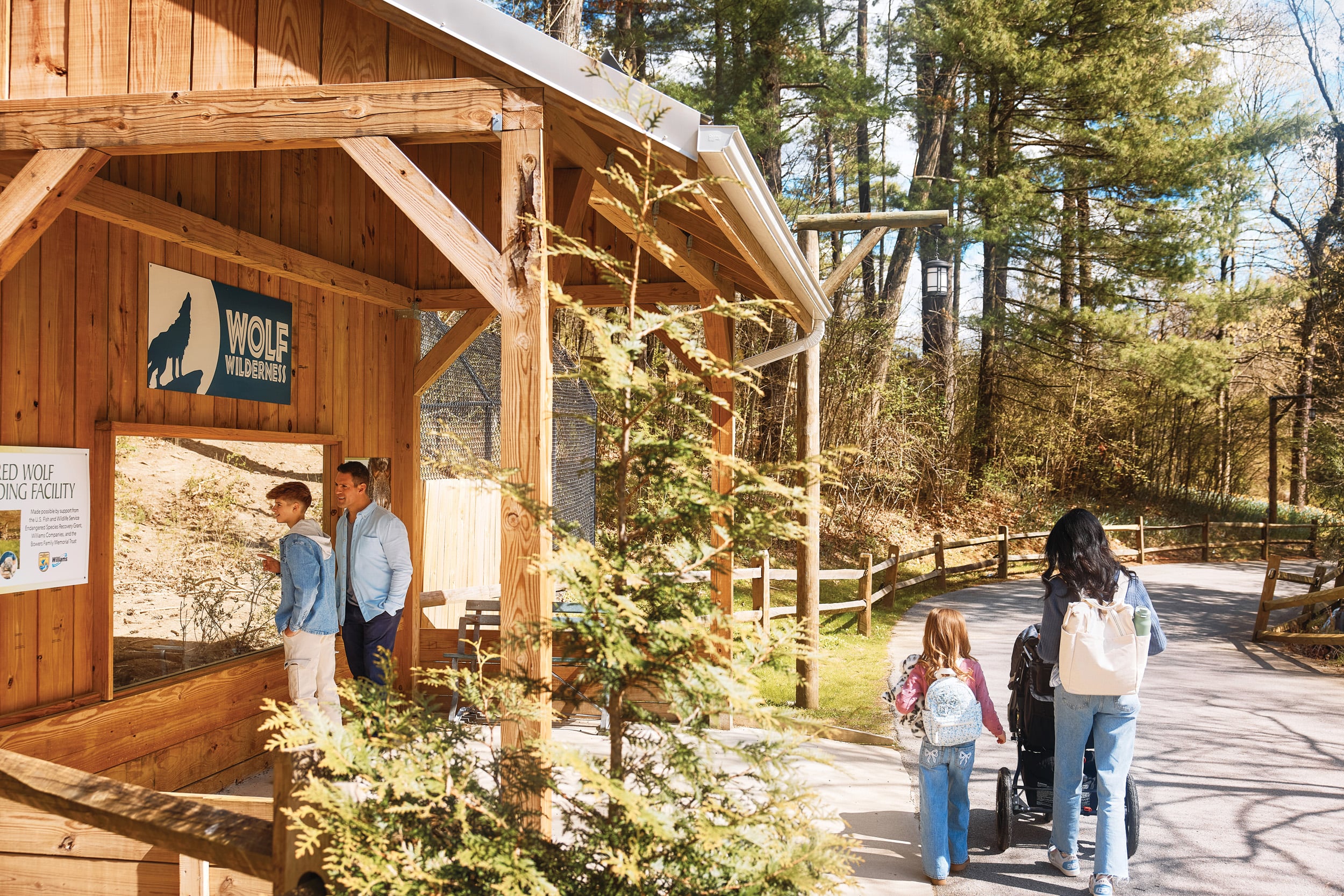
The Oglebay Good Zoo is working to bring back the most endangered wolf on the planet.
This story was originally published in the April/May 2026 issue of Wonderful West Virginia.
Subscribe here.
Written by Mikenna Pierotti
This is a story about edges. About transitions. About liminal spaces full of potential and challenge. And it’s apt that the creature inhabiting this story is also a creature of edges. In its natural habitat, you’d find it sliding through the grass at dusk, moving along the borders of forest and field as day lets go into night. If you were lucky enough to spot one of these rare wild spirits shifting in and out of tree shadow as dark descended—a ruddy coat, ears a bit too large for its head, a sleek and graceful body at once recognizable as canine—you might mistake it for a coyote. But with fewer than 30 left in the wild, the likelihood of spotting one of these native edge dwellers is slim at best.
Today, the red wolf, Canis rufus, is mostly found in captivity, in places like Oglebay Good Zoo. And even there, in an enclosure, you might not see them. Red wolves are masters of the disappearing act. “These guys, believe me, know you’re there before you know they’re there,” says Oglebay Good Zoo Curator of Animals Mindi White. “So they’re gonna stay away.”
That’s just the nature of a red wolf. Be cautious. Observe. Always know your escape route. It served them well for multiple millennia, when their territory stretched across the Eastern and South Central United States. “They used to be an apex predator. They went all the way from New York down to Texas at one point,” White says. “And when you say ‘an apex predator’ to the normal person, that’s kind of scary. But you have to realize what that definition is.”
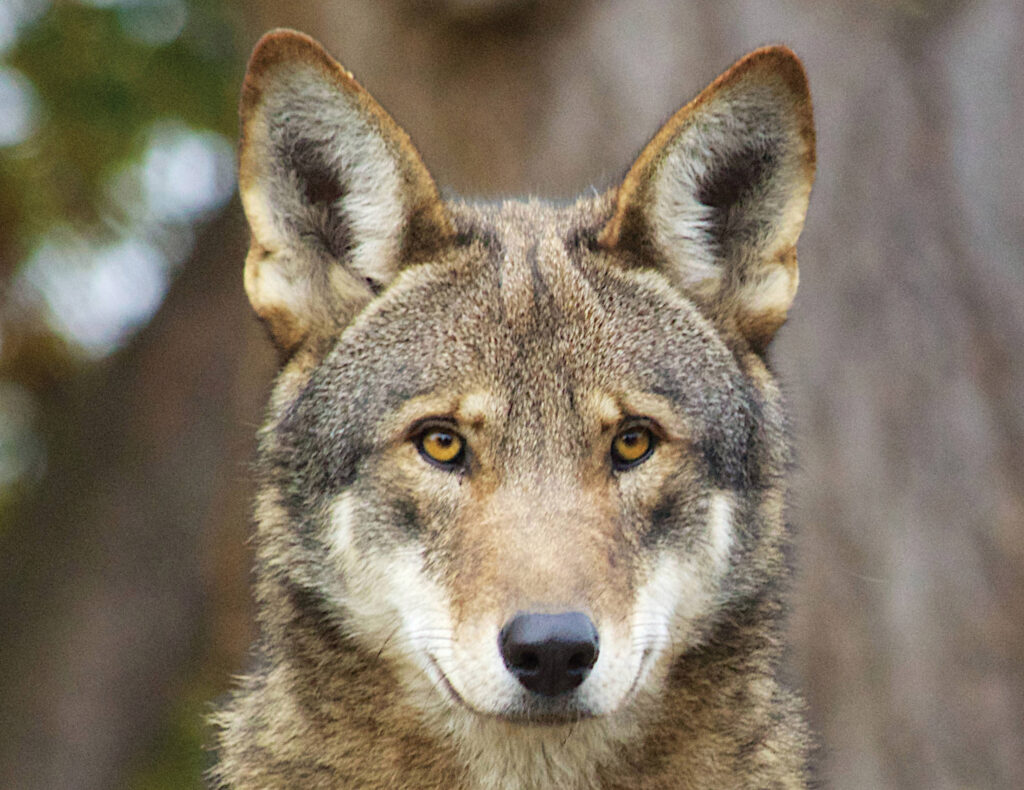
An apex predator is, simply, at the top. “They are at the top of the food chain,” White stresses. The red wolf, in its heyday, inhabited the peak of the food web in all of its habitats, traveling sometimes 20 miles per day to hunt and consuming two to five pounds of flesh. But that’s a big responsibility. It kept the balance below its place at the top by regulating prey populations and even by influencing how those populations moved across the landscape. Everything that happened to the wolf rippled outward. It was an ecosystem architect.
Deer, rabbits, raccoons, and rodents would have stripped an ecosystem bare if they hadn’t been red wolves’ preferred dinner. Disease would have spread. Potentially irreversible damage could have occurred if another apex predator hadn’t stepped up.
Well, one did: us.
Still, some passionate groups of humans—humans like those at the Oglebay Good Zoo—have been working for decades to bring the red wolf back. Hopes are high. Ambitions are, too. But the road is long, and the red wolf remains on the edge. Whether it moves into safety someday is entirely up to us.
Back From the Brink
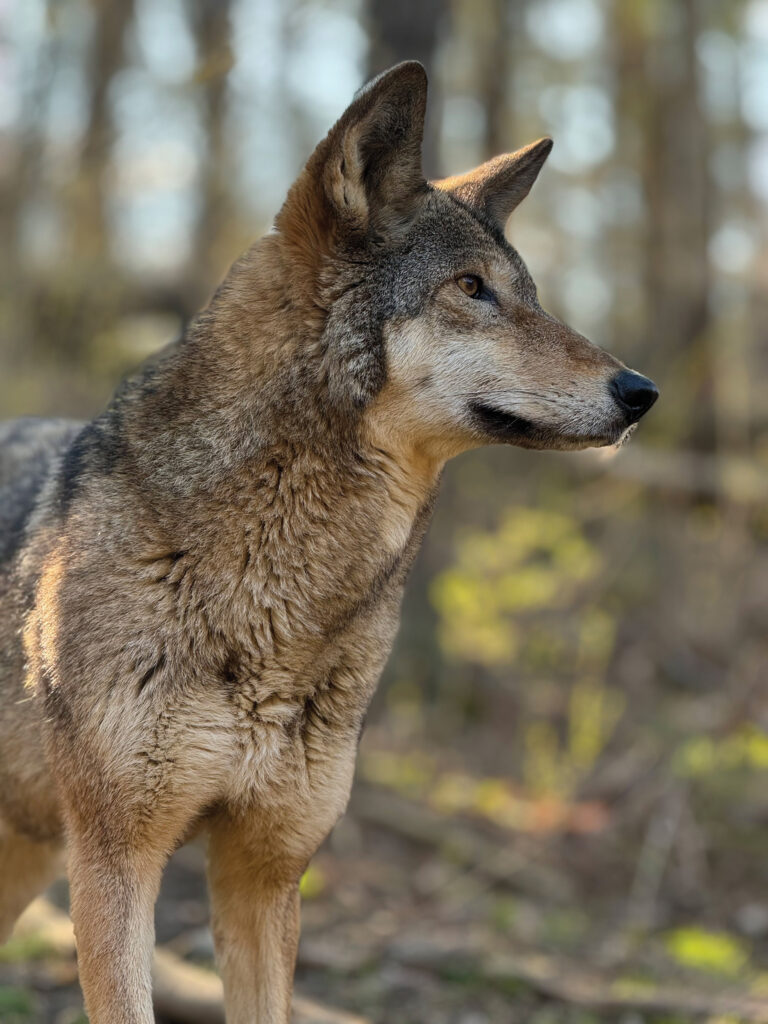
The knife’s edge on which this predator is balancing was forged in fear. “When people think of a wolf, they think of a big bad wolf, right?” White says. “They think it’s going to come in, mess up our livestock, mess up the land, and change everything.”
Over hundreds of years of interaction with people, the red wolf population slowly dwindled. Farms, roads, urban sprawl, fearful humans with guns—it all added up. Until, in the 1970s, the once-reigning alpha of the forest was down to just 14 individuals confined to areas of Texas and Louisiana. “There was no way that 14 individuals would’ve been able to survive on their own,” White says. “So they finally decided to start a red wolf breeding program—a red wolf recovery program.”
The U.S. Fish and Wildlife Service stepped in. Starting in 1973, the USFWS began gathering what was left of the wolf packs and bringing them into the care of humans at select zoos that were outfitted to protect and grow the population. And it was just in time: In 1980, the species was declared extinct in the wild.
Four years later, in 1984, a captive breeding program known as the Red Wolf Species Survival Plan was approved by the Association of Zoos and Aquariums. Its mission was to oversee the efforts to maintain a healthy and genetically viable, diverse stock within human facilities. As breeding efforts took off and the captive population grew, reintroduction started in Eastern North Carolina.
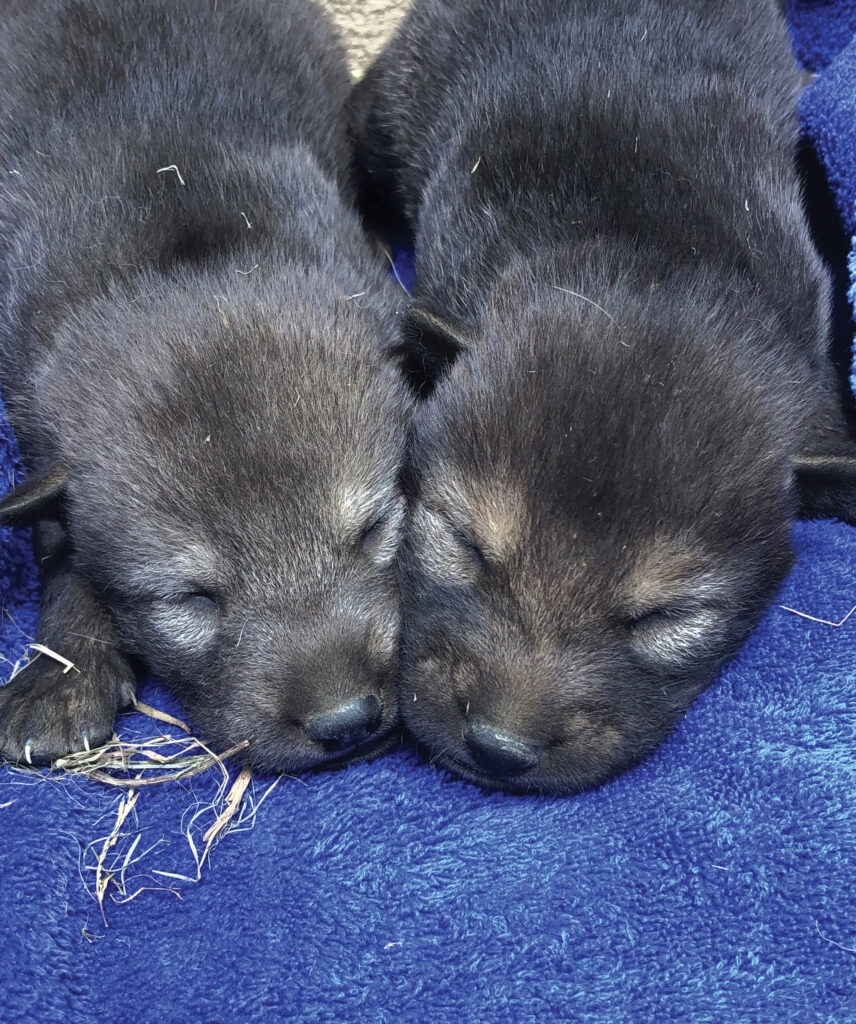
It was about this time, in 1990, that Oglebay Good Zoo first became involved in this vital process, providing not only space but also expertise and care that contributed to the national effort. “We’ve had 25 pups since 1990 here at the zoo,” White says. Not only did the zoo help breed and raise pups for decades, but it also acted as an essential sanctuary to hold individual animals that might, at any time, be called to other facilities to pair up with good genetic matches or even be released into the wild. It’s not as flashy as being a constant source of fluffy little wolf pups, but it’s quietly crucial. “You might not have a breeding recommendation, so you might just be what’s called a holder. You have the space which is needed for these species as we’re working to try to develop more genetic diversity.”
Because of Oglebay and the roughly 48 other participating facilities in what is now called the Red Wolf SAFE—Saving Animals From Extinction—program, there are now, as of February 2026, 280 captive red wolves and an estimated 27 to 28 living and breeding in the wild.
Still Holding On
The keepers and staff at Oglebay have a deep love for these rare creatures. They’re proud to be part of a national network of zoos, farmers, pilots, veterinarians, wildlife biologists, and everyday citizens—regular people willing to lend land, time, expertise, or even a seat in a small aircraft if it means moving a wolf safely to its next home. As the program has expanded, so has the circle of those toiling behind the scenes to give the species another chance. “It’s a lot of people really putting a lot of effort and passion into this,” White says. And it’s still growing. “We’re trying to make sure we have enough to keep the wild populated.”
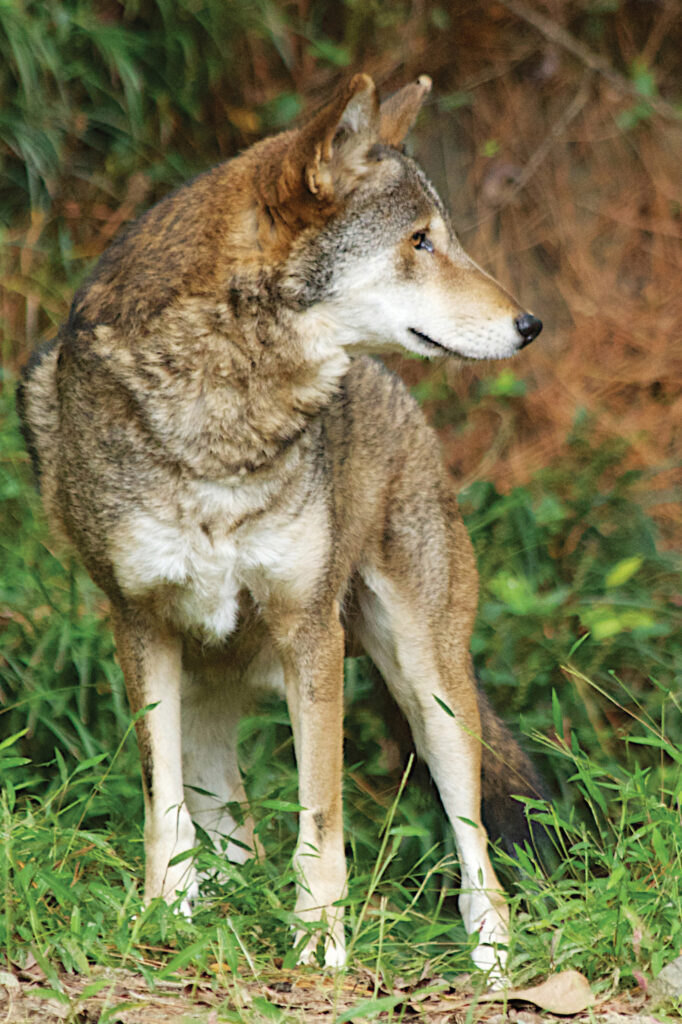
In 2022, thanks to grants from the Conservation Centers for Species Survival as well as the Helen J. Prince Foundation and Williams, a clean energy infrastructure company, Oglebay created two new habitats for red wolves. One is a breeding exhibit, and one is a holding exhibit. “You need space for everything. You might need to be able to house a pair of siblings or your pairs that aren’t breeding. All these rules are extremely important, because you never know when the genetics are going to shift and when certain lines that may not be lined up to be breeders might be breeders next year,” White says.
Unlike other parts of the zoo and animals you might encounter there, however, the red wolves are treated differently. Keepers limit contact. They don’t name them. They keep their distance. “They need to keep a healthy respect for humans,” White says. “So we have to keep a healthy respect for space between us and them at all times.”
They provide the same care to the wolves as to any other animal at the facility, but with these animals, two extremely important factors must take precedence—breeding and release. “You have to look at these guys as if at any point they need to go back to the wild,” White says.
Oglebay Good Zoo welcomed two new pups—the first born since 2007—to its little pack in May 2023. White says the goal nationally is to build the population slowly and carefully. “So we’re trying to get that capacity up, because the better the capacity is and the more numbers we have, the better we are at keeping those genetics diverse. Their ultimate goal is to try to build it up to about 400 wolves,” She says. “But that’s gonna take quite some time to get there. It’s going to take years to get it built up to the way it needs to be.”
Meanwhile, our recovering edge dweller waits patiently as the humans around it band together to make the world safe for its return. Somewhere among the unnamed wolves at Oglebay, the future of the species may already be born—a keystone pup sitting in the long tree shadows of its temporary enclosure, golden eyes scanning a swiftly darkening sky, waiting for its moment to change everything.

 By
By