 By
By 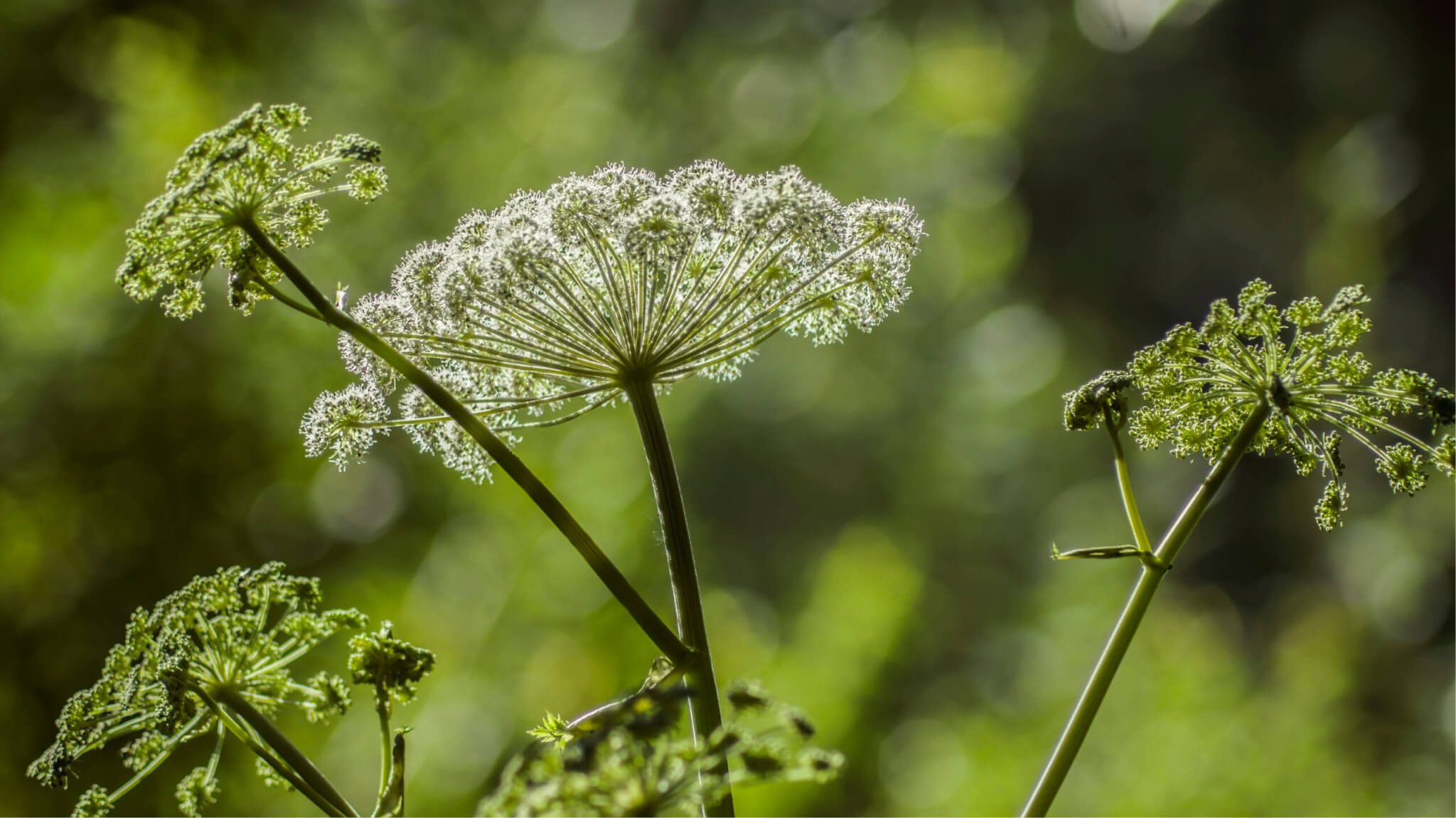
How on invasive species arrived and spread like wildfire—and what you can do about it.
Name a plant that’s related to common kitchen ingredients such as carrots, parsley, and dill, is lethally toxic and spreading throughout Appalachia, and is credited with killing one of the world’s great minds—the ancient Greek philosopher known as the father of Western philosophy, Socrates. If you guessed Conium maculatum L., or poison hemlock, you are correct.
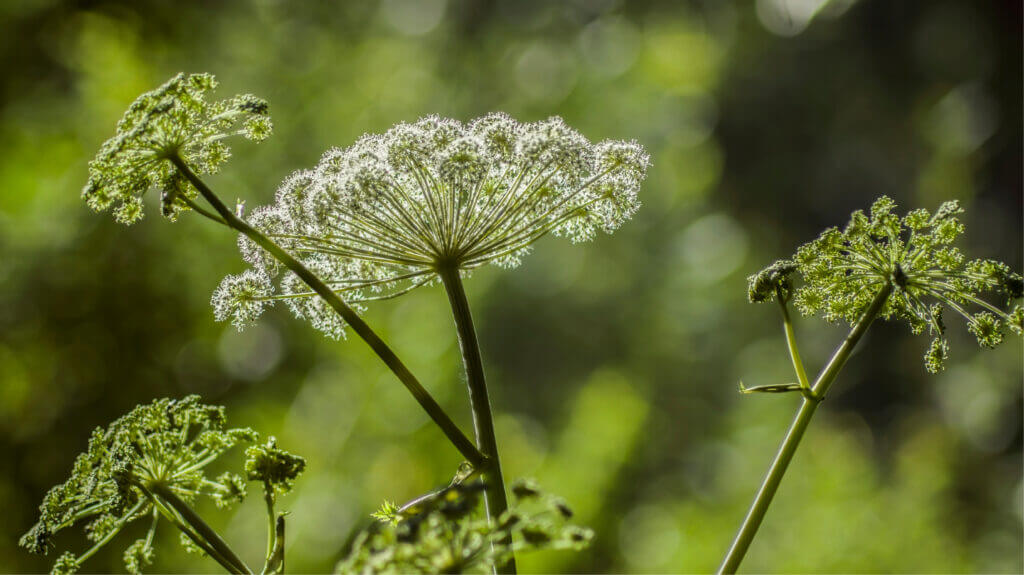
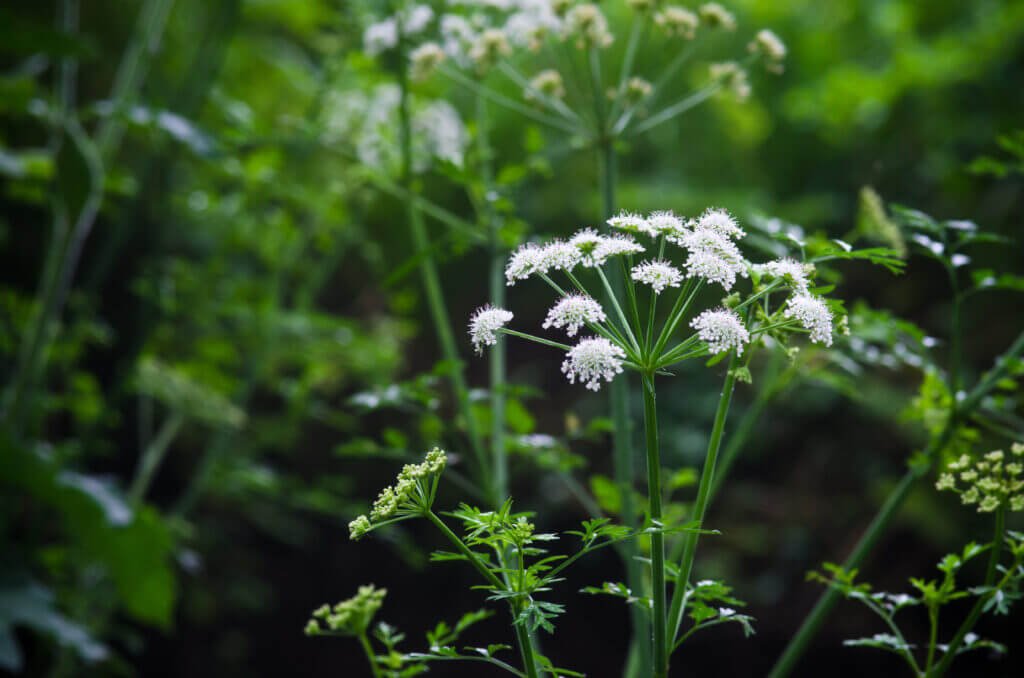
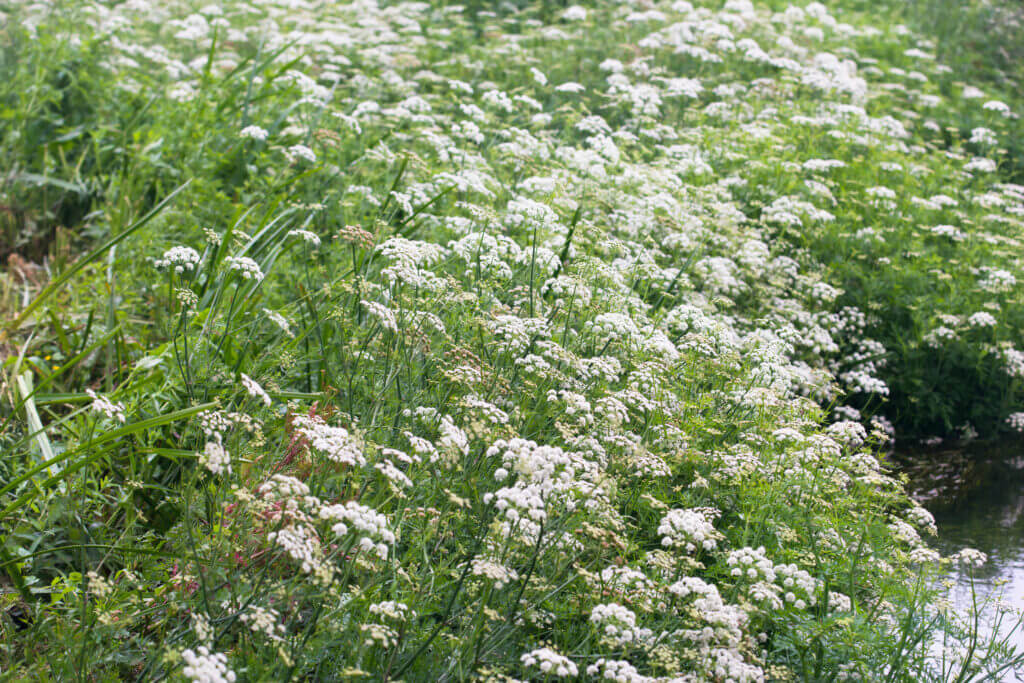
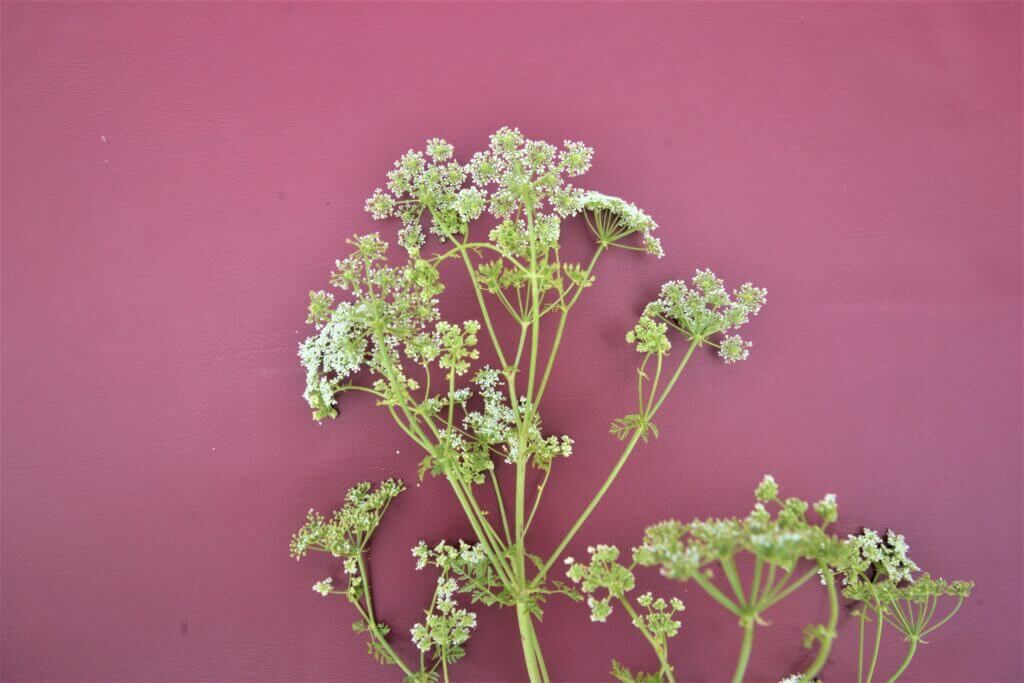
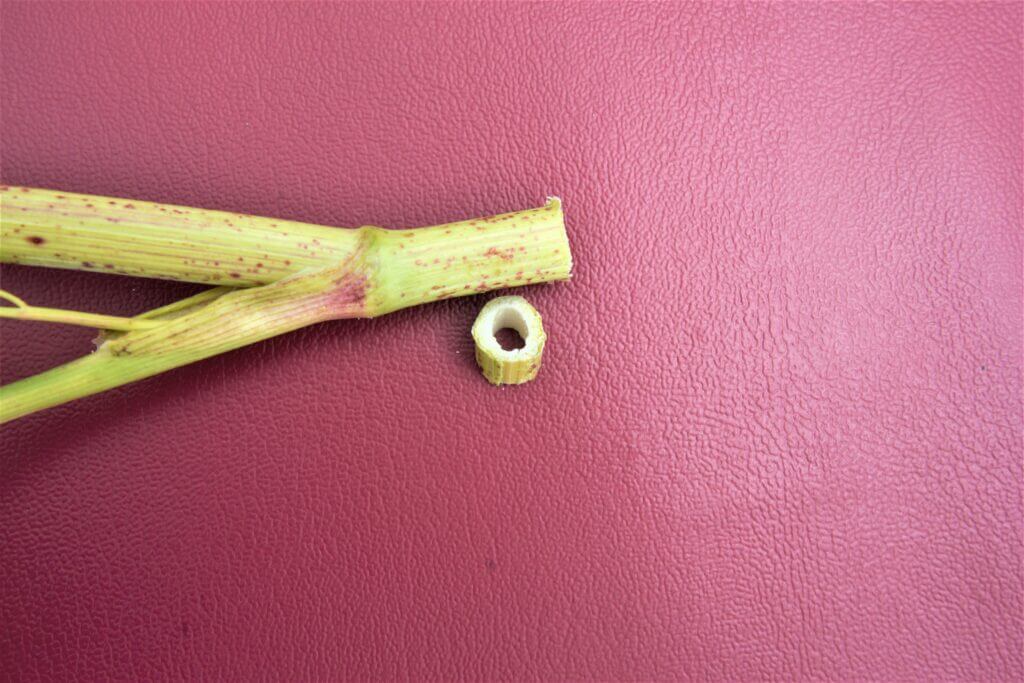
Poison hemlock even warns passersby to stay away. The hairless, hollow, purple-streaked stems grow to intimidating heights of up to 10 feet. Before it flowers, the foliage looks a lot like its carrot and parsley cousins—feathery, fern-like, bright green, and distinctly divided. But unlike those tasty cousins, poison hemlock’s leaves offer a jarringly unpleasant odor when crushed.
The plant produces small, white flowers, arranged in large, umbrella-like clusters called umbels. The umbels can reach up to 6 inches in diameter and are made up of hundreds of tiny flowers blooming throughout late spring and early summer. Its dainty yet showy umbels probably helped the plant achieve invasive status in North America, according to one West Virginia University Extension expert.
An Origin Theory
It’s widely thought that poison hemlock was introduced to North America as a garden plant in the early 1800s. “It’s likely that it was admired for its discernable looking blooms similar to garden-favorite Queen Anne’s lace,” says Rakesh Chandran, professor of weed science and extension specialist with WVU Extension. “Perhaps someone planted it for those appealing blooms and mistakenly thought it could be easily handled or controlled. Instead, it escaped cultivation and, globally, has turned out to be a very toxic plant with a very rapid spread. Whoever did plant it probably didn’t understand the attributes of this specific plant.”
Chandran says poison hemlock is a significant threat to residents and livestock and is now commonly found throughout the region along roadsides, in fields, and near waterways.
“There are certain parts of the state where you can find pastures totally taken over by the weed,” Chandran said. “I’ve seen this plant grow prolifically, and we get a lot of calls about it, especially from the Eastern Panhandle. It’s also prevalent in wastelands and along highway medians. Just drive along Interstate 79 north from Morgantown, and you can see it growing profusely.”
The plant’s leaves, stems, seeds, and roots all contain the toxic alkaloids coniine and gamma-coniceine, according to the U.S. Department of Agriculture. Young leaves unfurled in the early spring are the most toxic, and most livestock grazing in pastures have the sense to stay away from it. Consuming only 6 to 8 leaves can prove deadly in humans.
“Livestock have a natural instinct to not feed on them,” Chandran says, “but accidents do happen, especially when desirable forage is limited in the fields.”
The plant is not equally toxic across all species, though. Sheep are the most vulnerable, but it still only takes 8 to 10 pounds of fresh plant material to fatally poison a 1,600-pound cow. Humans exposed through direct contact with the skin or inhalation of pollen can experience significant symptoms ranging from vomiting to respiratory failure and even death.
Symptoms begin with an hour of exposure in most livestock species, and the USDA says death from significant exposure can come as quickly as 2 to 3 hours. And if the plant doesn’t kill, it can still do significant damage to unborn livestock if females ingest non-lethal doses of it during specific windows of the gestational period.
Management Options
So what’s a landowner with acreage to do about a plant that you shouldn’t even touch? Chandran and other agriculture experts around the state are actively educating the public about management options.
He says there are basically four options: cultural control, mechanical control, biological control, and chemical control.
Cultural control includes preventive management, which, in theory, should leave little to no room in a defined space for this invasive species. It includes supporting the growth of desirable forages that can shade out undesirable weeds, maintaining proper rotational grazing if fields are home to livestock, and monitoring the pH of the soil. Cutting hay fields at the proper height and maintaining good fertility levels in the fields can also help support the growth of desirable species.
“Mother Nature likes to keep soil covered,” Chandran says. “If you don’t support good, desirable species, weeds like poison hemlock tend to take their place.”
If prevention is unsuccessful or futile, Chandran says landowners are forced to choose one of the other three management options, only two of which are viable.
Mechanical control involves cutting back the plants or removing them by hand or with equipment, which presents exposure challenges. Chemical control includes the use of herbicides that can selectively kill it. Unfortunately, biological control, which calls for introducing another living organism with an appetite for a plant to an area where its eradication is the goal, isn’t an option with poison hemlock. There is only one insect known to feed on the plant—the hemlock moth—but its feeding behavior isn’t effective enough to manage large populations of this weed.
“Typically, if I see more than 50 to 60% of an area, a pasture or a field, that’s been taken over by weeds of this type, it may be better to apply a non-selective herbicide to renovate the field,” Chandran says. “When present in lower numbers, maybe 20 to 30%, it really would be a judgment call, and using selective herbicides may be a viable option.”
The timing of chemical management is also important, he says. Poison hemlock is a biennial plant, which means it takes two years to complete its life cycle. The first year’s growth is vegetative. In its second year, it blooms and disperses seeds. Treating a poison hemlock invasion with herbicides will be more successful during the plant’s first-year growth and applying herbicide only when the daily temperature hovers around 60 degrees. Usually this can be accomplished in late fall or early spring.
Once the plant reaches its second year and its flowers bloom and seeds develop, it’s too late. Even with a late herbicide application, the seeds produced can remain viable and stay dormant in the soil for 6 to 10 years, sprouting in subsequent years when conditions are right.
What To Do if You Get Too Close
Anyone working outside where exposure to poison hemlock is possible should know what to do if it happens.
“You want to do everything you can to avoid any type of skin contact,” Chandran says. “If plants are present in small numbers and you plan to mechanically remove them by hand, be sure to wear gloves and a long-sleeve shirt. You might even consider wearing a dust mask to prevent any type of inhalation or accidental ingestion. And even if you’re using a machine like a weed eater, there are still exposure risks with the sap that these plants make.”
If you take precautions and still come into contact with the sap from the plant, wash your hands with soap and water as soon as possible. “It’s not like poison ivy where the oils can be quickly absorbed by the skin,” Chandran says. “In small quantities, it can be tolerated as long as it’s washed very well and quickly.”
If you suspect poison hemlock exposure and experience nausea, vomiting, or difficulty breathing, you should seek medical attention.
For gardeners who spot poison hemlock infiltrating their rows and crops, Chandran says there is no cause for concern in terms of cross-contamination. “Even if it’s growing in the same vicinity as food, there is no chance of the toxic alkaloids getting into the vegetables,” he says. “Poisoning from poison hemlock can’t happen through soil or water.”
In addition, any Mountain State resident who suspects they may have poison hemlock on their property can call Chandran or a local county WVU Extension Service office for positive identification, herbicide recommendations, and help with management planning.

 By
By