 By
By 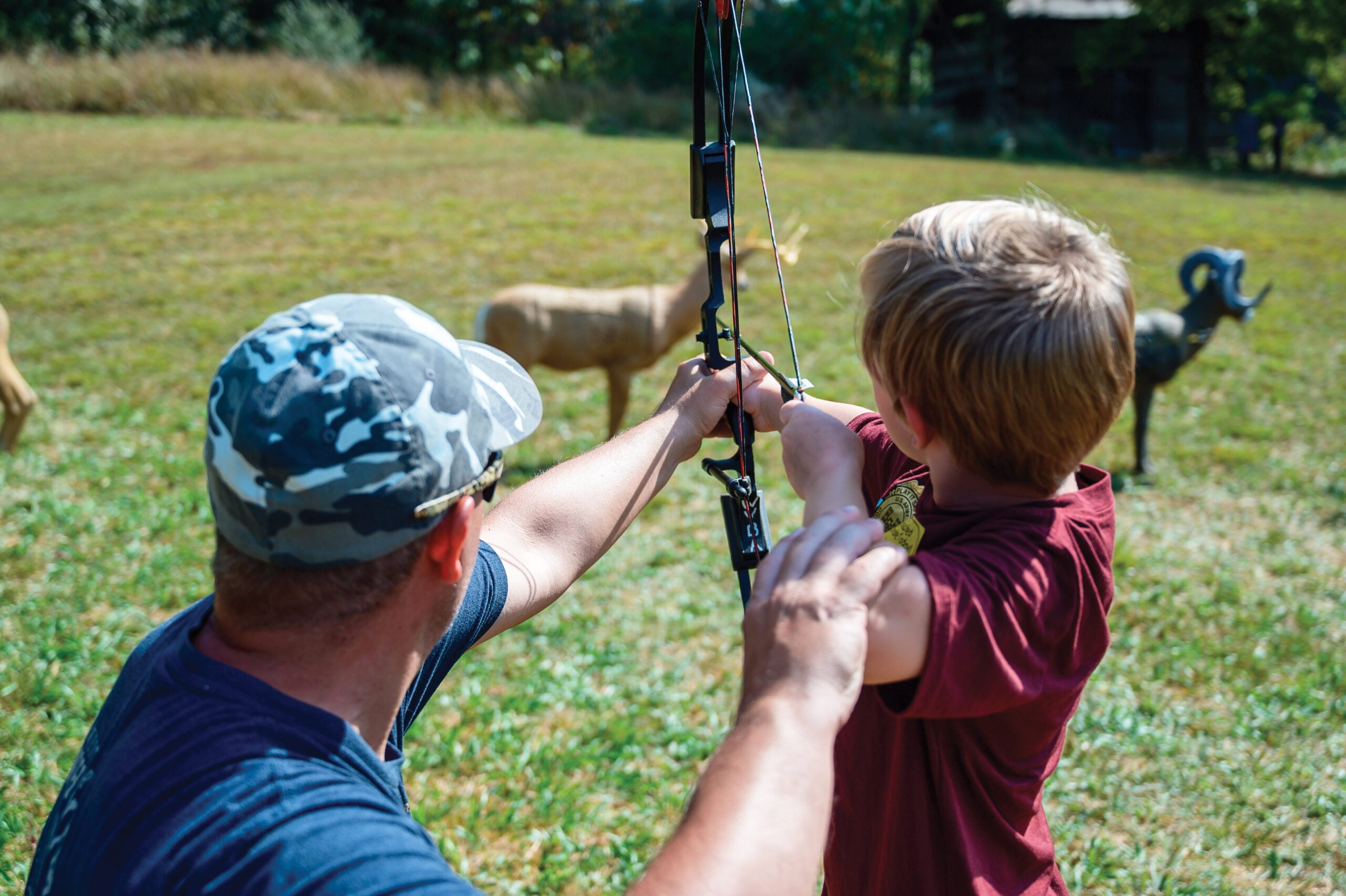
West Virginia is celebrating National Hunting and Fishing Day at Stonewall Resort State Park.
This story was originally published in the September 2025 issue of Wonderful West Virginia. To subscribe, visit wonderfulwv.com.
Written by Mason Jack
Photos Courtesy of West Virginia Department of Commerce
On a cool Saturday morning in early September, something comes alive in the hills of Lewis County. Just off the lodge road at Stonewall Resort State Park, tents are going up, archery targets are being dusted off, and kids are tugging their parents toward fishing rods, game calls, and the unmistakable buzz of a premier event. This is National Hunting and Fishing Day in West Virginia. And at Stonewall Resort, it feels less like an event and more like a homecoming.
National Hunting and Fishing Day has been around since 1971, when Congress formally set aside a Saturday in September to recognize the hunters, anglers, and outdoor enthusiasts who fund most of the country’s conservation efforts. Through licenses, permits, and excise taxes on gear, these folks have helped restore fish populations, conserve public lands, and protect entire ecosystems.
But this day isn’t about patting ourselves on the back. As Chris Scraggs, coordinator for the event, puts it, “It’s a chance for someone who’s never cast a line or held a bow to try it for the first time. Maybe it sparks something—a lifelong love of the outdoors. Or maybe it just gives them a new respect for the land.”
The point is that anyone can show up. And everyone walks away with something. Maybe it’s a new skill. Maybe it’s a better understanding of conservation. Or maybe it’s a full belly and a great story to tell on Monday.
At Home at Stonewall
Stonewall Resort State Park isn’t just scenic—it’s spacious, built for gatherings. With its 2,600-acre lake, tucked-away lodging, and hardwood-forest shoreline, it’s the kind of place that makes you lower your voice without realizing it. But beyond the aesthetics, it makes logistical sense, too. “We’re only three miles off I-79, and the resort offers the space, the lake, and the flexibility to pull off an event of this scale,” says Brennon O’Sullivan, the park superintendent.
The event draws more than 1,500 attendees in a single day, and according to Scraggs, it takes nearly 11 months of planning. “The Monday after it ends, we’re already planning for the next year,” he says. A committee of about 12 people from various West Virginia Division of Natural Resources (WVDNR) sections meets regularly, recruits vendors, coordinates logistics, and brainstorms new features. “We never stop building on it,” he says.
This year’s celebration, scheduled for Saturday, September 6, will be the second since the event returned to Stonewall after a few years away. Scraggs calls it a full-circle moment: “When we heard it was coming back, we were thrilled. And clearly, so was the community.”
The event is one that feels rooted in West Virginia, tied to its history and culture. For many families, it’s become an annual tradition, a mark on the calendar as familiar as the first frost or the last day of school.
A Chance to Learn
If there’s a heartbeat to the day, it’s the Outdoor Youth Challenge. Designed to teach, engage, and inspire, it’s a sprawling, multi-station program where kids can try everything from .22 rifle shooting to wildlife identification. “We rarely see phones in their hands,” O’Sullivan says. “They’re far too busy learning new skills or testing old ones.”
Archery is always a favorite. So is the shotgun station, where West Virginia Natural Resources Police guide first-timers through the mechanics and safety. In addition to providing instruction and firearms safety, Law Enforcement Officers are on hand to ensure a safe event by providing security throughout the entire resort grounds.
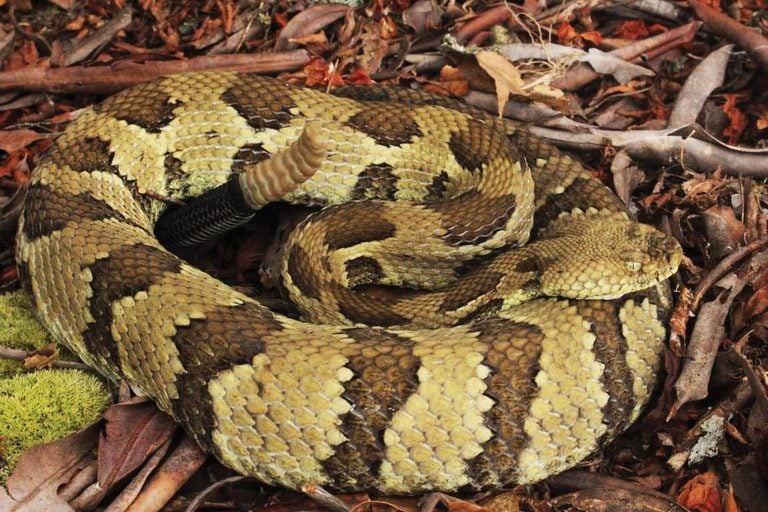
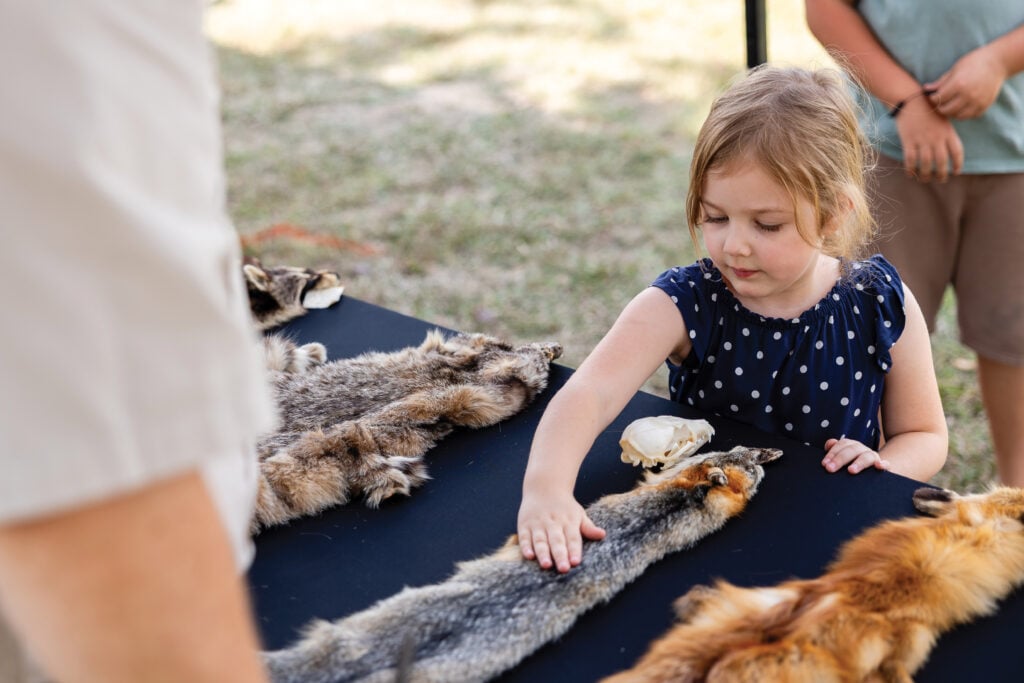
There are field dressing demonstrations for deer and squirrel, knot-tying tutorials, and even a sticker you get if you pet a snake. “It’s overwhelmingly a family event,” O’Sullivan says. “And we see a lot of grandparents showing their grandkids the ropes.” Scraggs sees it as foundational. “When a kid hits a target with a bow for the first time—not even a bullseye, just the target—we can see their face light up. That could be the moment a lifelong outdoorsperson is made.”
Kids wear participant T-shirts and are cheered on by parents, guardians, and WVDNR staff. After they complete each activity, their Youth Challenge cards are stamped—and after completing enough stations, they turn their cards in to enter a drawing for gear and prizes. The big-ticket item? A lifetime West Virginia hunting and fishing license.
It’s not just the kids who benefit. Parents often report being surprised by how engaged their children become. The event creates moments where families are fully present, exploring, laughing, and learning together.
Food, naturally, has its own spotlight. The Taste of State Parks event features chefs from around the State Parks system serving up wild game and regional dishes. Nine parks typically participate, each offering two small-plate samples of what they cook for their guests back home. It’s a culinary passport through West Virginia’s park kitchens with items like bear chili, venison pot roast, and smoked trout hush puppies on hand. You buy tokens for samples, and by the end, you might be voting for your new favorite camping destination based on who made the best wild boar sliders. As Scraggs explains, “It gives people a reason to say, ‘Hey, I liked what I ate from Blackwater Falls or Chief Logan, maybe I’ll go stay there next time.’”
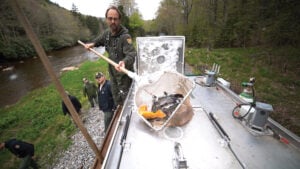
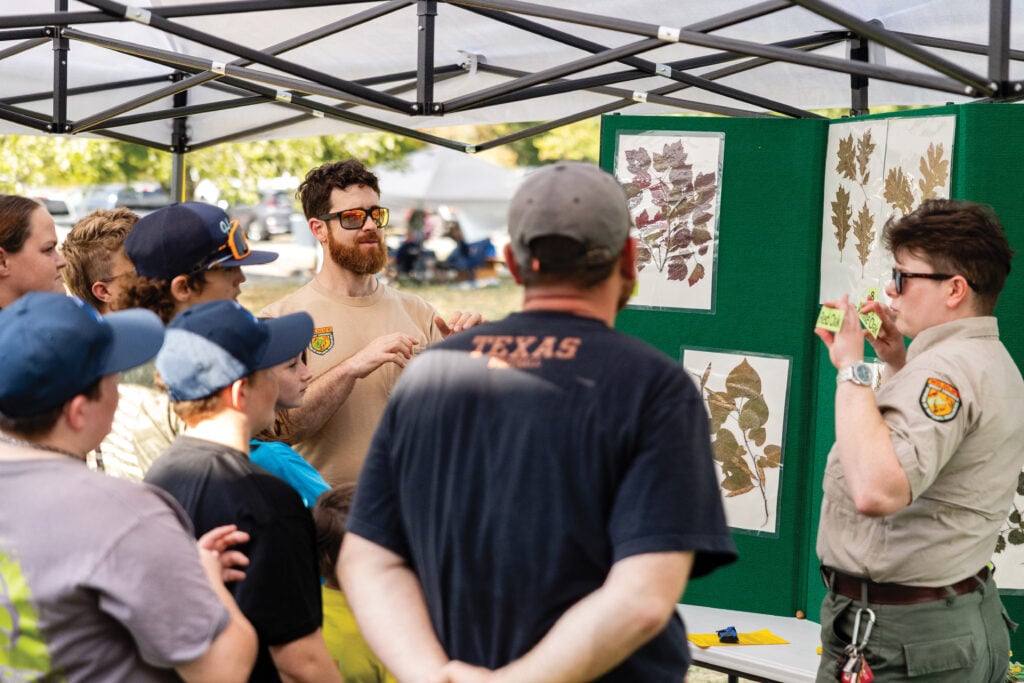
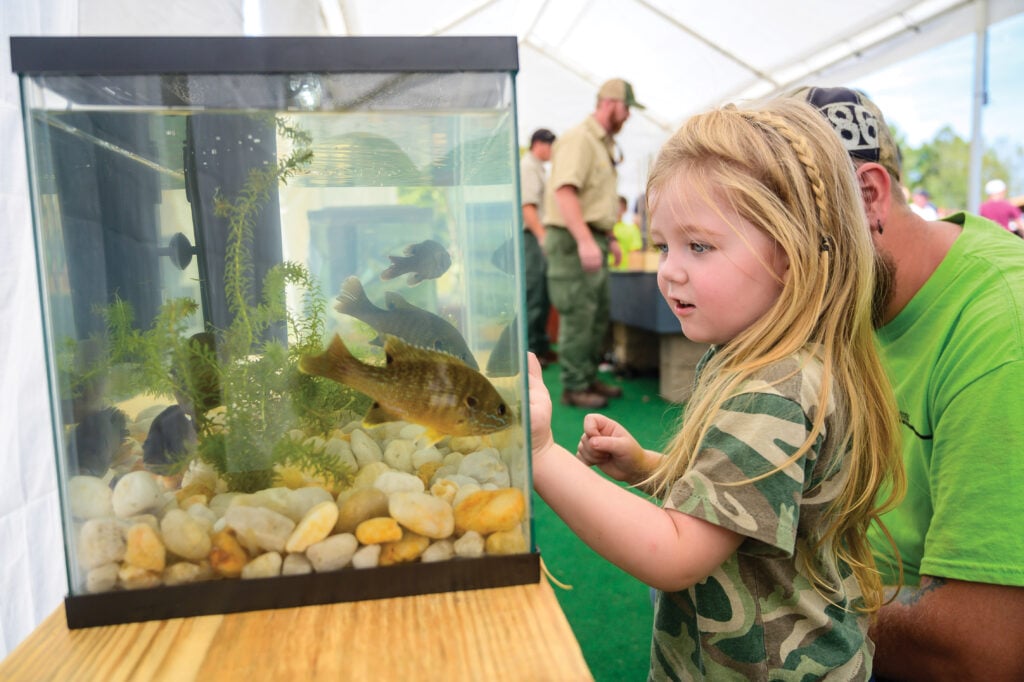
The event is more than entertainment. It’s education, it’s conservation, and it’s mission-driven. Throughout the day, booths and demonstrations tackle everything from fish filleting to firearm safety. There are lessons on fly casting, habitat preservation, and tree identification. Wildlife biologists answer questions. Volunteers from conservation groups offer literature, stickers, and stories.
“We cover the whole umbrella,” Scraggs says. “Education, conservation, sportsmanship. When people see what our staff does—the stocking, the cleanup, the management—they walk away with more respect for the work that goes unseen.” That respect can be as simple as litter awareness. “You’re less likely to throw a cup into a stream if you’ve met the guy who stocks that stream,” he says.
There’s something powerful about seeing the faces behind the scenes, like the fisheries biologist, the wildlife tech, and the park manager—people who work all year ’round to keep the state wild and wonderful. For many attendees, it’s their first real glimpse into that world.
Make New Discoveries
More than 30 vendors set up at National Hunting and Fishing Day, ranging from outfitters and bow shops to artisans and tackle suppliers. “It’s like stepping into a mini Cabela’s,” says Scraggs. Many of these vendors return year after year, not just to sell gear, but to connect with a crowd that genuinely cares about the outdoors and often leaves with a new appreciation for locally made products and services. Some families go home with new rods or gear, inspired by what they tried just minutes earlier at a challenge station.
Stonewall’s central location and resort setting also make it a boost for the community. Restaurants, gas stations, and local shops see increased traffic. “Even families who weren’t here for the event stumble into it and stay longer,” Scraggs says. One Virginia family came for a wedding and ended up casting their first fishing lines together. “They asked when next year’s event was and said they’d plan their trip around it.” It’s the kind of accidental discovery that creates lasting memories and repeat visits. And that’s no small thing for the local economy.
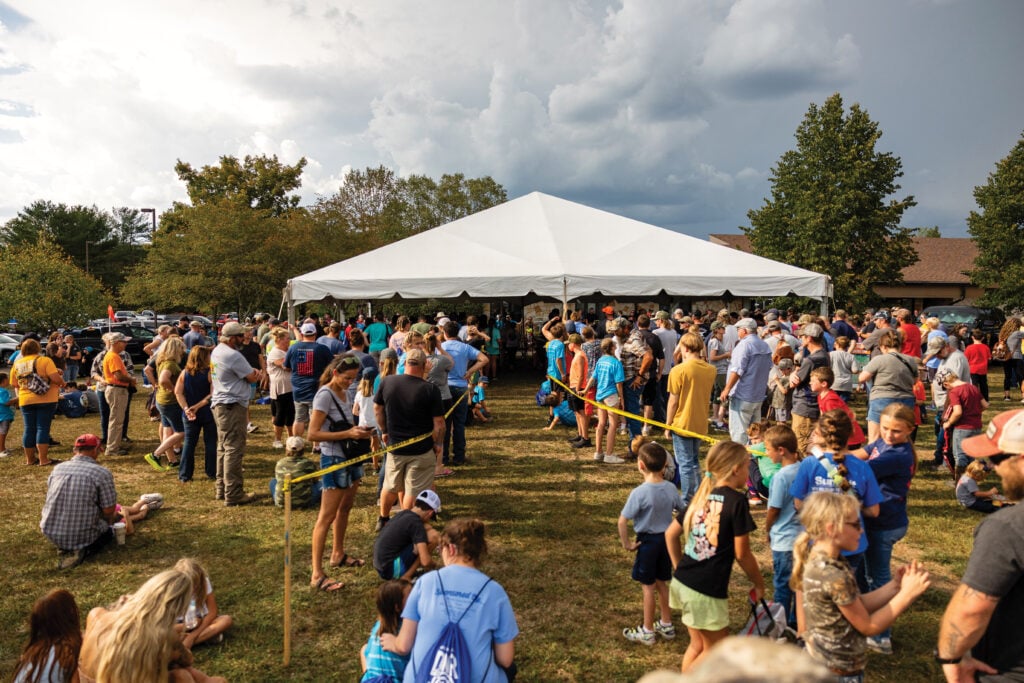
For Scraggs, who didn’t attend his first National Hunting and Fishing Day until he started coordinating it, the experience has been eye-opening. “I learn something every year,” he says. “One year, it was how to repair taxidermy.”
Goals for the future include growing attendance, diversifying vendor involvement, and striking a better balance between activities for younger kids, teens, and adults. More local shops and more demonstrators from across the state are wanted too, to show all of West Virginia.
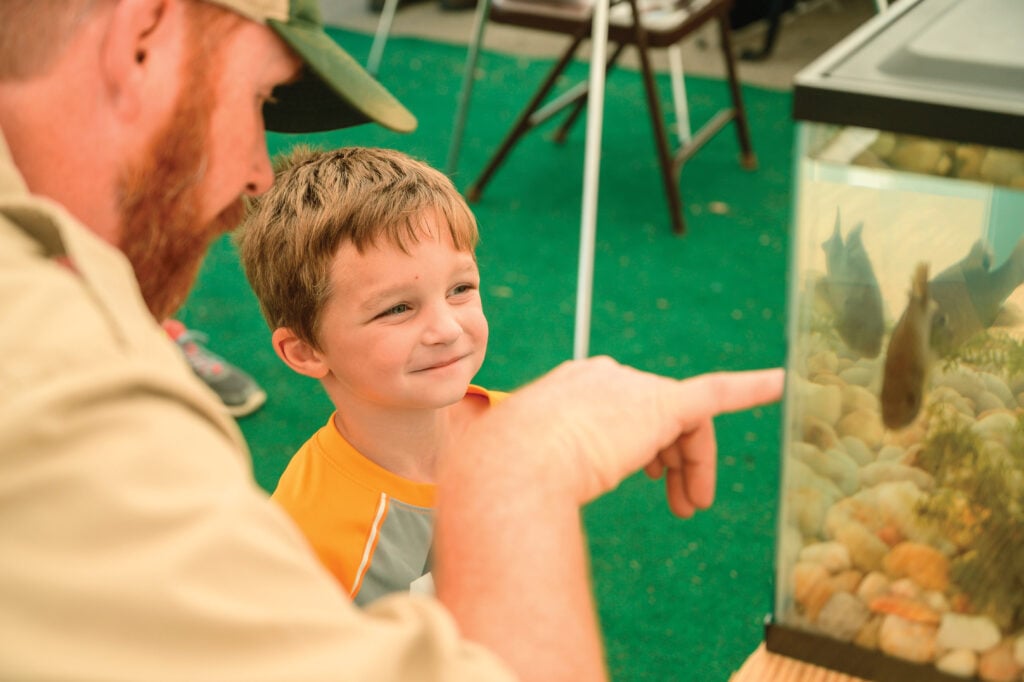
“Now that we’re home,” he says of Stonewall, “we want to keep growing it. Bring back the falconers, the trick-shot archers, and get more mom-and-pop shops out here. This is about community, after all.”
Once a two-day affair, the event now runs for just one day. But as Scraggs and O’Sullivan both noted, growing interest could make a second day a real possibility again. And judging by the energy and turnout, they might be right.
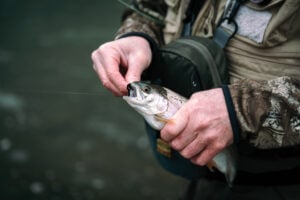
National Hunting and Fishing Day isn’t just for seasoned hunters or avid anglers. If you’re even a little curious about the outdoors or just want a good reason to try bear chili and watch a kid beam with pride after hitting a target for the first time, then you belong here. Bring your walking shoes. Maybe a folding chair. Definitely your curiosity. You might want a camera, too—there’s something photogenic about a kid holding up their first fish. You’ll leave with a new skill, a full belly, or a spark of something that surprises you.
Join the Fun!
West Virginia’s 2025 celebration of National Hunting and Fishing Day takes place on Saturday, September 6, at Stonewall Resort State Park.
Admission – $10 for adults, free for kids 14 and under
Parking – Free, on-site shuttles available
Tickets – Buy early at WVdnr.gov or at the gate, cash only
 By
By