 By
By 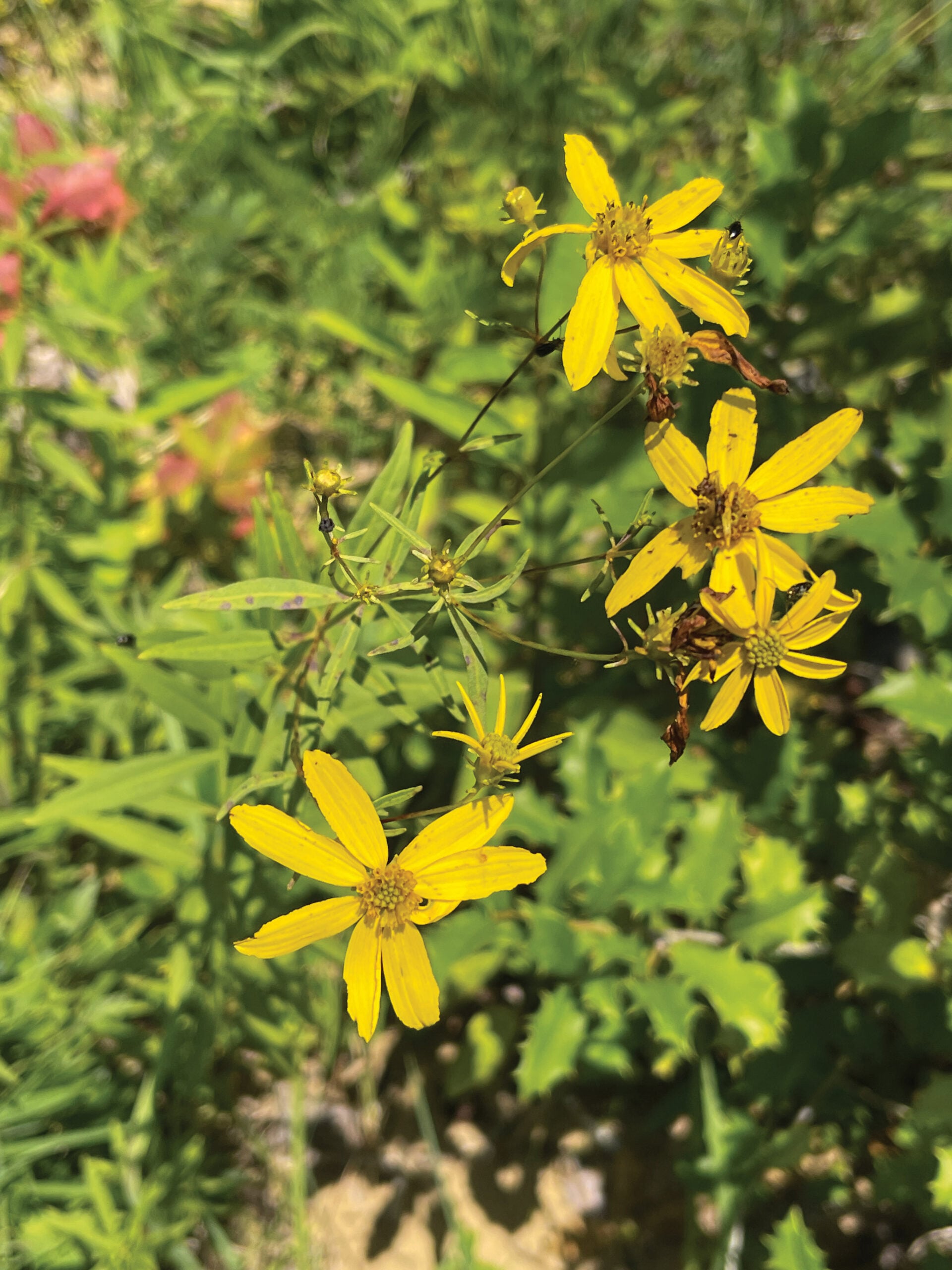
The Mountain State is home to countless hidden wonders, but some of the most fascinating phenomena occur in wonders you encounter every day—including unwelcome botanical hitchhikers.
This story was originally published in the September 2025 issue of Wonderful West Virginia. To subscribe, visit wonderfulwv.com.
Written by Laney Eichelberger
Photographed by John Burkhart
Take a stroll through West Virginia’s wilderness, and you’re guaranteed to encounter the unparalleled biodiversity of the Appalachian Mountains. Some species, like white-tailed deer or goldenrod, are familiar sights; others, like river otters or rhododendrons, are more coveted discoveries. But not every find yields the same enthusiasm.
It’s typically the final leg of a weekend hike or the moment you’re dusting soil from your gardening gloves when these botanical bothers make their prickly presence known: burs. Although instinct might suggest you pluck away these pesky pods and go about your business, John Burkhart, state natural heritage botanist in the West Virginia Division of Natural Resources (WVDNR), encourages a different approach: Slow down and take a closer look.
A Sticky Situation
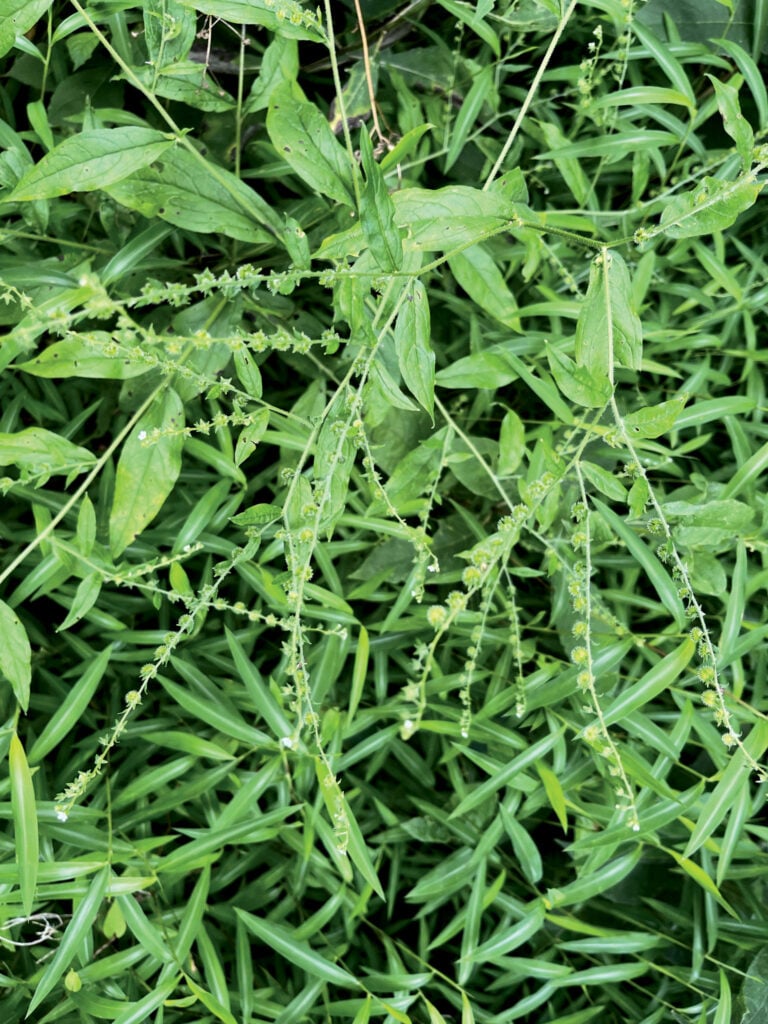
Even in Almost Heaven, you simply can’t escape plants bearing bothersome burs—in fact, West Virginia is home to quite a few. If you’ve found yourself cursing as you painstakingly peel them off your jacket after an otherwise peaceful fall hike, you likely encountered one of these plants without even realizing it: Virginia stickseed, tick-trefoil, beggartick, burdock, sweet cicely, or hooked buttercup. These species don’t exist solely to be a thorn in your side. According to Burkhart, they’re evolutionary marvels found right in your backyard.
Both blackberry bushes and tall tick-trefoils can be recognized by their dainty flowers, but what follows those flowers reflects two different evolutionary adaptations. The soft white blooms of a blackberry bush develop into juicy, sweet fruit—an enticing treat for many bird species and the most prolific summertime food source for wildlife in West Virginia. Animals consume the fruit and later excrete the seeds, dispersing them far from the parent plants.
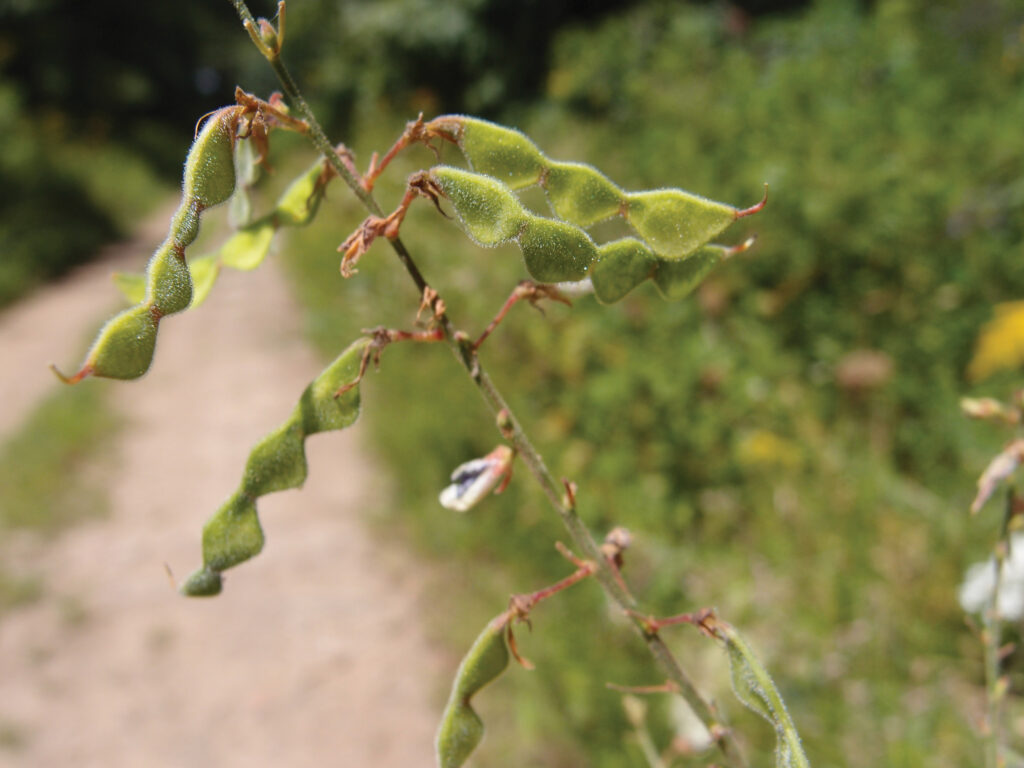
The winged purple blooms of a tall tick-trefoil give way to something less appetizing and more intrusive: pea-like pods that are covered in tiny hooks and act as vehicles for the plant’s seeds. Unlike the tempting blackberry—and more like the host-seeking behavior of the tick the plant is named for—these seed pods catch a ride on passing animals. They fall off later, leaving their seeds far from where they started. It’s a process called epizoochory: seed dispersal through attachment to a passing animal. Though it may cause irritation, a bur’s purpose isn’t to harm. Rather, burs are just one way nature keeps the wheel of life turning.
Plants disperse their seeds through five main methods: wind, water, animals, gravity, and ballistic dispersal. Each strategy is adapted for the greatest odds of survival—but sometimes survival looks like hurtling through the air, floating down a river, or hitching a ride on your pant leg.
“Some disperse their seeds through wind like a dandelion, others are dispersed through an animal eating a seed, and these guys get around by sticking themselves to you,” says Burkhart. “All of these dispersal methods aim to create separation between the parent plant and the offspring so they don’t compete with each other.”
You’re not likely to encounter many plants that disperse their seeds quite like burs do—epizoochory is estimated to occur in less than 5% of plant species. But discovering the fascinating habits of West Virginian flora is as easy as taking a closer look, Burkhart says. Natural phenomena like these provide opportunities for all ages to engage with nature and play an active role in the ecosystem, he says—even if it means being an unwilling chauffeur to a prickly hitchhiker.
Stick It to the Man
According to Burkhart, burs found in West Virginia are all bark and no bite. “None of these species are harmful. I’ve been hurt by many plants in my day, and these rank very low,” he explains. They can put a damper on your outdoor plans, though. Knowing how to avoid and remove them can keep your nature walks free from uninvited guests.
Steer clear of tall grass and wear clothes composed of dense material—burs can become particularly stubborn when caught in loosely woven fabrics like wool and fleece. If you or your pet bumble through a patch of burdock, try popular removal strategies like duct tape, a fine-toothed comb, tweezers, or a lint roller, and use cooking oil to untangle any resulting matted fur or hair. What’s a botanist’s top trick for removing pesky burs? It’s simple: Persistence and patience.
“You just have to take the time to pick them out once you notice them,” Burkhart explains. “If you go through a patch of them, you end up with a lot and it takes some time, but they’re pretty easy.” Just be sure to remove any burs before tossing clothes in the wash—that’s a good way to ruin a good pair of socks, according to Burkhart.
Planting a Seed
Hitching a ride on your pet’s fur isn’t the only way you’ve seen seeds make their way to new homes.
Maple (Wind)
If you’ve ever spotted dozens of miniature helicopter-like shapes twirling from the sky on a windy fall day, you’ve witnessed the seed dispersal method of West Virginia’s state tree—the sugar maple. Maple seeds are encased in a samara, a structure with two “wings” that cause it to spin as it falls, catch the wind, lift, and glide hundreds of feet.
Trillium (Animals)
To an ant, trillium is like a slice of warm apple pie—rich and irresistible. The ants are attracted to elaiosomes, the fatty, protein-rich flesh attached to trillium seeds. Triumphant, the ants return to the nest with their sweet finds, consume the elaiosome, then discard the seed. It’s a mutually beneficial arrangement—ants with full stomachs, trillium seeds with new soil to populate.
Jewelweed (Ballistic)
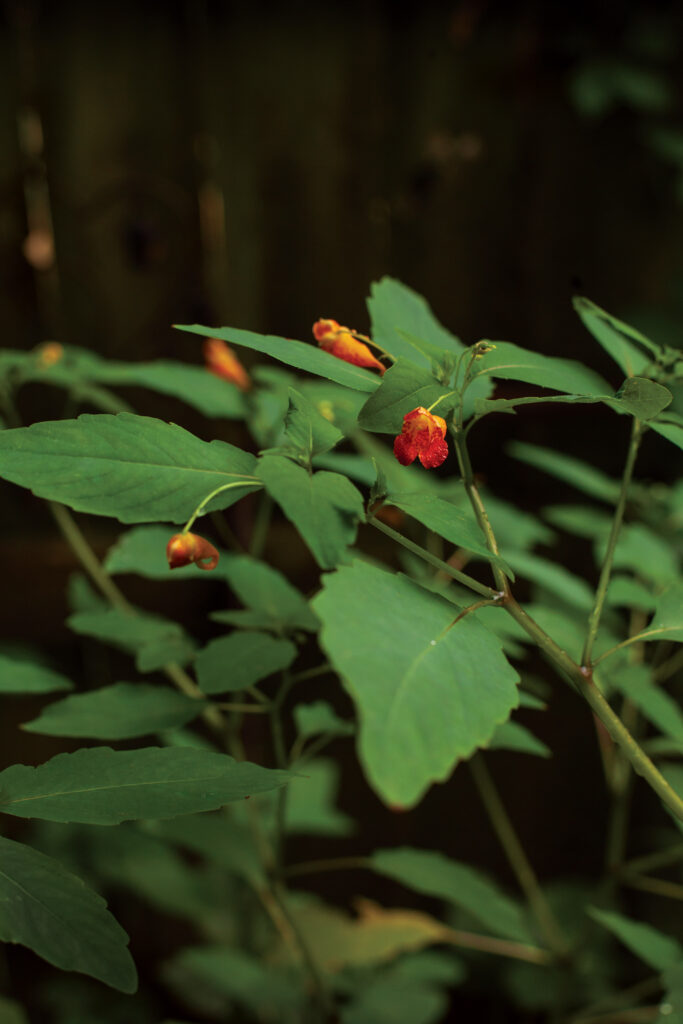
Trumpet-shaped, fiery orange flowers aren’t the only characteristics that make jewelweed so unique. Also referred to as spotted touch-me-not, this plant is known for its explosive personality. When ripe, its seed pods become spring-loaded with tension. A mere tap of the finger or brush of a strong breeze and the energy is released: the seed pod explodes, three to five seeds are catapulted several feet from their parent plant, and the cycle begins anew.
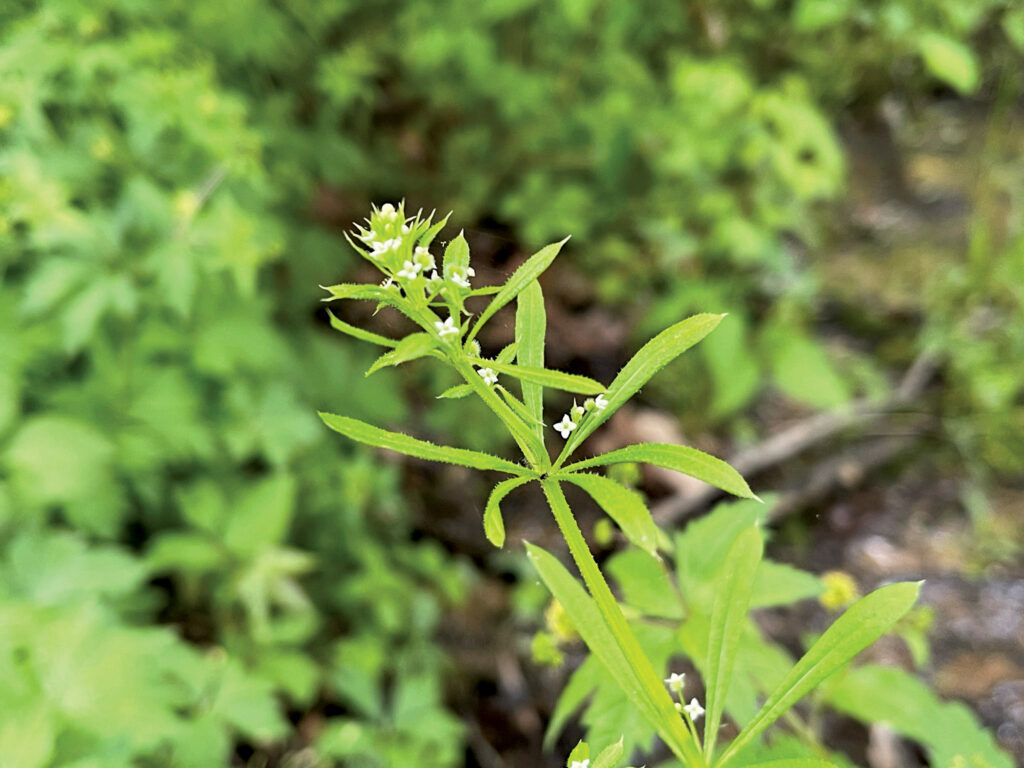
When he’s not patiently plucking them from his socks, Burkhart uses burs as an educational tool—for example, the cleaver, a vine-like herb known for its exceptionally sticky nature. Not only does it produce small, round burs, but its stems and leaves are also coated in hooked hairs. Its clingy nature has earned it a slew of affectionate—or perhaps not-so-affectionate—nicknames, like sticky Bob, robin-run-the-hedge, catchweed, Bobby buttons, velcro plant, and whippysticks. To Burkhart and his daughter, though, it’s known as sticky Willy, the star of a game by the same name.
“It’s a really fun game to play. You just rip a piece of it off, throw it at someone, and it sticks,” he explains. “My daughter and I love whacking each other with them. I really think playing games with plants is a fun way to get kids to connect with plants.”
Next time you find yourself brushing off a few hitchhiking burs, consider taking a closer look. A bur doesn’t just cradle the seeds of its parent plant—it offers a glimpse into the intricacies of the natural world.
“Everybody: Just have fun with plants,” Burkhart advises. “Have fun observing and noticing all the fun and strange things plants do.”
Breakthroughs with Burs
More than an irritating by-product of your scenic stroll and a surprising source of botanical insight, burs are to thank for the fasteners on your child’s favorite sneakers, the baseball cap repping your home team, and even medical devices like blood pressure monitors and knee braces.
In 1948, Swiss electrical engineer George de Mestral set out on a hunting trip in the Alpine countryside with his dog, an Irish pointer named Milka. By the end of their excursion, the pair found themselves unwilling hosts to dozens of burs from a burdock plant.
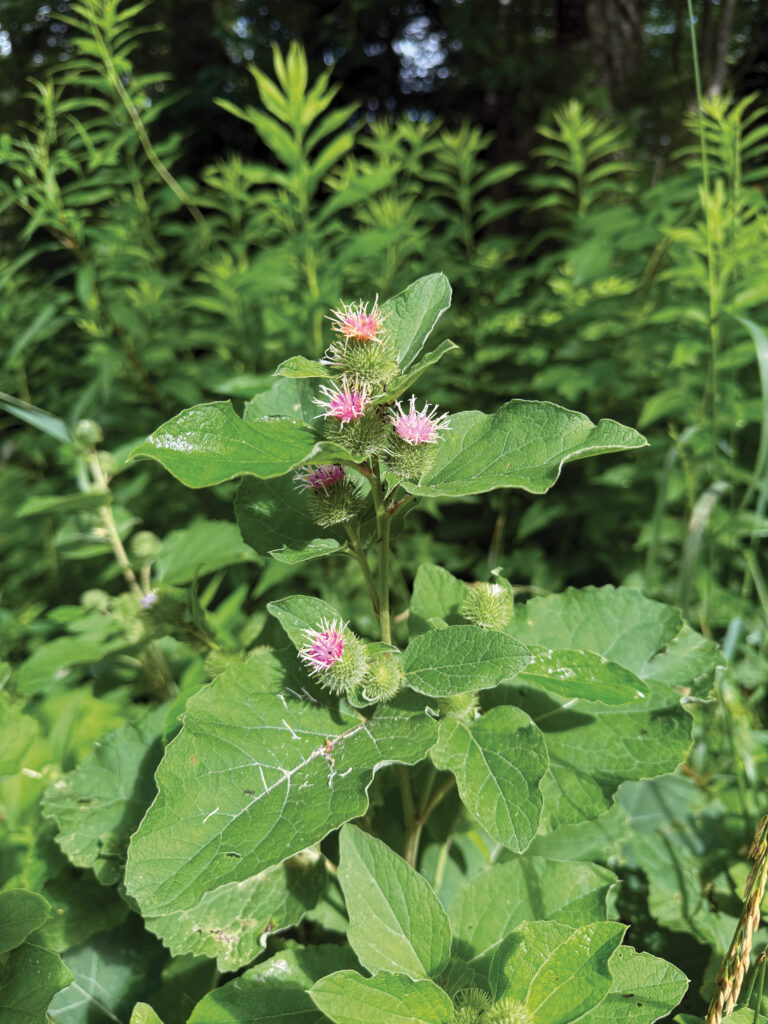
“Burdock isn’t a native plant, but it is one that people are most familiar with. It was probably introduced intentionally with early European settlers because it was a popular medicinal, edible plant,” says Burkhart. “It has these big sticky burs. If you have a shaggy dog, this is the one that will get you.”
Intrigued by the seed pods’ tenacity, de Mestral placed the burs under a microscope and made a groundbreaking discovery: tiny hooks shielding the bur’s exterior, ideal for catching the loops in clothing fiber and fur. In one of the most famous cases of biomimicry—solving human problems by imitating nature—de Mestral set out to replicate the bur’s efficient design.
Ten years later, de Mestral perfected the reusable hook-and-loop fastener technology with the invention of Velcro. It wasn’t long before NASA came knocking. Turns out, the design was perfect for securing snack pouches and equipment in zero gravity. More than six decades later, that same bur-inspired technology is used in countless household items.

 By
By