 By
By 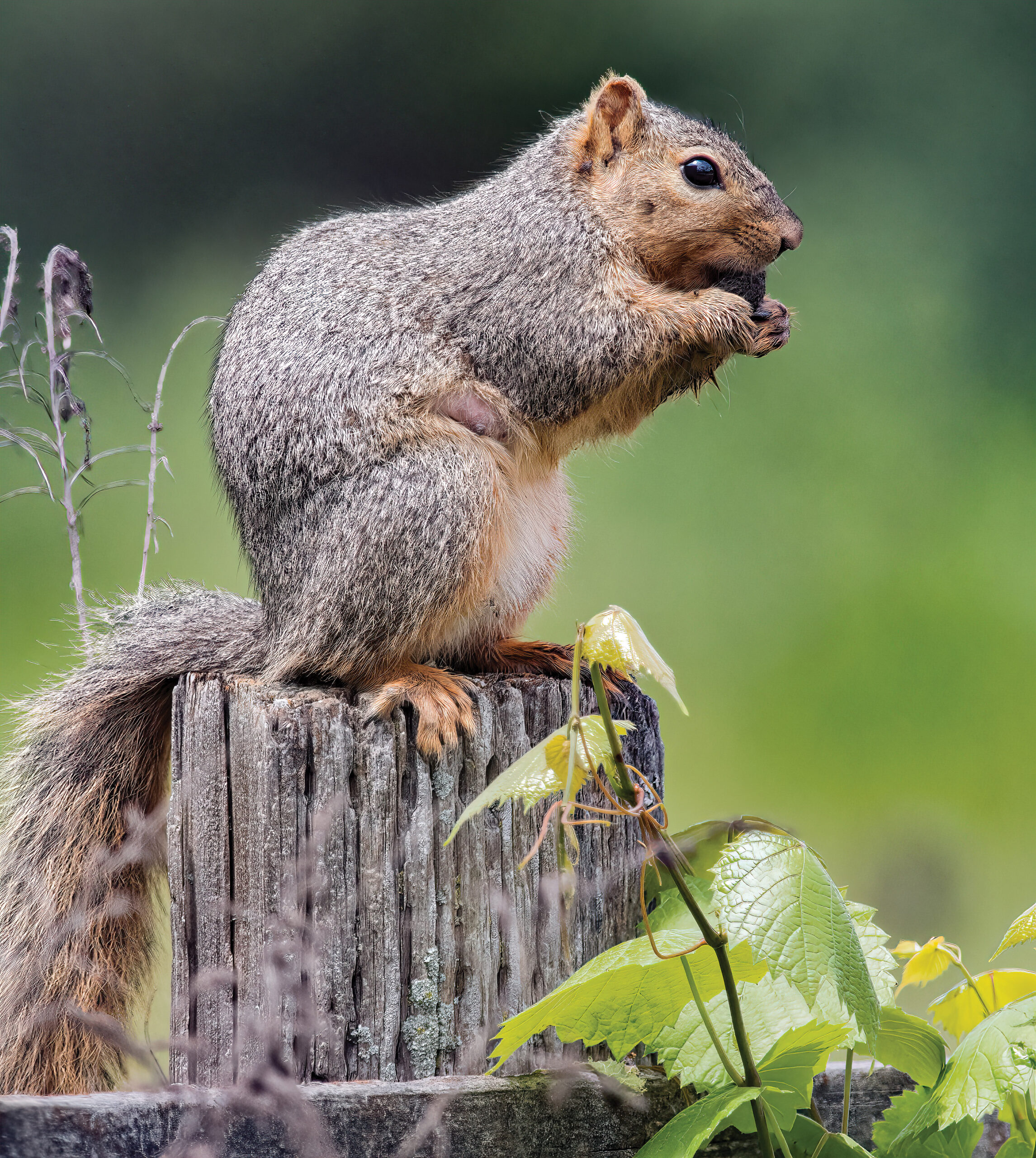
For hunters, West Virginia squirrels mean tradition, family, and food.
This story was originally published in the September 2025 issue of Wonderful West Virginia. To subscribe, visit wonderfulwv.com.
Written by Laura Jackson
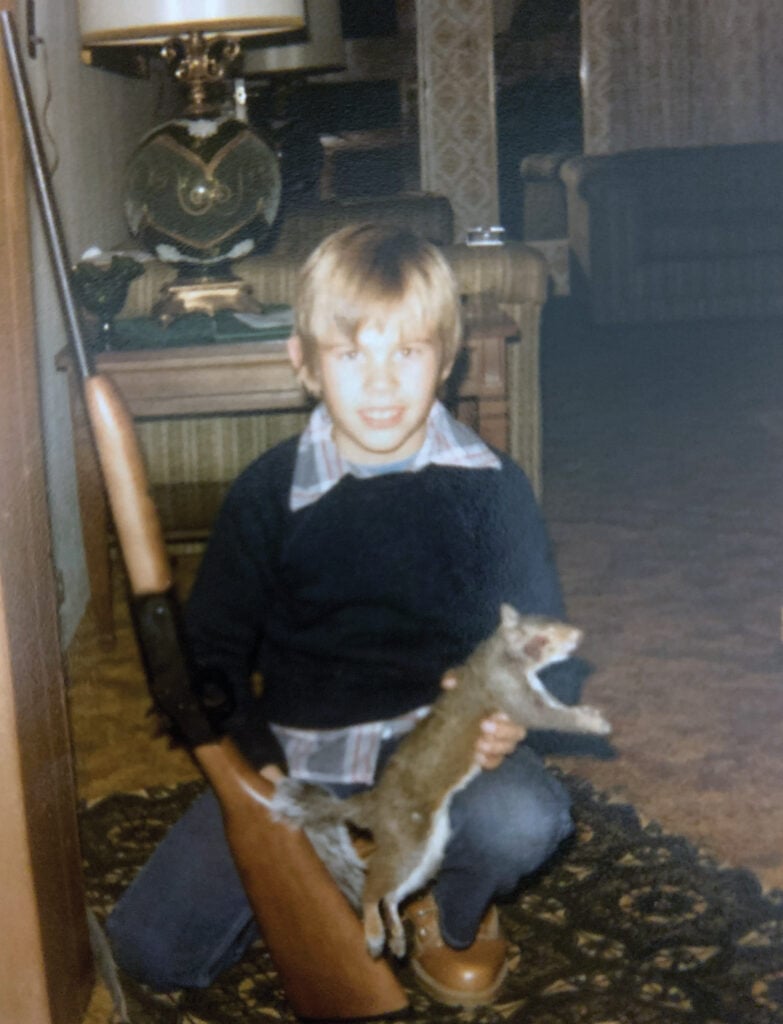
Ask a West Virginia squirrel hunter about their favorite pastime and you’re bound to get the same kinds of answers: it’s easy, it’s fun, and it’s a family tradition. Many picked up their first squirrel hunting gun at a young age, beside a father or grandfather, and many more remember biscuits and squirrel gravy or squirrel stew around the family table. For families that relied on game to stock their freezers in tough times, a squirrel hunt wasn’t just an adventure—it was a dependable way to provide.
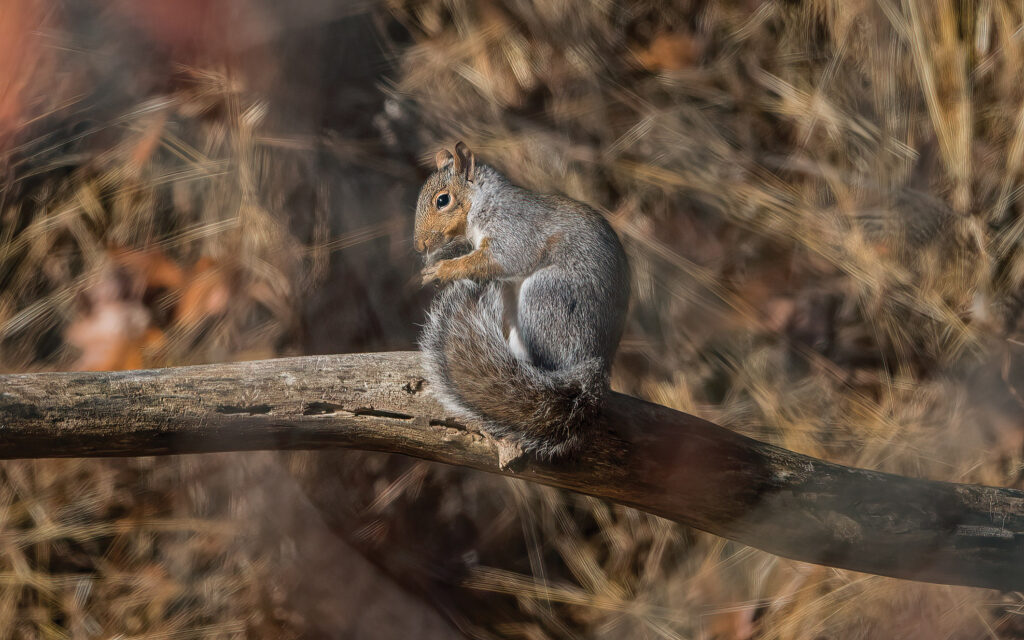
Three species of huntable squirrels inhabit West Virginia: red, gray, and fox squirrels. It’s easy to tell them apart. Red squirrels are small and aggressive and have white rings around their eyes. They’re vocal, often chattering and scolding. Gray squirrels are indeed gray and are twice as big, weighing about a pound. Fox squirrels, in turn, are twice as big as gray squirrels and are characterized by a gray-brown coat, a tan underbelly, and a tail as long as their body.
You might see some other colors, too. Both gray and fox squirrels can exhibit a black morph coloration, and these small populations tend to be isolated and often occur in parks and on college campuses, where they’re less vulnerable to predation. Leucistic squirrels with reduced pigmentation also occur, and these white individuals have dark eyes and are not to be confused with albinos.
While red squirrels appear most anywhere, they prefer coniferous or mixed forests. The larger two species thrive in mature oak and hickory forests, but fox squirrels will claim a larger habitat and prefer a more open space.
Squirrel young are born in March and emerge from their tree cavities in May. In a year with ample food, squirrels may have a second, summer litter.
Rules and Regs
David Trader, a lieutenant colonel with the West Virginia Natural Resources Police (NRP) stresses safety and safe gun handling. “Squirrel season is pretty close to bow hunting season,” he says. “You need to be careful, because you may have bow hunters in camouflage up in the trees at the same time. Safety is the primary consideration. Know where your shots are going to fall, what your target is, and what’s beyond it.”
While squirrel hunters are not required to wear blaze orange, it’s still a good idea to consider visibility. Hunters must obtain a license and permission to access their site of choice.
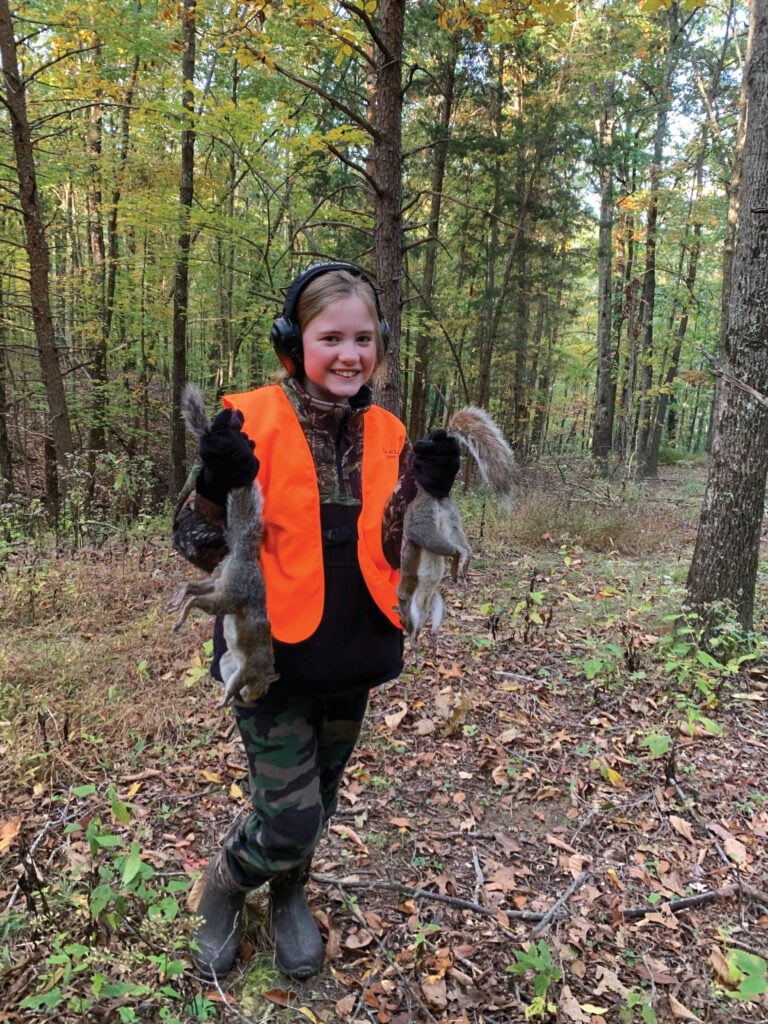
For gray and fox squirrels, the season, which used to start in October, now runs from mid-September to the end of February to give hunters more opportunities to enjoy the woods. The daily bag limit is six, the possession limit is 24, and there’s no season limit.
Trader has been squirrel hunting since he was young. “I can remember, as a kid, I would stay up the night before and have my shotgun laid out, cleaning oil, my game bag, my shotgun shells—it was a pretty exciting thing for me,” he says. “We’d be known to skip three days of school once in a while, too.”
Every squirrel hunter seems to have or recall a favorite squirrel-centered meal. The Trader family dish of choice? Squirrel gravy over eggs. “My grandfather would boil the heads, and then he would have squirrel brains. But I couldn’t eat it.”
A Day at the Beech
Studies have shown that kids who spend time outdoors are healthier and happier. Time in the forest has proven, positive effects on mental health and conditions like ADHD. In the spirit of reconnecting young people with nature, the NRP hosts youth deer hunts throughout the state. Such events may be an adolescent’s first chance to harvest a deer or even be out in the woods. Likewise, squirrels offer a similar, easily accessible way to get out there.
Natural Resources Police Captain Danny Dolin, of Parkersburg, has seen a downward trend in the popularity of hunting. He’s also observed the increased amount of time adolescents spend indoors and the significant uptick in their screen time.
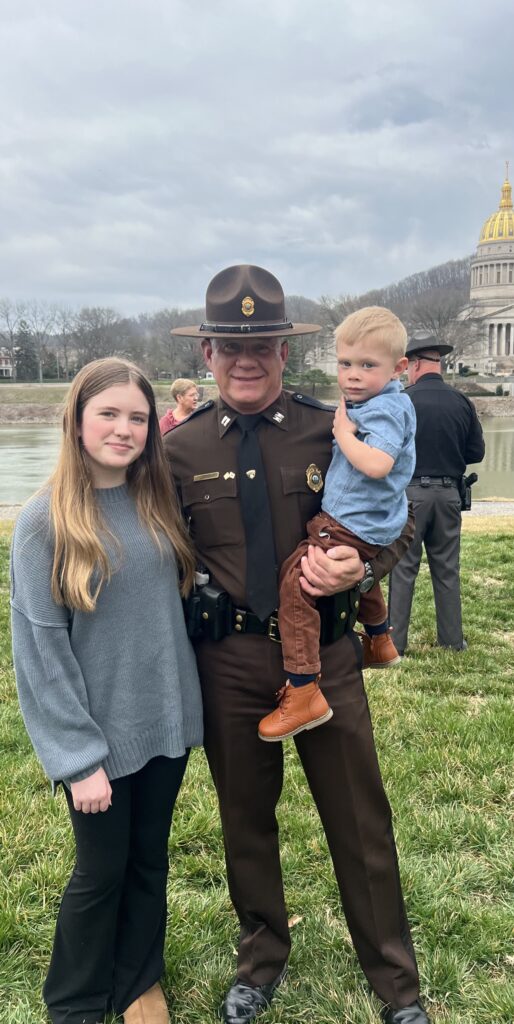
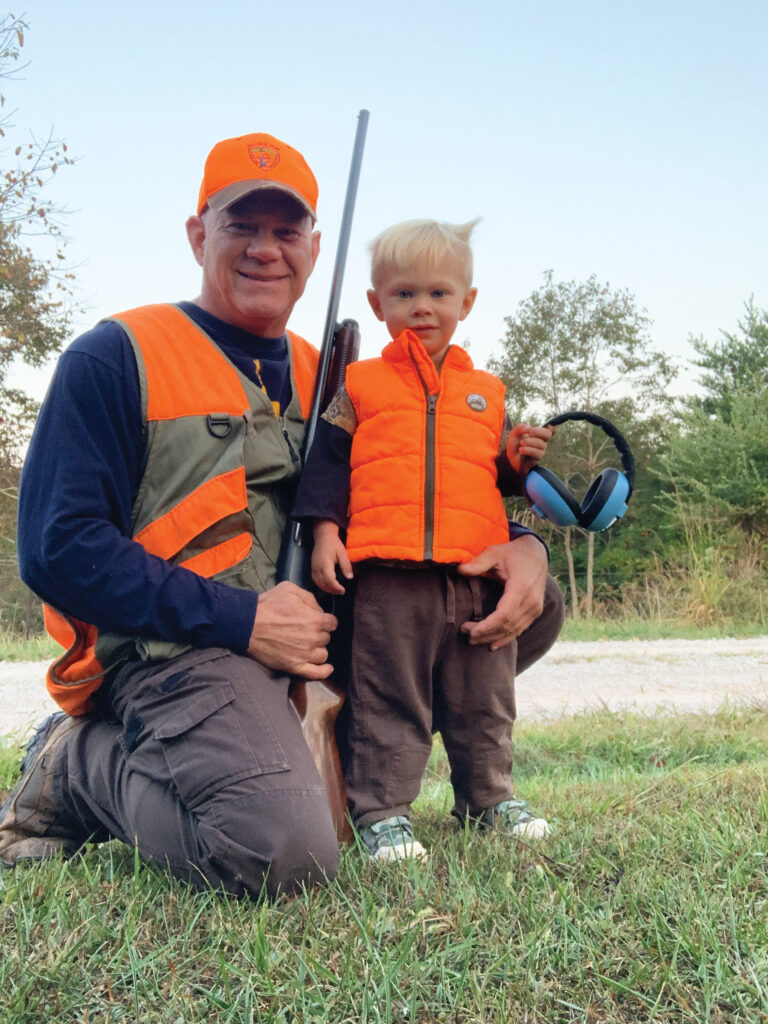
Dolin is also a squirrel hunter, and he took his two-year-old son, Broxton, squirrel hunting for the first time last year. Despite his son’s short attention span, Dolin did his best to create a memorable experience. “I prayed all morning—‘Please give me 30 good minutes. He’s going to start throwing rocks and playing. Give me one little silly squirrel that’s not paying attention.’ We got lucky, and one jumped out on a limb in front of us. Broxton helped me clean it, and I’m excited to go again this October.”
With that initial hunt under his tiny belt, Broxton is now ready to join his older sister, Danni, with their father out in the woods.
Dolin grew up in Boone County, where his entire family hunted and fished. Deer were scarce in those years, while squirrels were always close by and abundant. His father worked long shifts and often came home exhausted, only to find that his son had laid out his gun and a box of shells. Somehow, the senior Dolin always found the energy to head to the woods.
“My grandfather had a farm in Jackson County, too,” Dolin says. “There was an area with a whole bunch of trees we called the Beech Cove, where my grandfather always took my dad when he was little—and then my father took me.”
By the time he graduated from college and began working in law enforcement, Dolin had gotten away from squirrel hunting, but his daughter’s arrival reignited the tradition. Now, he and his father take Danni to the special family spot at Beech Cove, which is thick with memories. “I can see old scars from our shotgun patterns on the beech trees,” he says. “I can scratch around in the leaves and find old shotgun shells, and I think, ‘Oh, wow, this is probably one of Grandpa’s shells.’ He and my uncle passed away quite a while back, and when I find these old shells, I wonder which one of my relatives shot them.”
At such a young age, his son has yet to develop the patience needed to hunt squirrel, but Dolin has laid the foundation. He believes squirrel hunting is a great way to introduce kids to the sport. While deer hunters must be still and quiet and may spend long hours in the cold, squirrels aren’t so easily spooked. Quiet does, however, help a hunter listen, as Dolin’s father used to do. “In early October, there’s nothing like listening to a squirrel jumping from limb to limb,” Dolin says. “You might not see, but you can hear a limb shake and you hear the dew fall. I used to get scolded for making noise, but it wasn’t that I was scaring the squirrel. It was because my dad was listening.”
The Dolin family had a favorite squirrel dish, too. “Sunday morning, Mom would fix squirrel gravy and biscuits after a successful Saturday hunt,” he says. “We didn’t grow up with a bunch of money. We kept wild meat in the freezer all year ’round.”
Annie, Get Your Gun
Just like Trader and Dolin, Toby Lane, of Pineville, West Virginia, started squirrel hunting when he was young, in Wyoming County. Deer were scarce in his neck of the woods at that time, too. “Squirrel hunting was about all we did,” he says. “Then, as we started getting a good, solid deer population, everybody got away from it.”
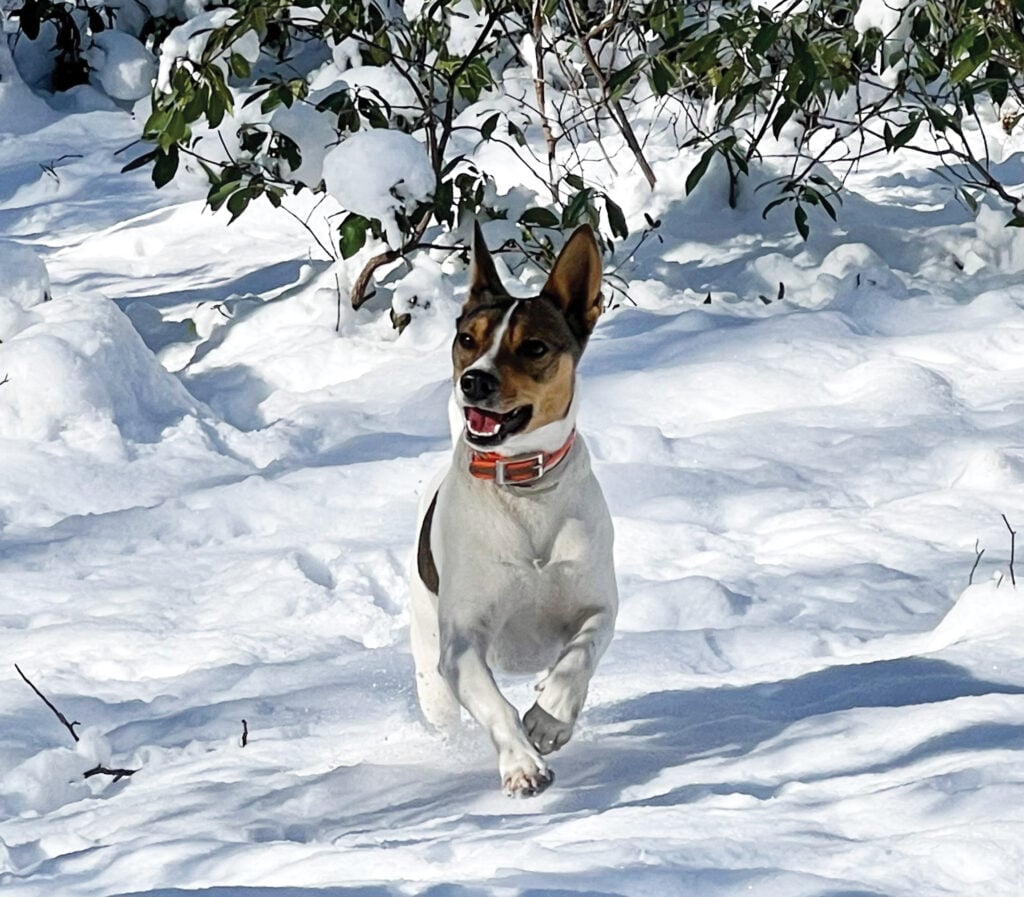
But Lane enjoyed squirrel hunting and always wanted to try it with a dog, so when he and his wife adopted a puppy, he stopped deer hunting for several years to focus on teaching Annie how to be a proper squirrel hunter.
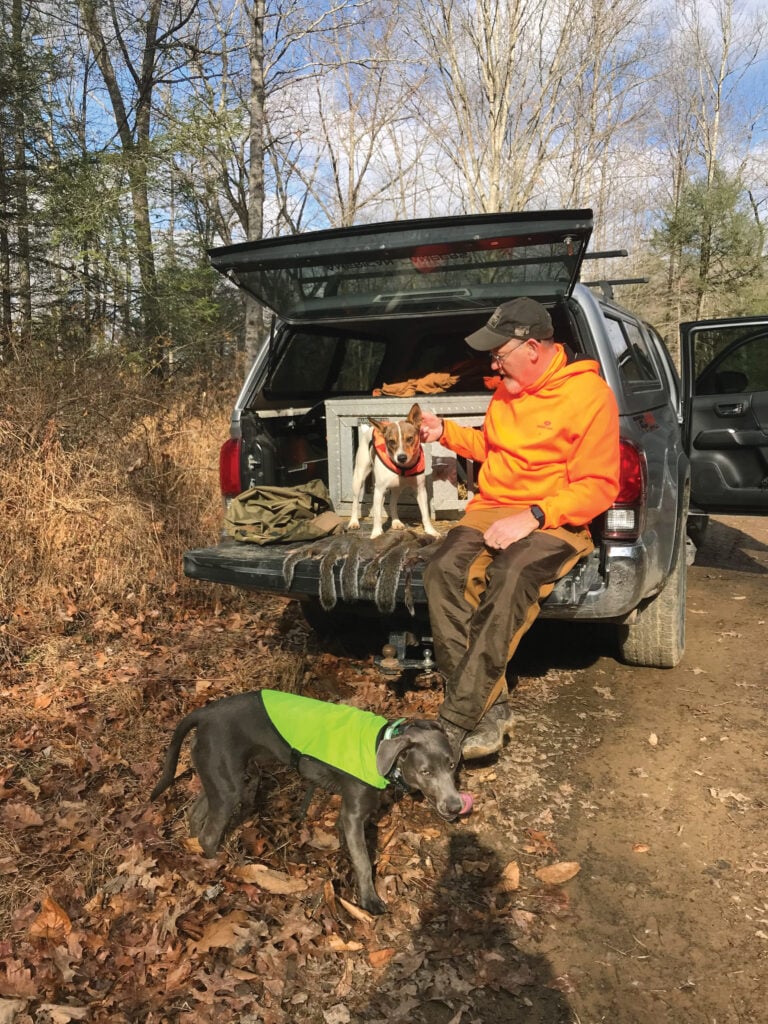
It started with exposure to squirrels and a daily walk in the woods. “One of my buddies went squirrel hunting and brought a squirrel to me,” Lane says. “Annie was five pounds, and when I threw it in the yard, she’d bring it back to me. She’s always looking up in trees, and we can tell by her bark if she sees the squirrel. We’ve also got two Texas Lacy dogs that we use for deer blood trailing, and now they are chasing squirrels up trees. She’s taught them what she knows.”
Like most squirrel hunters, Lane says the fun doesn’t stop in the woods. The Lane family enjoys a variety of squirrel-based cuisine. “We’ve smoked it. We’ve canned it. We make biscuits and gravy. And we put the fox squirrels in a crock pot. We’ll just shred them up and eat them like fajitas.”
He says Annie always gets a reward for her hard work out on the trail, too. “She gets the heart, the liver, and the lungs.”
Getting a Different Kind of Shot
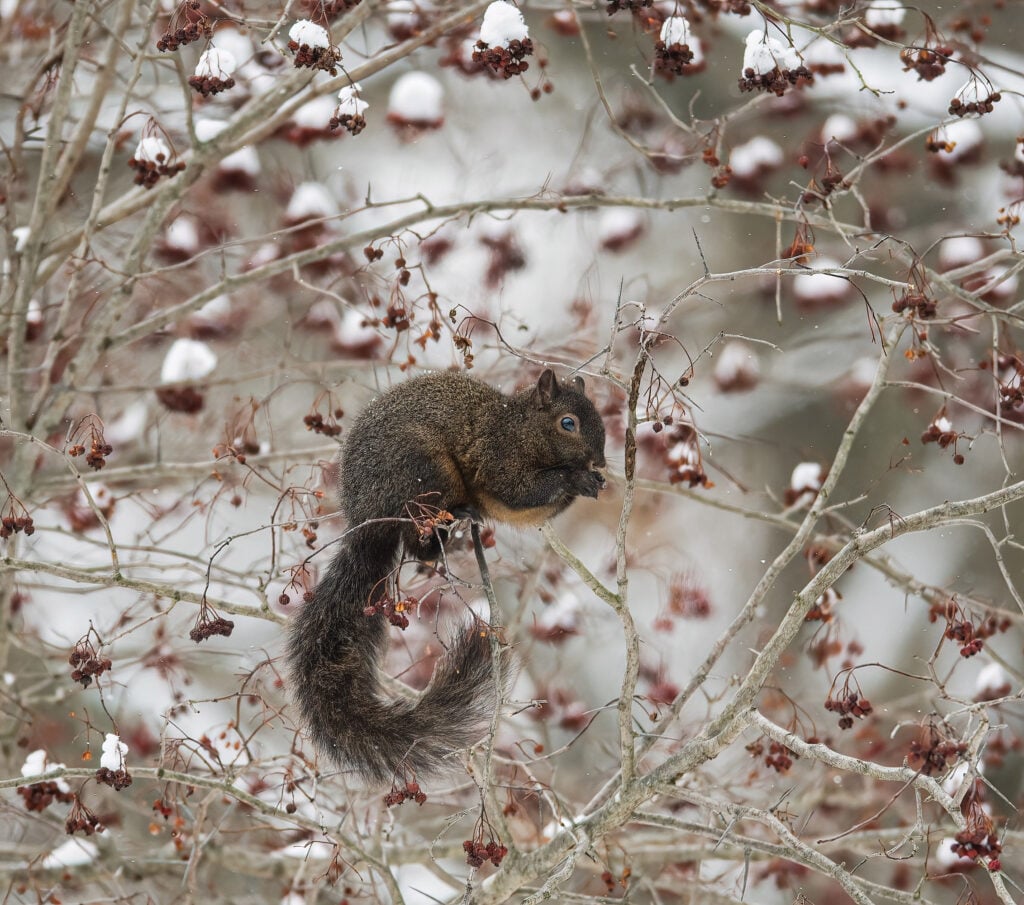
At Wonderful West Virginia magazine, we love seeing wildlife photography from all across the state! Here are a few tips and tricks for capturing images of our tree-inclined friends on your next jaunt through the West Virginia wilderness.
- Autumn is a good time for photographing squirrels, as they’re busy foraging for the upcoming winter and spend time on the ground.
- Consider location: Gray and fox squirrels are often found in city parks and oak forests, while red squirrels prefer coniferous forests. Squirrels are frequent visitors to bird feeders, so consider staking out a feeder site.
- Use a zoom lens and a fast shutter speed. The minimum speed for a static shot should be 1/250th of a second—1/1600th of a second to capture a squirrel in motion.
- A larger aperture will give you a shallow depth of field and make the squirrel stand out against the background.
- When photographing other animals, keep an eye out for squirrels—they’re everywhere!
 By
By