 By
As fall settles across the mountains, West Virginia’s six species of lizards prepare for their disappearing act.
This story was originally published in the October / November 2026 issue of Wonderful West Virginia.
Subscribe here.
Written by Holly Leleux-Thubron
Featured Photo Photographed by Carla Witt Ford
They live in trees and under the ground. They hide beneath rocks, rustle through fallen leaves, and sun themselves on old fence rails. One can grow to nearly 12 inches long. Another barely reaches three or four. One is found throughout much of West Virginia. Another has been documented in just one small part of the state.
And, according to Thomas K. Pauley, after more than 50 years studying West Virginia’s reptiles and amphibians, there is still plenty we don’t know about them. “We know less about lizards in West Virginia than any other reptile or amphibian,” says Pauley, professor emeritus of biology at Marshall University. “They are hard to study, fast and elusive.”
During his career at Marshall, Pauley worked with around 90 graduate students studying reptiles and amphibians. Only one, he says, chose lizards as their focus.
Perhaps that’s fitting for animals that spend much of their lives trying not to be noticed.
Six Species, Six Different Stories
West Virginia is home to six species of lizards—four skinks, an eastern fence lizard, and an eastern six-lined racerunner. “Skinks all fall within the same lizard family,” says Kevin Oxenrider, amphibian and reptile program leader for the West Virginia Division of Natural Resources (WVDNR). The distinction is largely one of taxonomy. West Virginia’s four skinks belong to the family Scincidae, while the eastern fence lizard and eastern six-lined racerunner belong to different lizard families.
Put more simply: All skinks are lizards, but not all lizards are skinks.
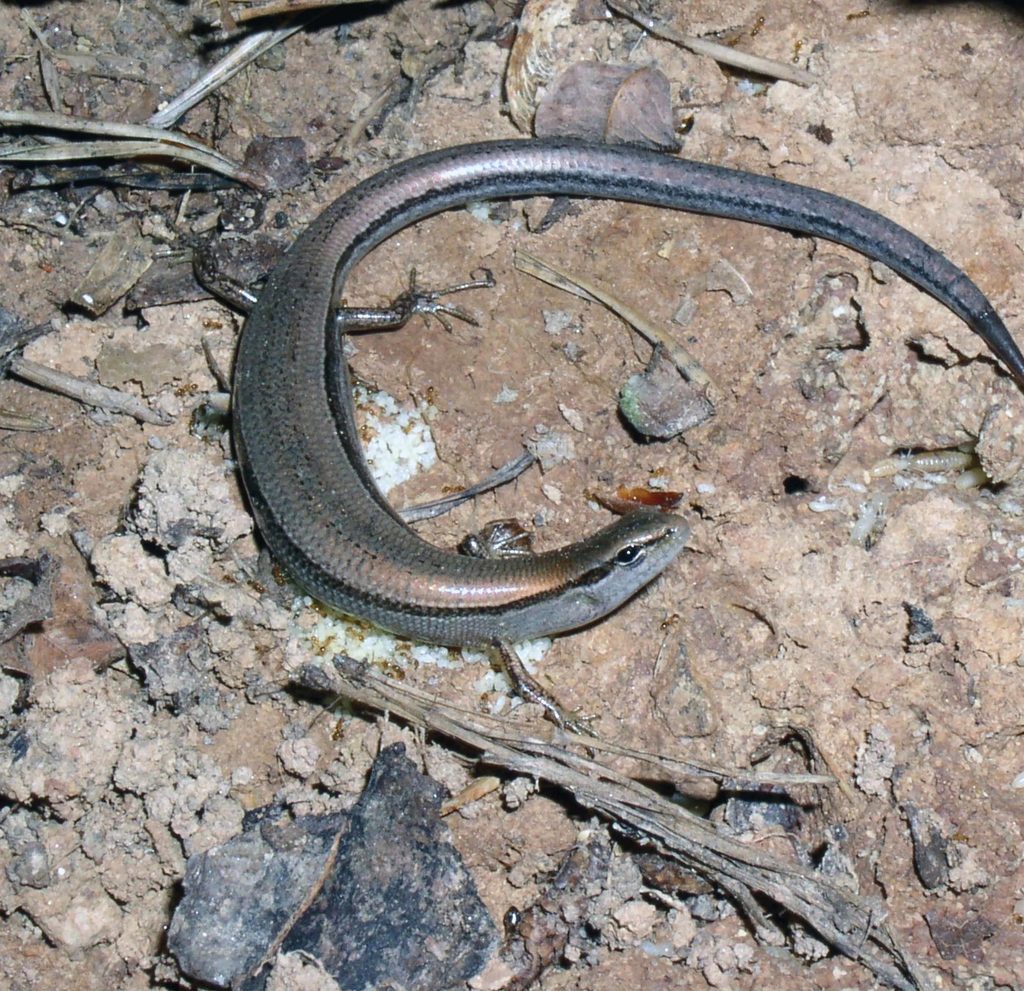
Pauley learned just how unfamiliar the word “skink” is years ago when the WVDNR asked him to prepare a booklet about West Virginia’s lizards. Its title was simple: Skinks. After making its way through the review and proofreading process, the manuscript eventually came back to Pauley with one unexpected correction. Somewhere along the way, the title had been “corrected” to Skunks. “Most people had never even heard of a skink,” Pauley says, noting how that simple fact reflects our collective lack of familiarity with these elusive creatures.
They may not know the name, but chances are many West Virginians have seen one.
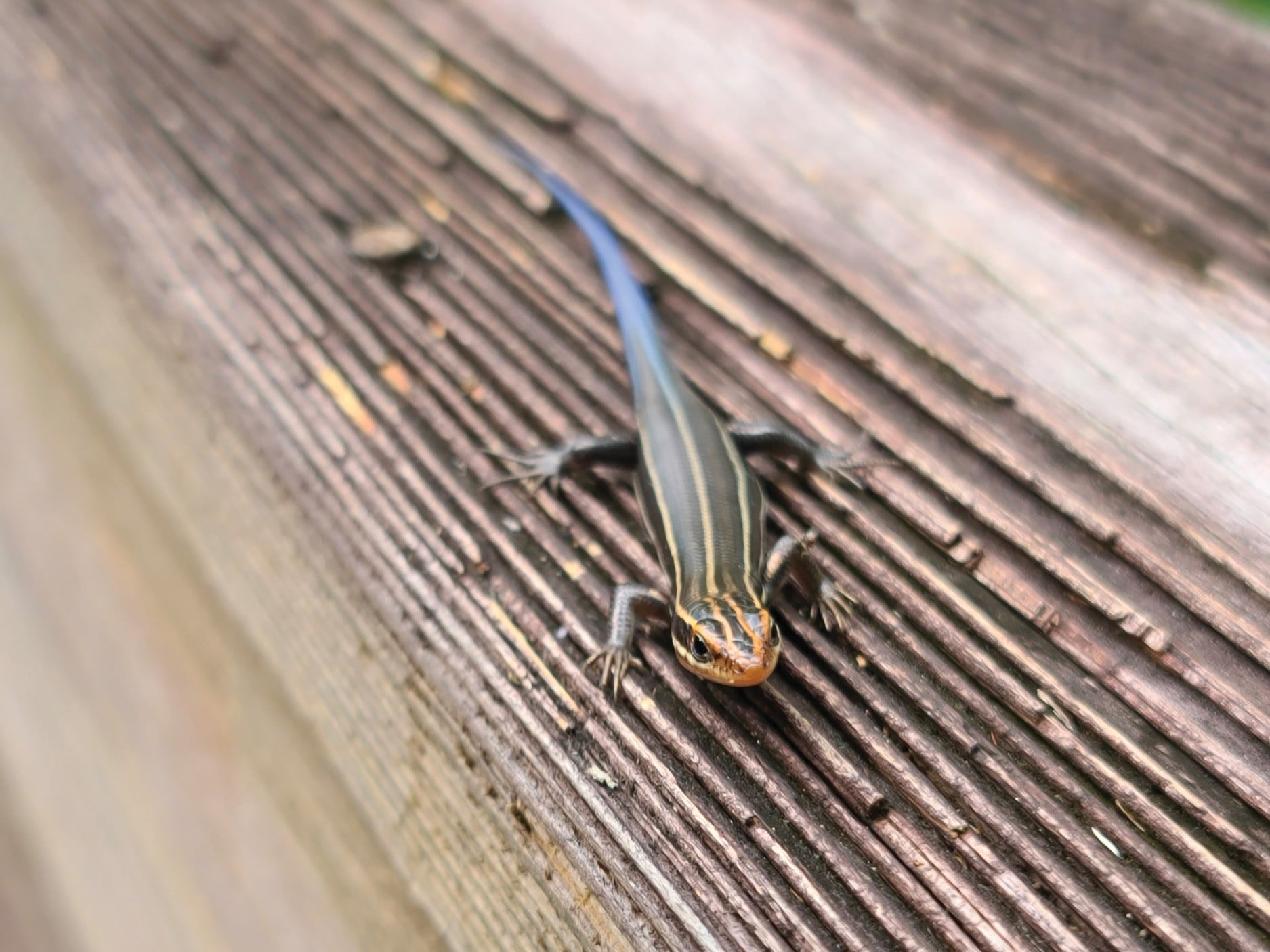
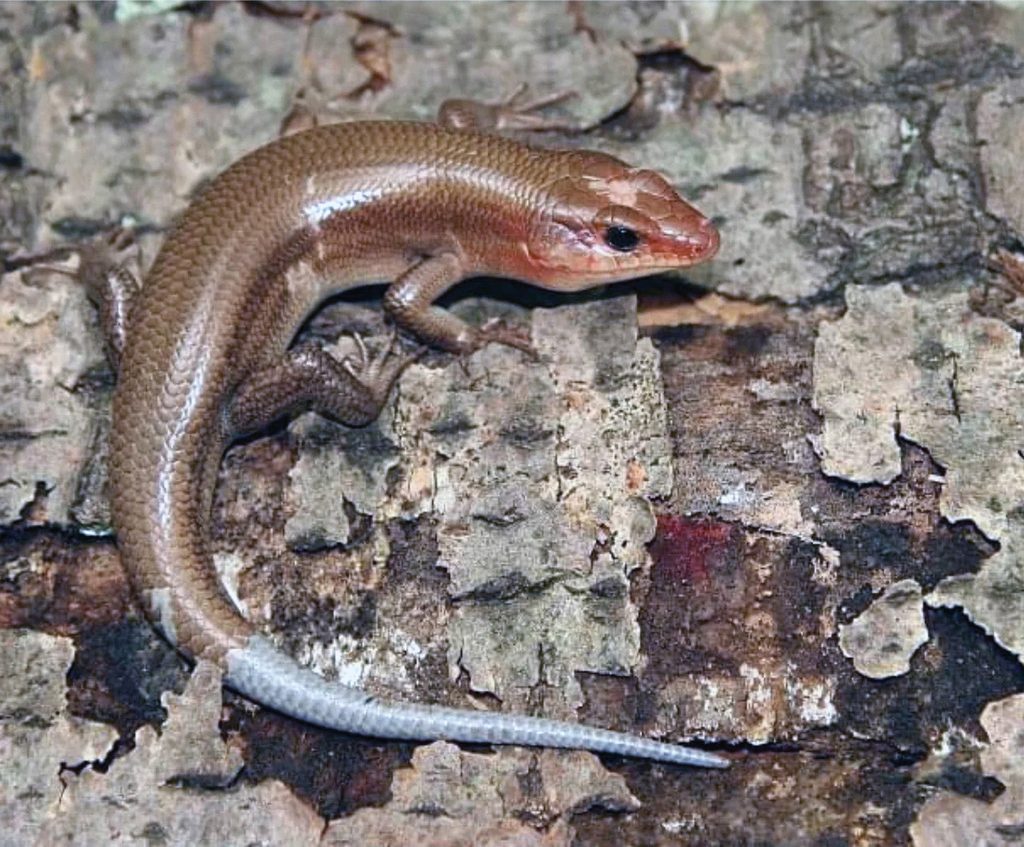
The common five-lined skink is widespread across the state. Pauley says they’re “basically everywhere.” Juveniles are distinctive, with five light stripes along dark bodies and brilliant blue tails. When threatened, the skink can detach—or “autonomize”—its tail, distracting a predator while it escapes.
The eastern fence lizard is another familiar species, often found in relatively open areas along the edges of fields and forests, sunning itself on old split-rail fences—hence the name.
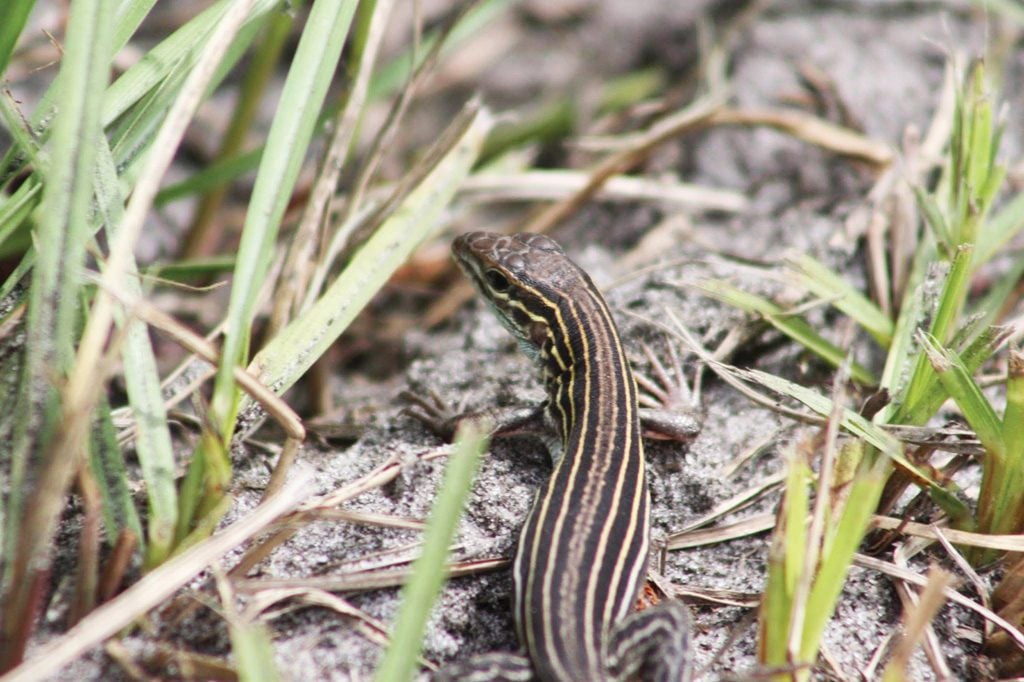
The broad-headed skink is the state’s largest, growing to about 10 inches and spending much of its time in trees. The little brown skink, by contrast, measures just three or four inches and prefers life underground, while the northern coal skink occurs in scattered populations along the eastern part of the state.
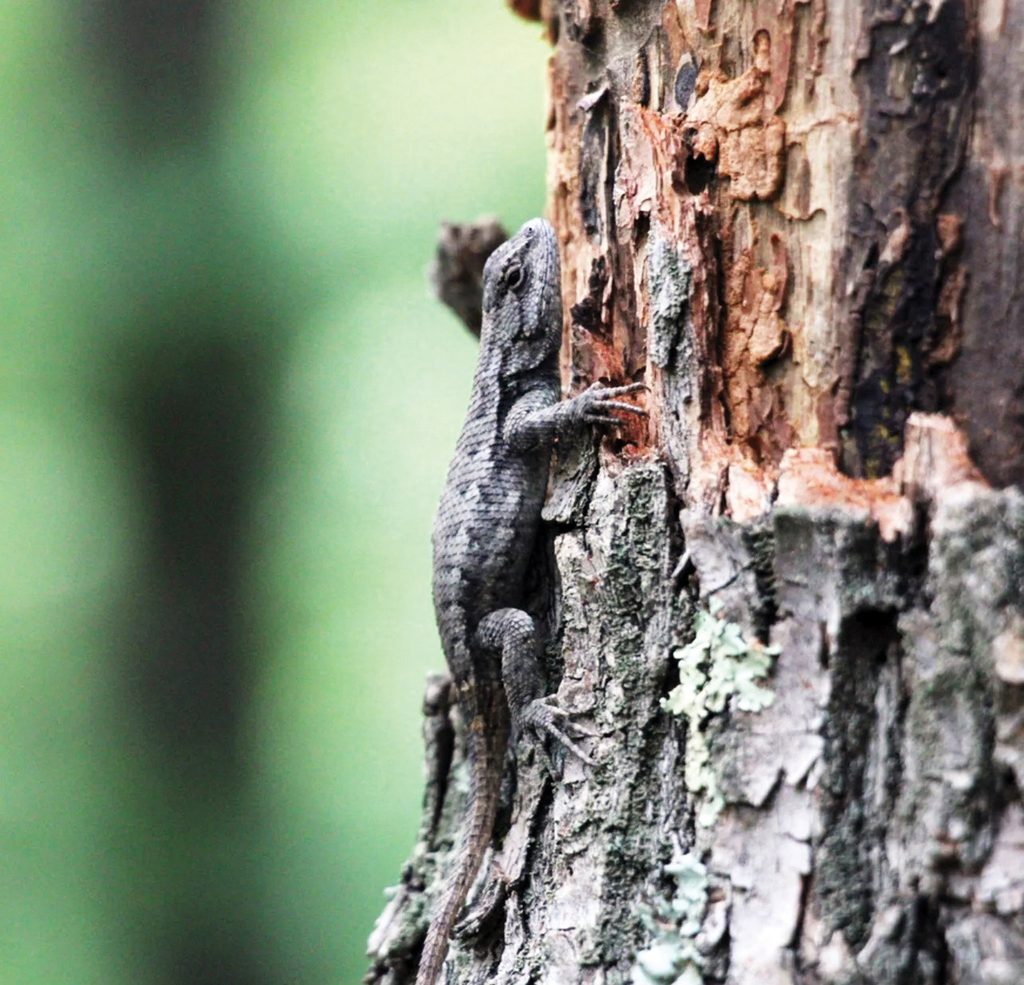
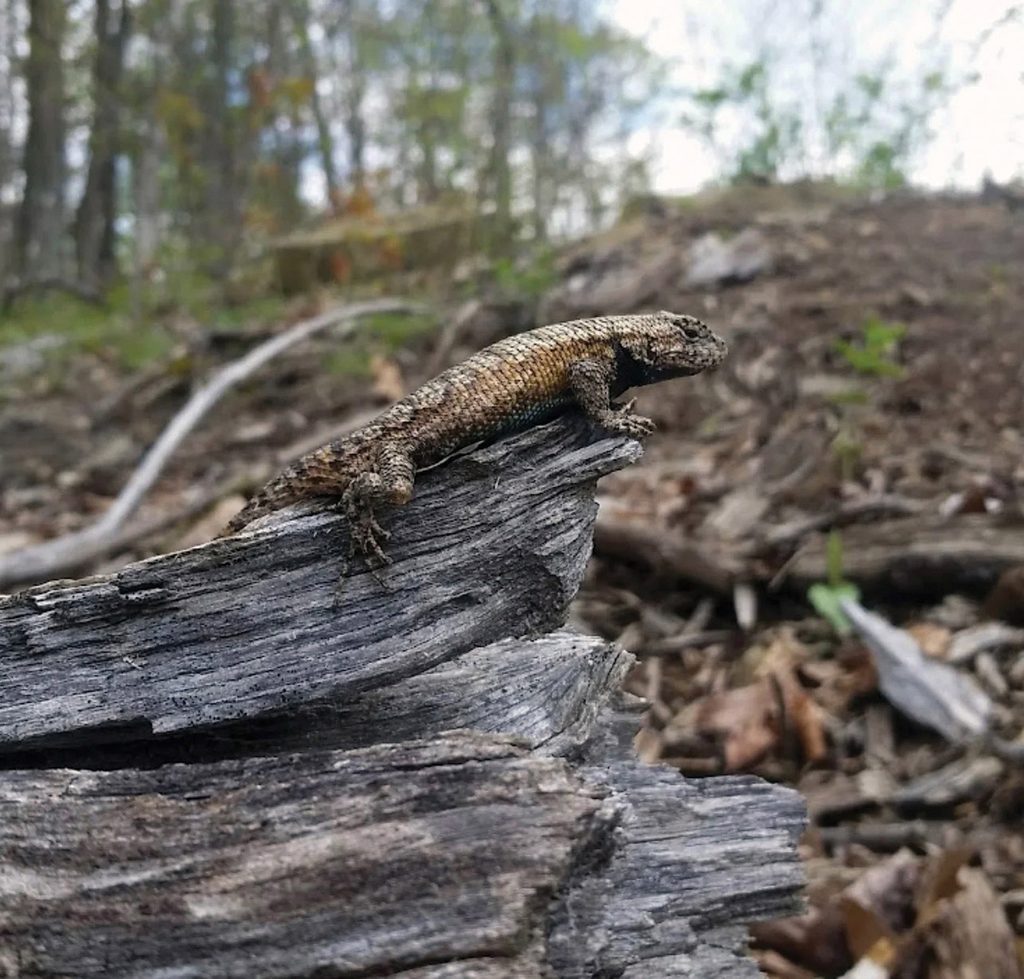
Then there’s the eastern six-lined racerunner. When Pauley and his colleague wrote an earlier book on West Virginia’s amphibians and reptiles, they believed the species could occur here. No one knew for sure.
Now they know it does. The racerunner has been documented in a small pocket of Morgan County, where the WVDNR regularly conducts surveys and counts to make sure the population remains stable.
Five of West Virginia’s lizard species have long been considered native and, while the history of the six-lined racerunner population is less clear, the WVDNR treats it as native while biologists continue trying to understand when and how it became established here.
Slowing Down for Winter
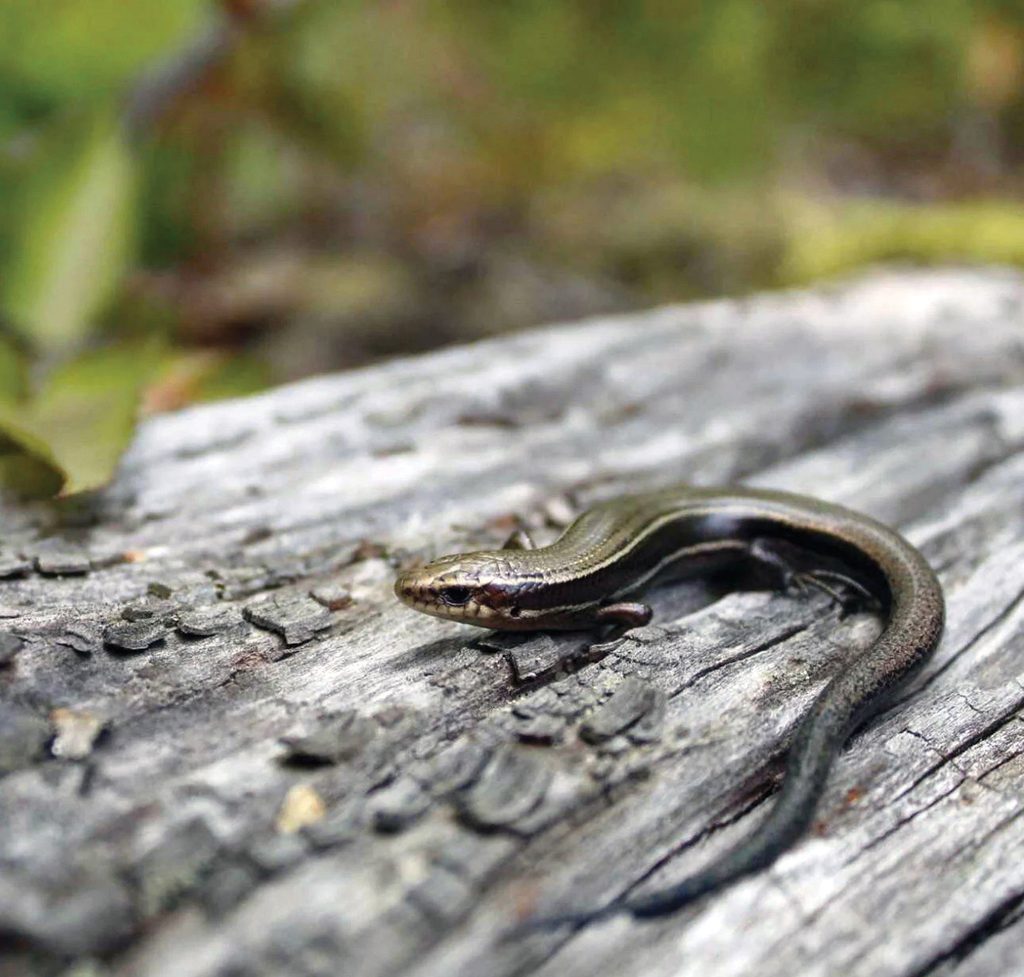
Whatever their differences during the warmer months, West Virginia’s six lizard species face the same problem as autumn settles across the state: Cold weather is coming.
Lizards are ectothermic, meaning they depend on outside temperatures to regulate their body temperature. As fall progresses, temperatures drop, insects become harder to find, and there are fewer hours of sunlight available for basking. Eventually, activity slows, and their metabolism drops dramatically, allowing them to conserve energy. They shelter in leaf litter and abandoned burrows, beneath rocks, or inside cracks and crevices.
The process is commonly called “brumation,” and in West Virginia, the experts generally begin seeing this slowdown around mid-October, although the timing isn’t fixed. “Their cue is largely coming from ambient temperature,” Oxenrider says. “Increasingly, that can mean activity extending later into fall. I have seen them running around on freakish weather days that are near 70 degrees in the winter. They’re always paying attention.”
For animals whose activity is so closely tied to temperature, warmer conditions could alter not only when they become dormant, but also where they are able to live. Pauley has witnessed signs of that shift during decades of research in West Virginia’s high elevations, where he began noticing ticks, poison ivy, and eventually box turtles in places he hadn’t encountered them before.
But there is still much scientists don’t know.
Small Animals with a Large Role
What scientists do know is that lizards occupy an important place in the state’s ecosystems. “Every animal has a niche,” Pauley says. Lizards consume insects and other small invertebrates while becoming food themselves for snakes, birds, and other predators. “Without birds and lizards, insects would inherit the Earth,” he says with a chuckle.
Oxenrider sees another reason to care about them. “We need to understand and respect their intrinsic value,” he says. “They went through a lot of evolution to get to where they are, and they deserve to be here.”
Four of West Virginia’s six lizard species are identified as Species of Greatest Conservation Need in the state’s 2025 State Wildlife Action Plan. The common five-lined skink and eastern fence lizard are the exceptions. The designation doesn’t necessarily mean a species is threatened or endangered. Rather, it identifies wildlife that may need additional conservation attention because of factors such as limited populations or habitat, emerging threats, or gaps in what scientists know about them. The State Wildlife Action Plan serves as a roadmap for the WVDNR and its conservation partners, helping direct research, population monitoring, habitat work, and other efforts intended to keep species from becoming more imperiled.
For West Virginia’s lizards, some of that work is already underway. In addition to surveys of the eastern six-lined racerunner, WVDNR biologists are monitoring northern coal skinks and experimenting with passive monitoring methods to detect them in different habitats. Habitat protection remains one of the most important pieces of that work. “Any time habitat is destroyed, animals die,” Pauley says. “There is no question about that.”
Look, but Don’t Touch
For West Virginians interested in seeing the state’s lizards for themselves, Pauley recommends heading into the woods during spring or early summer before conditions become especially hot and dry, and listening for the rustling of leaves. Looking up helps, too, since some species climb trees. Pauley’s approach is to find promising habitat, settle in with binoculars, and wait.
Oxenrider encourages people to look for them, too. Just don’t pick them up.
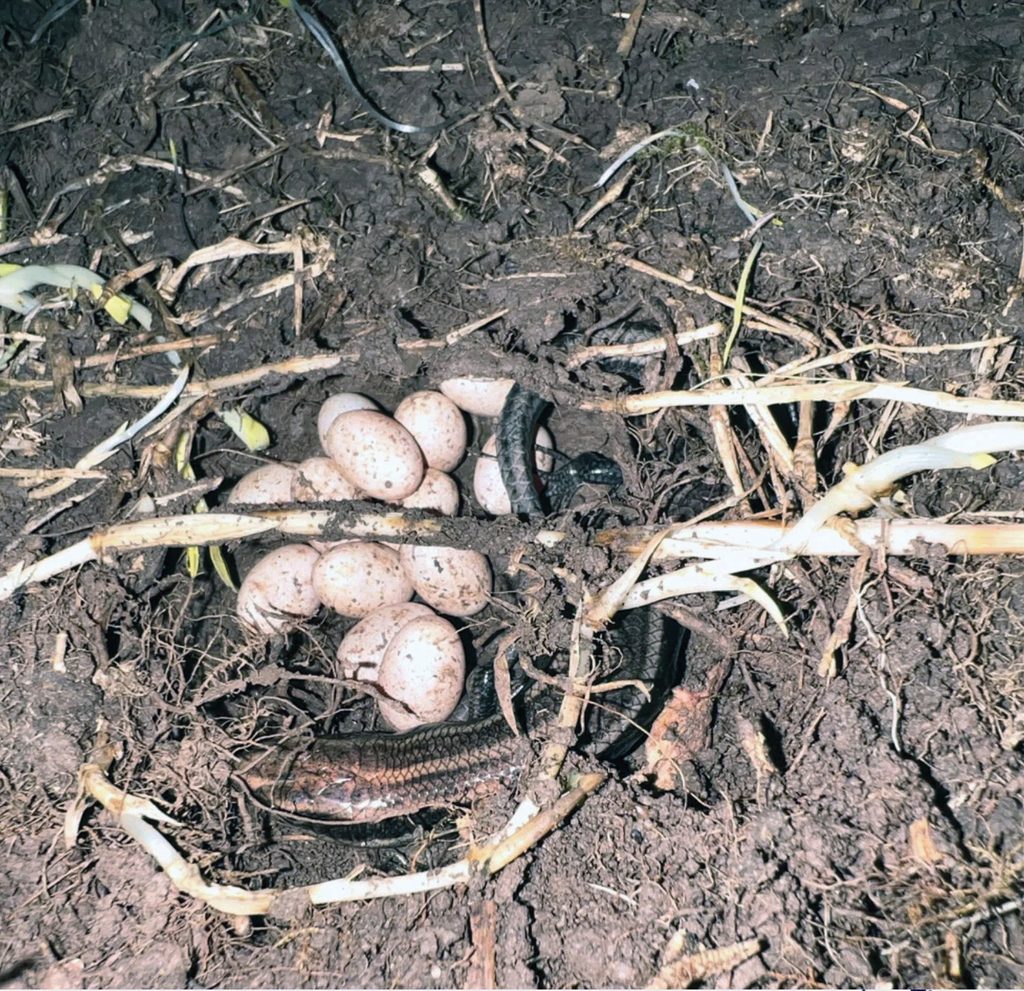
Under regulations in West Virginia’s Reptile and Amphibian Rule, on the books since 2021, all six of the state’s lizard species are protected from collection and possession. They cannot be taken from the wild to keep as pets or collected for commercial purposes, and scientific or educational collection requires a permit. Oxenrider encourages people to appreciate them without disturbing the animals or their habitat.
Even seemingly harmless efforts to find them can cause problems. Turning over rocks and logs disturbs the tiny microclimates underneath—the temperature, humidity, and protection that reptiles and amphibians may have specifically chosen for shelter. Oxenrider says wildlife officials have observed declines in areas where the same objects are repeatedly disturbed. “While I would never discourage children and families from going out and exploring nature, it can be done in an ethical way. We don’t have to turn everything, and it’s not always important that we have everything in hand to be able to appreciate it,” he says.
By October, there may be little to see anyway.
As temperatures fall, the rustling in the leaves becomes quieter. Fence posts and tree trunks that served as sunning spots during warmer months remain empty. Beneath the leaf litter, inside old burrows and among West Virginia’s abundant rocks and crevices, the animals settle in to wait.
They’ll be back when temperatures allow.
 By