 By
By 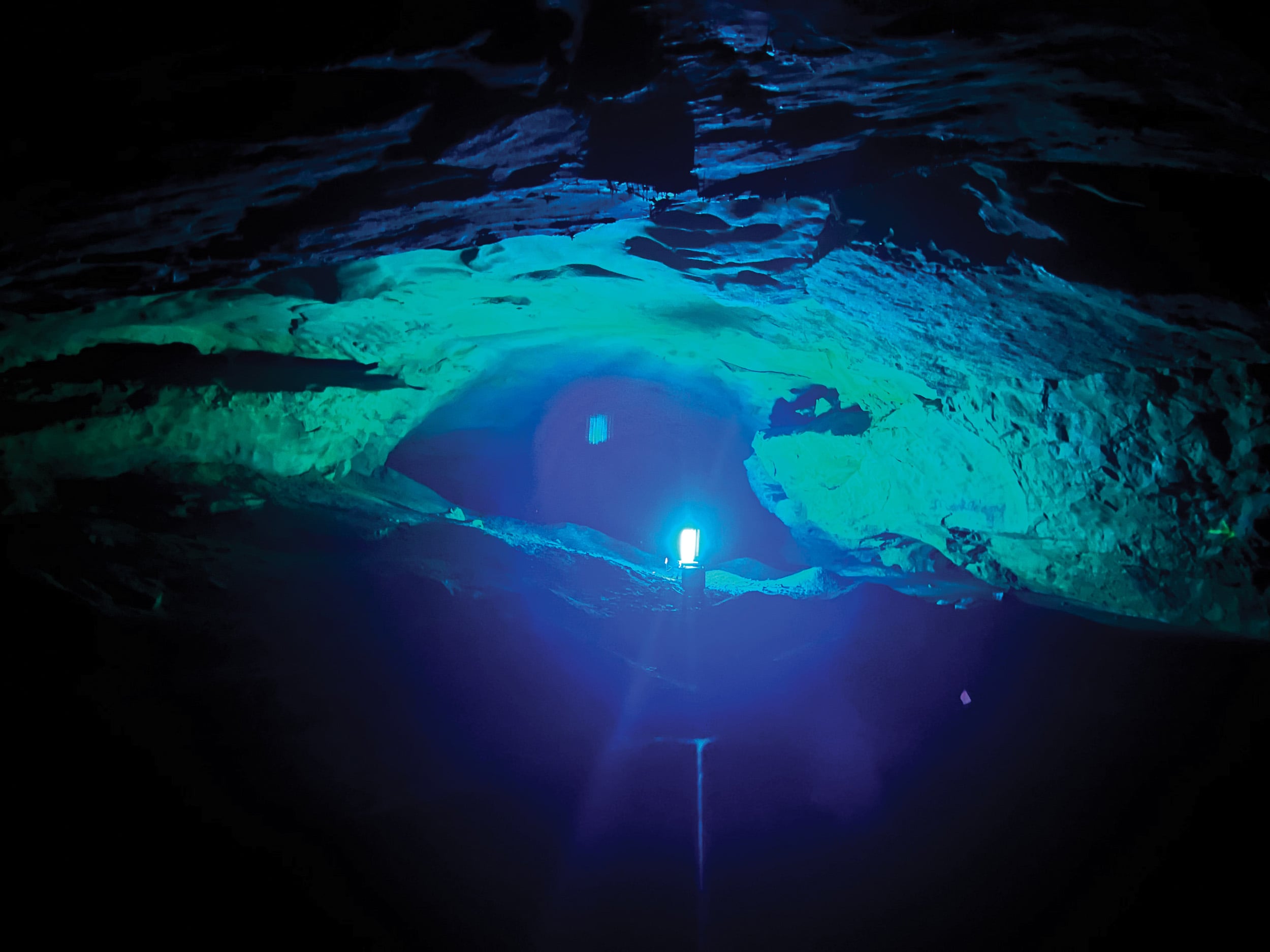
In a Monroe County cave, scientists are turning to ultraviolet light in hopes of slowing a disease that has devastated hibernating bats.
This story was originally published in the August / September 2026 issue of Wonderful West Virginia. Subscribe here.
Written by Mikenna Pierotti
Feature Photo Photographed by Rick Doyle
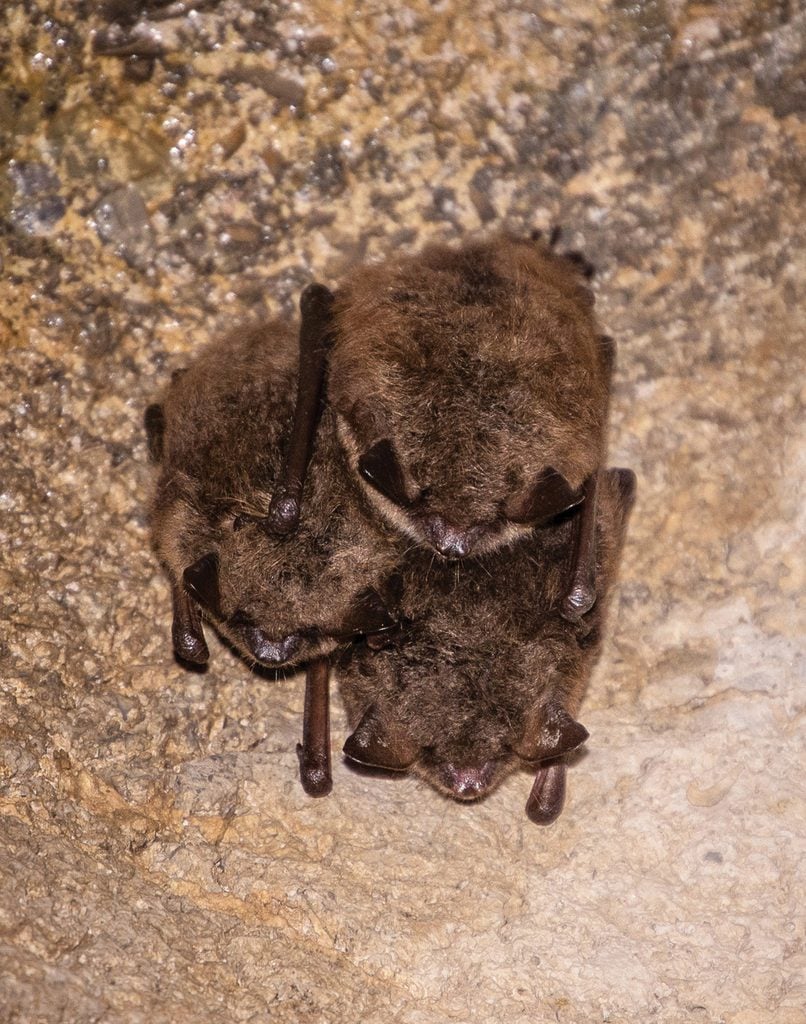
For Alex Silvis, the impact of white-nose syndrome on bats is not some abstract horror. It’s not some footnote in the ecological record. It is a loss he has seen and felt. Before the fungal disease swept through bat populations in the Eastern United States, Silvis remembers entering caves in the state where the walls seemed to breathe.
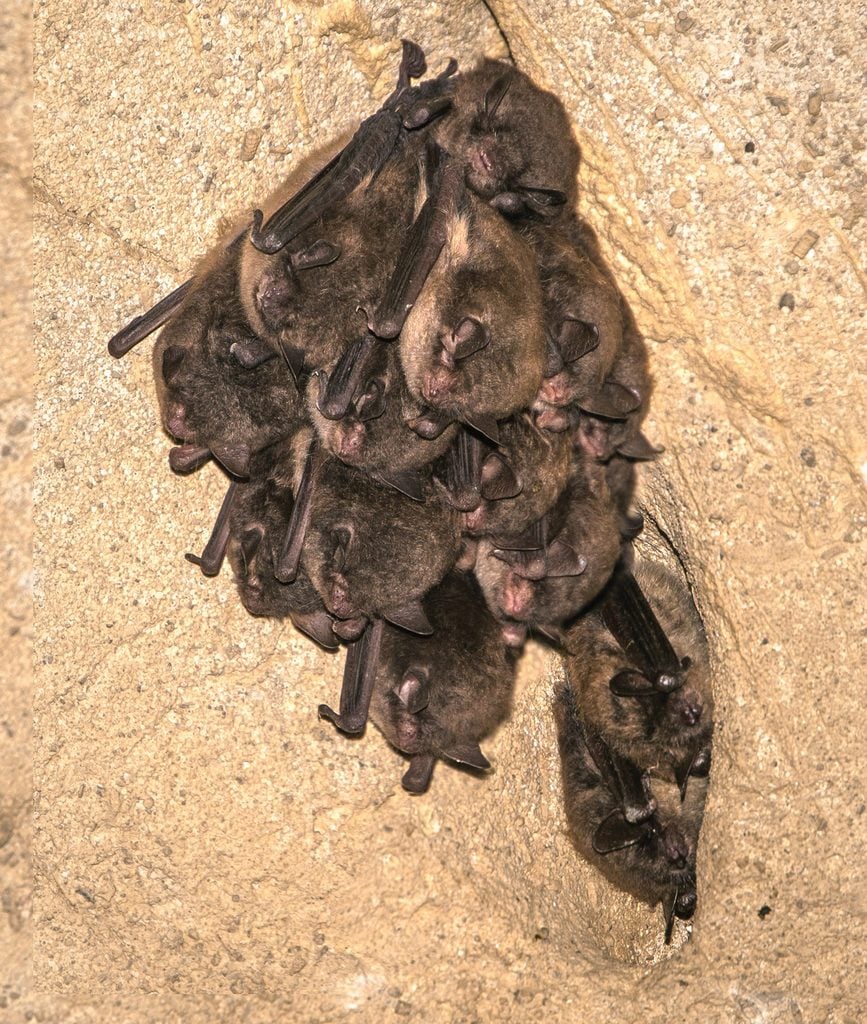
“You go into these caves where we used to see big aggregations of bats,” says Silvis, a wildlife biologist with the West Virginia Division of Natural Resources (WVDNR), “and the ceiling would be alive, essentially.” The animals would cluster along cave walls and ceilings, hibernating, folded into the stone until spring.
Then white-nose syndrome crept in. “Now, you go back and, instead of life on the ceiling, you see death on the floor.”
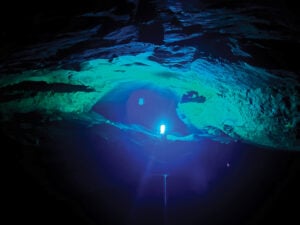
ABOVE: While UV-C is not a treatment for white-nose syndrome, it just may be the answer to making our cave systems safer for West Virginia’s resident bat colonies.
White-nose syndrome, often shortened to WNS, is a disease of hibernating bats that’s caused by the fungal pathogen Pseudogymnoascus destructans, or Pd. The fungus is invasive in North America and is believed to have originated in Eurasia. It was first observed on the continent in 2006 in a cave in Upstate New York, according to Silvis.
“The fungus can persist in the soil and on cave surfaces without the bats,” he says. “When the bats come into contact with it, they develop the infection. Then, when they hibernate, they form large clusters and pass it from bat to bat.”
The disease gets its name from the white fungal growth that can appear on the muzzles and wings of infected bats, but the visible signs are only part of the damage. The fungus disrupts a season when survival depends on conserving energy. During hibernation, bats lower their body temperature and slow their metabolism to make it through winter on stored fat reserves. When the infection becomes severe enough, WNS interrupts that process.
“This causes hibernating bats to wake up, consuming vital fat reserves necessary to survive a winter, which ultimately means starvation—or they freeze to death if they leave the cave to try and feed.”
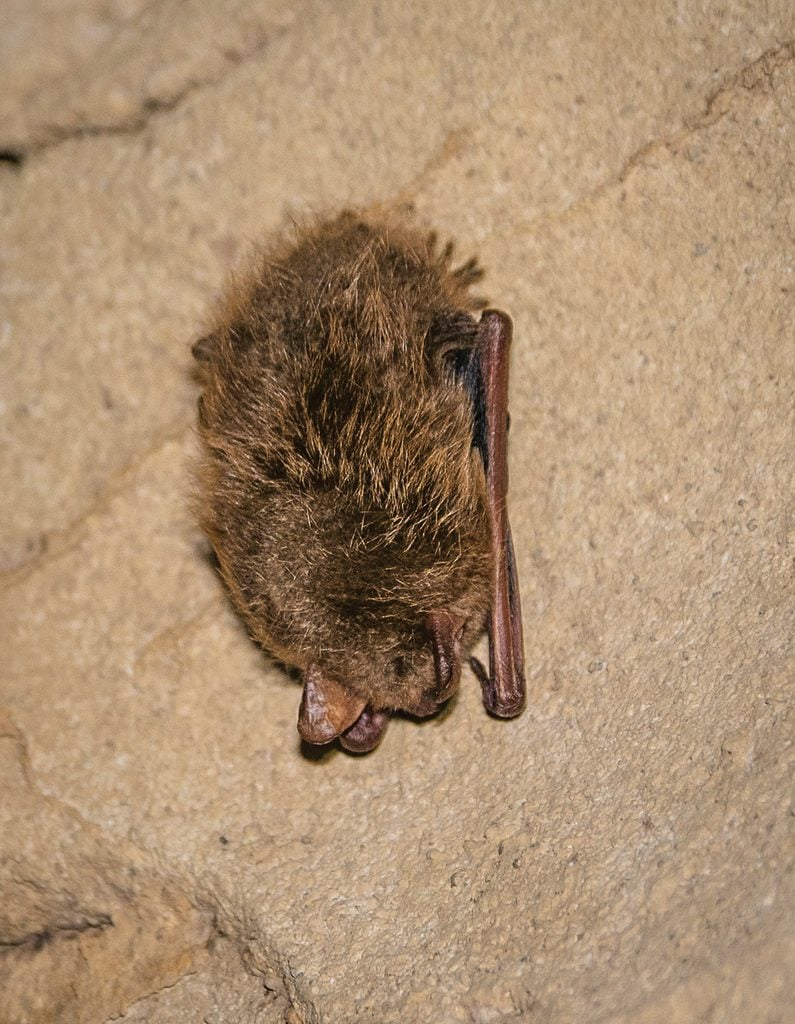
The losses have been severe. In the two decades since WNS was discovered in North America, millions of bats have died as the disease spread across much of the United States and Canada. In some affected species, populations have declined by more than 90% across the Eastern United States. The northern long-eared bat is now listed as endangered under the Endangered Species Act, and the tricolored bat has been proposed for endangered status.
West Virginia has not been immune. Silvis says some sites are now completely missing species that once hibernated and thrived there. “Our populations have pretty much tanked as well,” he says. “We’ve approached the zero line.”
The effort to protect bats reaches beyond any one cave. In West Virginia and across North America, many species feed on insects, including mosquitoes. “Bats eat a lot of insects,” Silvis says. “A number of those are pest insects, disease vectors for people, invasive insects, and agricultural pests.”
Bats also help sustain cave ecosystems, bringing nutrients underground through guano. “Bat guano is a huge nutrient source for a lot of different cave organisms,” Silvis says. So when bat populations fall, those cave systems feel the loss, too. To Silvis, conserving bats and the habitats that sustain them is part of the larger public benefit of managing West Virginia’s natural resources. “We, at least at the state level, are tasked with managing and preserving these resources for the public benefit,” he says. “And this falls into that.”
That is what makes the work now underway at Greenville Saltpeter Cave Preserve in Monroe County both urgent and unusual. The WVDNR has partnered with the West Virginia Land Trust to study whether ultraviolet-C (UV-C) light can reduce the amount of Pd on cave walls and ceilings before bats return to hibernate.
It is not a cure. It is not expected to stop white-nose syndrome from killing bats overnight. Instead, the hope is more measured: reduce the fungal load in key hibernation areas, slow transmission, and give surviving bats a better chance to persist long enough for populations to stabilize and, eventually, adapt.
“We know that we can’t save all of the bats,” Silvis says. “We’re hoping to slow down the loss rate at a large hibernaculum so those animals are more likely to survive and pass on those genes. Hopefully, we can support that genetic rescue where the bats eventually save themselves by becoming resistant. We’re just trying to get through that sort of midterm.”
High-Tech and Hands-On
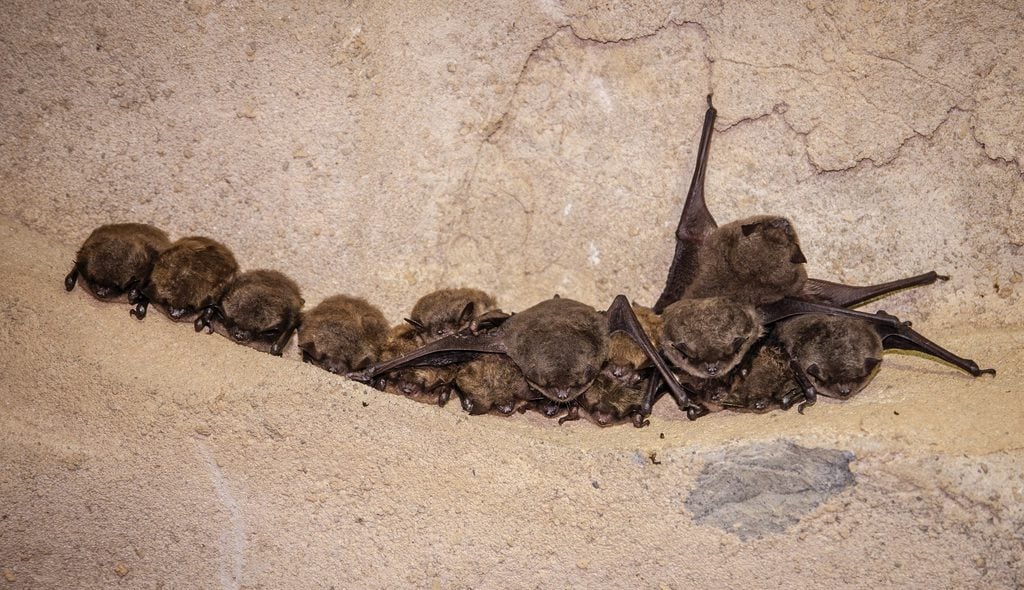
Greenville Saltpeter Cave is one of West Virginia’s most significant bat hibernation sites. Located in Monroe County, the cave contains nearly four miles of mapped passages and is part of the 298-acre Greenville Saltpeter Cave Preserve, now managed by the West Virginia Land Trust.
The cave also carries our history. It was once mined for saltpeter by pioneer settlers and Confederate soldiers, when saltpeter was used as a key component in gunpowder. For the WVDNR treatment project, the focus is on Indiana bats, little brown bats, northern long-eared bats, and tricolored bats, Silvis says. Greenville Saltpeter Cave contains aggregations of those species, making it a high-priority site.
But caves are not laboratories. Their surfaces are irregular, broken, folded, and hidden. A cave wall may curve away from the light. A ceiling crack may be too narrow for the light to find its way in. The work requires not only scientific expertise but also the practical planning that comes from fieldwork experience.
“When we go to a treatment site, we first start by mapping out all the treatment points,” Silvis says. Shadows matter. Any surface hidden from direct light may remain untreated and harbor the fungus. “We need to make sure that all of the surfaces are getting the right level of exposure.”
To do that, the team uses an ordinary work light to study where shadows stretch. They choose positions that minimize shading, then place flags at treatment points, effectively creating a grid. Once the site is mapped, they bring in what Silvis calls “the obelisk,” a whole-room UV sanitizer about three-and-a-half feet tall and heavy enough to make moving it carefully part of the challenge. “It weighs close to 50 pounds,” Silvis says. “And the battery pack weighs about 50 pounds as well.”
The device is set on an adjustable stool to keep it level, then plugged into its large battery pack. When it runs, the team uses a protective shield to avoid exposure. “We run it while we take cover so that we’re not getting blasted, because we’ll get a heck of a sunburn from it,” Silvis says.
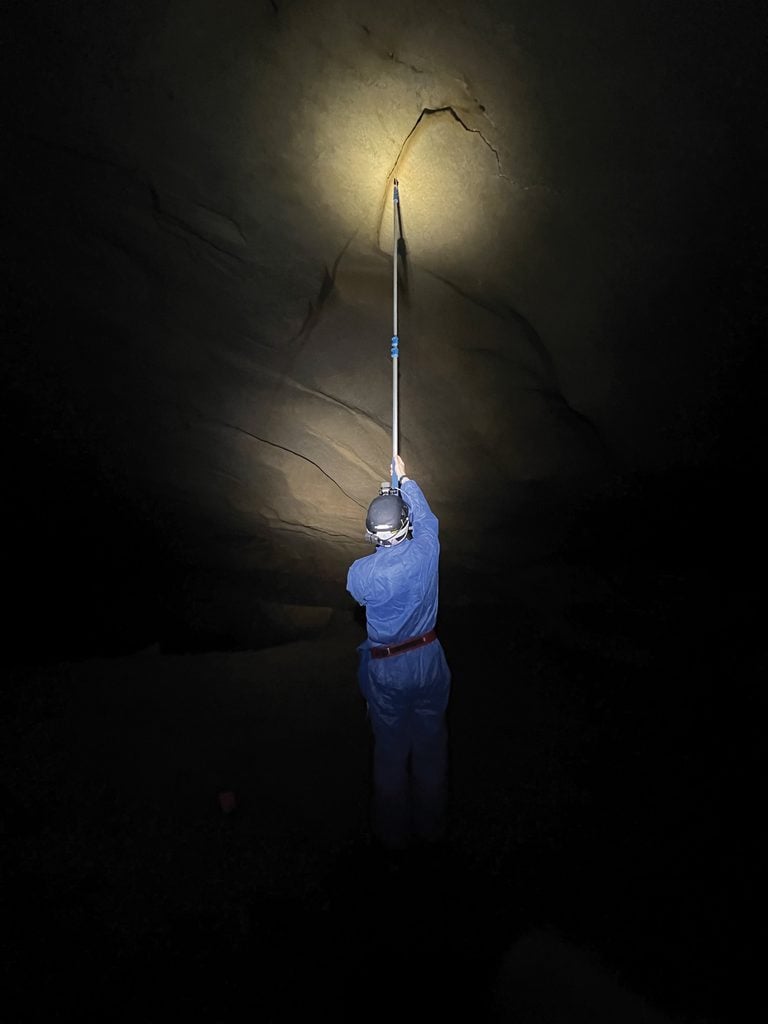
Each treatment point usually receives about five minutes of exposure, he says, enough to deliver the intended intensity of UV-C light. Then the team moves the obelisk to the next point. For cracks and crevices the larger device cannot reach, biologists use small handheld UV lights mounted on extendable poles.
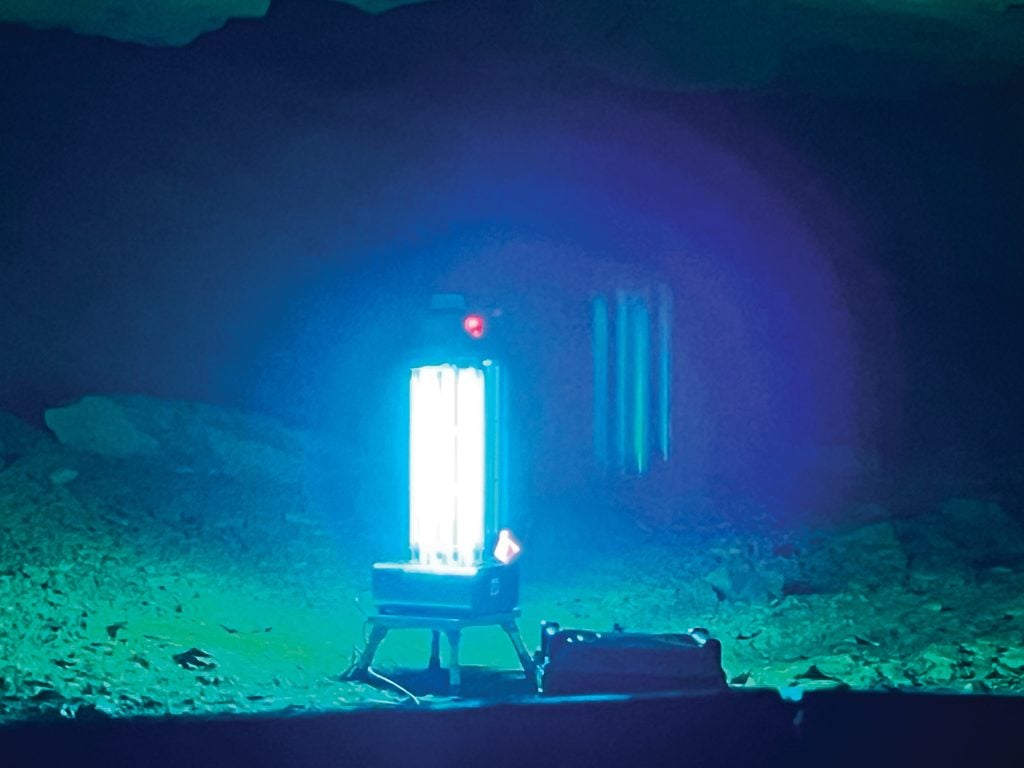
The reason UV-C is promising has to do with a weakness in Pd itself. “If we use a UV light at the right intensity, we can damage the DNA in the fungus,” he says. “The fungus can’t repair that DNA, so the fungus dies.”
Because most other organisms can repair that kind of UV damage, Silvis says, the treatment has minimal impact on other cave life. It also leaves no chemical residue behind. That matters in caves, which can be home to rare and highly specialized species.
After treatment, the team can test whether the fungus is still alive. Biologists take swabs before and after UV-C exposure. If the fungus can be cultured from the pre-treatment swabs but not from the post-treatment swabs, that is a clear sign the treatment killed it.
Timing the Treatment
The treatment does not happen when bats are hibernating in the cave. Instead, WVDNR treats the cave surfaces in late summer, before bats return for winter.
The timing is deliberate. Bats clear the infection during summer, when they are active, grooming, and able to mount an immune response. It’s only during hibernation that their immune systems are not working fast enough to fight infection effectively.
“We want to reduce the amount of fungus that’s in the cave right before the bats show up,” Silvis says. “We’re making sure it doesn’t have time to recolonize before the bats start showing up in September.”
The bats will likely be exposed to the fungus in other places, but he compares the idea to limiting exposure to poison ivy. The more contact an animal has with the fungus, the greater the problem becomes. “We’re trying to minimize how much they’re exposed to,” he says.
The work at Greenville Saltpeter Cave is focused on a relatively small section of a much larger system. The cave is more than four miles long, but the treatment area is only a few hundred feet where many of the bats form large groups, Silvis says. Because lab studies have shown the fungus does not spread through the air, the team can target the places where bats gather in the highest numbers rather than treating the entire cave.
That targeted approach saves time and reduces unnecessary exposure of other cave organisms. Silvis says the agency is also looking at other possible treatment sites, including abandoned rail tunnels that serve as artificial hibernacula.
That work is possible at Greenville Saltpeter Cave because of partnership. In October 2023, the West Virginia Land Trust assumed management of the preserve, creating a protected setting for conservation and research. For Adam Webster, director of stewardship with the West Virginia Land Trust, the partnership with WVDNR made sense.
“When we acquired this property, it was a natural fit to invite the WVDNR onto the property to do work that they had already been involved with,” Webster says. “It fit our mission, and it was a really great opportunity to allow them to have a place to study this disease and the impact on bats, but also make it a conservation success story.”
The cave itself is only one part of that story. Protecting a cave also means protecting the landscape around it, Webster says: the fields, forests, water, and foraging habitat that support bats through more than one season of their life cycle. “The caves are one piece of the puzzle,” he says. “It’s a stacked benefits situation, where we protect the cave, we can protect the land, and we’re meeting a broader ecological picture.”
Trying and Hoping
In the short term, Silvis says, success means showing that the treatment can kill the fungus on cave surfaces. In the intermediate term, the team can look at fungal load on bats, using UV-B light to illuminate the fungus and photograph the extent of infection without removing bats from the cave. In the long term, the hope is to see increases in the number of hibernating bats at treated sites.
That may take years. Bats reproduce slowly, often having only one pup per year, and not all adult females reproduce every year. “It could be up to a decade before we see the number of bats actually really start to increase significantly,” Silvis says. “It’s a long game.”
But after years of watching white-nose syndrome ruthlessly cut through bat populations, having any tool matters. “We aren’t going to turn the tide necessarily, but it feels like we can at least make a difference,” Silvis says.
That difference may be enough to help surviving bats hold on. Enough to reduce the amount of fungus waiting in the dark. Enough to give populations time for resistance to spread. Enough, perhaps, for genetic rescue to begin.
“We don’t know,” Silvis says. “All we can do is try and hope.”
If it works, and that’s a big if, the bats that return in fall will find less danger waiting. They will fold themselves into the rock again, small bodies suspended in the dark. And when spring comes, more of them may wake, loosen their grip, and fly out into the darkening sky.
 By
By