 By
By 
“Country road vittles” takes on a whole new meaning in Marlinton every fall.
This story was originally published in the August / September 2026 issue of Wonderful West Virginia.
Subscribe here.
Written by Devin Lacy
Photographed by Kinsey B Photography
What’s the wildest thing you’ve ever eaten? And I mean wild. Maple-glazed raccoon? What about deep-fried snapping turtle? Oh, maybe a slow-cooked bear stew?
In West Virginia, dishes like this aren’t exactly uncommon. We have a knack for making the best out of the resources we have available to us—making a lot out of a little and turning it into something special to share with the people we love most. Those are the things we hold most dear: good food, better company, and traditions too tightly woven into our being to ever really die—even by vehicle.
Luckily, they can be found in what may seem like an unusual place, but one no less deserving: the West Virginia Roadkill Cook-Off and Autumn Harvest Festival in Marlinton, where roadside finds turn into out-of-this-world eats.
A Recipe for Success
William “Bill” Jordan, president of the Pocahontas County Chamber of Commerce and a member of the festival’s planning committee, might be on the planning side of the cook-off now, but there was a time he was taking home the prize. “I attended the very first cook-off in 1991,” he says. He signed up as a team with his grandmother, with only a few other participants to compete against and a couple dozen festival-goers to entertain. “We cooked for six or eight years there and even won first place a few times!”

Now it should probably be noted that, despite the name, the Roadkill Cook-Off isn’t serving anyone actual roadkill. Curious diners can rest assured that all of the meat has been properly treated and handled before being prepared, cooked, and served under the Chamber’s guidelines. With that said, there might still be a bit of hesitance around a “roadkill” cook-off and some curiosity as to how this idea made it from the drawing room floor to become one of the state’s most widely known events.
According to Jordan, the story starts in 1991 when The Printed Press in Charleston released a simple spiral-bound cookbook. Gourmet Style Road Kill Cooking and Other Fine Recipes by Jeff Eberbaugh was unique in its content, combining poetic form and absurdist humor with a collection of practical recipes inspired by generational Appalachian tradition and flavor. Eberbaugh was a West Virginia native and avid outdoorsmen who simply enjoyed cooking. As a hunter, much of the meat in his dishes was something he harvested on a recent trip into the woods. So when compiling ideas for a cookbook, it made sense that the recipes—gathered from other Mountain State locals—consisted of common West Virginia critters like opossums, deer, squirrels, and snakes that also happened to be commonly struck by vehicles on our roadways.
“The county commission got ahold of the book and were fascinated,” Jordan remembers. Eberbaugh, a former RN and local entrepreneur, passed away in February of this year, though his legacy and passion for West Virginia food tradition lives on through the festival his work inspired. “It’s odd, because no one else does this,” Jordan explains. “But it’s one of the biggest events in Pocahontas County.”
Competition Gets Hot
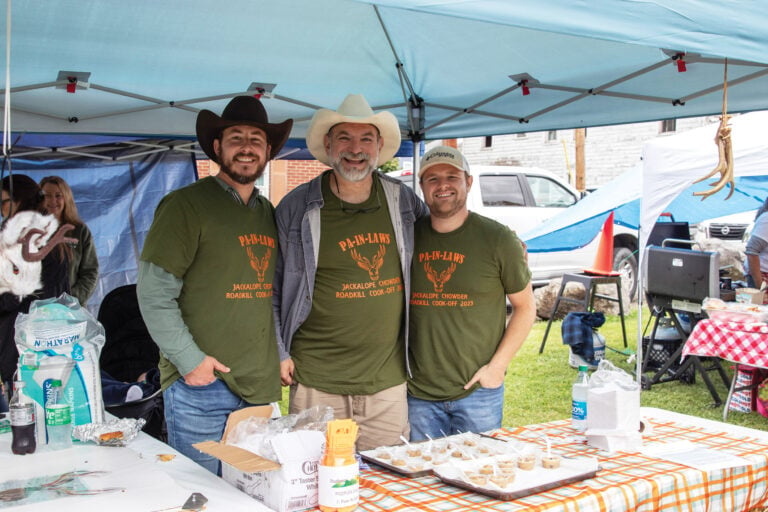
The Roadkill Cook-Off is an in-good-taste—literally—ribbing on Appalachian hillbilly stereotypes. Served alongside themed get-ups, wild booth decor, and even wilder dish names, recipes up for the judges’ consideration must consist of at least 25% native wild game commonly found on the side of the road. All the cooking must happen on-site as well, though pre-treatment—like parboiling or marinating—can be done ahead of time. Meat must be properly cleaned and prepped for cooking prior to arrival. “You have to know how to cook wild meat,” Jordan advises, voice going wistful as he reflects on those years spent bustling around the cooking site with his grandmother. “We used to have a blast.”
Don’t worry about your culinary prowess—you don’t have to be a professionally trained chef in order to participate. “We have families and groups that do it,” Jordan says. “One of the banks in town does it!” That would be Pendleton Community Bank, an enthusiastic team that has numerous awards under its tires. That’s an impressive feat given the tough competition, all vying for one of five awards, most sponsored by local businesses in town. “It’s really a community effort.”


Prizes are handed out for 1st, 2nd, and 3rd place dishes, as well as one given out to the team with the best showmanship and display and another for the general public’s favorite bite.
The few dozen attendees Jordan helped feed in 1991 have multiplied over the years into a few dozen thousand as the event continues to capture the attention of state residents as well as that of curious foodies from all over the country. But it’s not just the food they’re greeted with—nor the sole thing that keeps them coming back.
Outside of the competition and food sampling, there is a whole festival taking over downtown Marlinton. The Roadkill Cook-Off is a part of Marlinton’s annual Autumn Harvest Festival, and together they pack in all the seasonal fun we’ve come to expect from a fall gathering in Almost Heaven. Like a small-town dream, musical performers take the stage at the town’s gazebo for day-long entertainment while vendors line the quaint Main Street. The Roadkill Cook-Off Pageant already found its “next queens of ditch line delicacy” back in April, so you’re bound to see a few tiaras floating around. You’ll also probably see some running gear—the annual Possum Trot 5K takes place that morning. Walk or run the route before tasting the day away at the cook-off.
According to Jordan, roughly 100 vendors set up shop last year, selling anything from handmade crafts and artwork to fresh honey and syrup. Most of the vendors are nonprofits—local churches, scout troops, and Lion’s Clubs. “It’s fundraising for a lot of them,” he says, a chance for community outreach and reciprocal support from all sides of the road. “The volunteerism always stands out.” From the road crews to the Chamber’s planning committee to the vendors, it takes a village to pull it off.
Wild and Well-Loved
“This is a place where people still know how to live off the land,” said Andrew Zimmern, host of the Travel Channel’s hit series Bizarre Foods, as he opened an episode of the show in 2012. “People here know how to preserve the best traditions of the past, which means they still know how to cook things most other people have forgotten and probably wouldn’t think to try.”
With one episode, this New York–born man captured what others have willfully misunderstood about our home state for so long. And while he wasn’t the first to find humor in the stereotypes, he leaned into them with us and found a bit of truth in the meantime. “It just may be the most real version of America in all the 50 states,” he goes on to say of West Virginia, and his honest respect for and appreciation of its people and our traditions helped to shine a positive national—and sometimes international—spotlight on this little piece of Appalachian culture. What started with an episode on the Travel Channel, and subsequently the Discovery Channel and Food Network, grew into articles and news coverage that spanned states and countries, soon becoming awards such as Best Unique Festival in Blue Ridge Outdoors’ 2025 Best of the Blue Ridge competition.


Marlinton’s celebration has plenty of people to thank for its success year after year, from the community members who come together in support with wares, recipes, and sponsorships to the festivalgoers who show up with open minds and empty stomachs. People like Jeff Eberbaugh, who found that tradition and humor taste so good when combined, or Andrew Zimmern, cutting through outsider perceptions to find—and consume, it turns out—the heart of what makes this place special. People like Bill Jordan, who fell in love with the Roadkill Cook-Off on that fateful day 35 years ago as he cooked up venison with his grandmother and now helps bring it to life year after year.
Discover the surprising beauty of this annual hoedown when you join the thousands of people heading to Marlinton on September 26 with big appetites and unpicky palates. Just be sure to purchase tasting wristbands if you’re hoping to sample the offerings. If you’d rather be the one whipping up the grub, submit a completed registration form, a written recipe with ingredients and instructions, and a signed release form to the Pocahontas County Chamber of Commerce no later than September 19. Forms are available on the event’s Facebook page, @roadkillcookoff. Spots are extremely limited—only 10 teams will be able to participate—so dig out that old recipe box and see what dish can be improved by a little asphalt crunch.
Looking for more tasty fall fun?
North Bend State Park is welcoming foodies to Nature Wonder “Wild Foods” Weekend September 11–13, 2026. This long-standing annual event mixes education with culinary curiosity. Participants will be guided on how to find, process, and enjoy wild Appalachian forageables. Visit WVdnr.gov/nature-wonder-weekend for more information.
Get a Taste
If you’re looking to feed an army or use up the whole family’s deer harvest in one fell swoop, Steve Saffel and the High Rocks Grow Getters are way ahead of you with their quirky roadkill spin on a Cajun classic.
Deerly Departed Jambalaya
- 3 cups vegetable oil
- 20 pounds asphalt andouille sausage
- 30 pounds tiller-tenderized venison, ground
- 20 pounds grow-getter onion
- 15 pounds roadside peppers
- 9 pounds celery
- 1 quart garlic
- ½ cup salt
- ¼ cup black pepper
- ¼ cup paprika
- 2 tablespoons thyme
- 2 tablespoons oregano
- 10 gallons muddy stream water
- 40 pounds swamp rice
- Green onion, to taste
- Parsley, to taste
1. Heat oil in kettle. Brown sausage first, then remove. Sear venison until well browned; remove.
2. In remaining fat, saute onion, peppers, and celery. Add garlic and cook for another 2 minutes.
3. Return all browned meats to kettle. Stir in salt, pepper, paprika, thyme, and oregano.
4. Pour in 10 gallons of muddy stock and bring to a boil.
5. Slowly stir in rice. Reduce heat to low boil and simmer, covered, for 40–50 minutes.
6. Add green onion and parsley just before turning off the heat. Serve.

 By
By