 By
By 
The story of the 1914 failure of the Stony River Dam.
This story was originally published in the February/March 2026 issue of Wonderful West Virginia. To subscribe, visit wonderfulwv.com.
Written by and photos courtesy of Cynthia Karelis
In the early morning hours of January 15, 1914, under the chill darkness of winter, a West Virginia farmer made a feverish ride on horseback—a ride credited with saving hundreds of lives.
That farmer was J.G. Hanlin, who lived in the mountains above the Stony River Dam, in Grant County, near today’s Mount Storm Lake. Hanlin had been awakened at 4 a.m to devastating news: The newly built dam, owned by the West Virginia Pulp and Paper Company (WVPPC), was failing.
Hanlin rode frantically through the dark Stony River Valley to the small town of Schell 20 miles north, just downstream from where the Stony River flowed into the North Branch of the Potomac. In Schell, he delivered the news to a brigade of “telephone girls”—these signal brigades were organized by local communities even before World War I’s General John Pershing formed the bilingual squad of operators that was known as the Hello Girls—and the information was quickly acted upon, activating the emergency alert plan residents had organized to warn them to evacuate to higher ground.
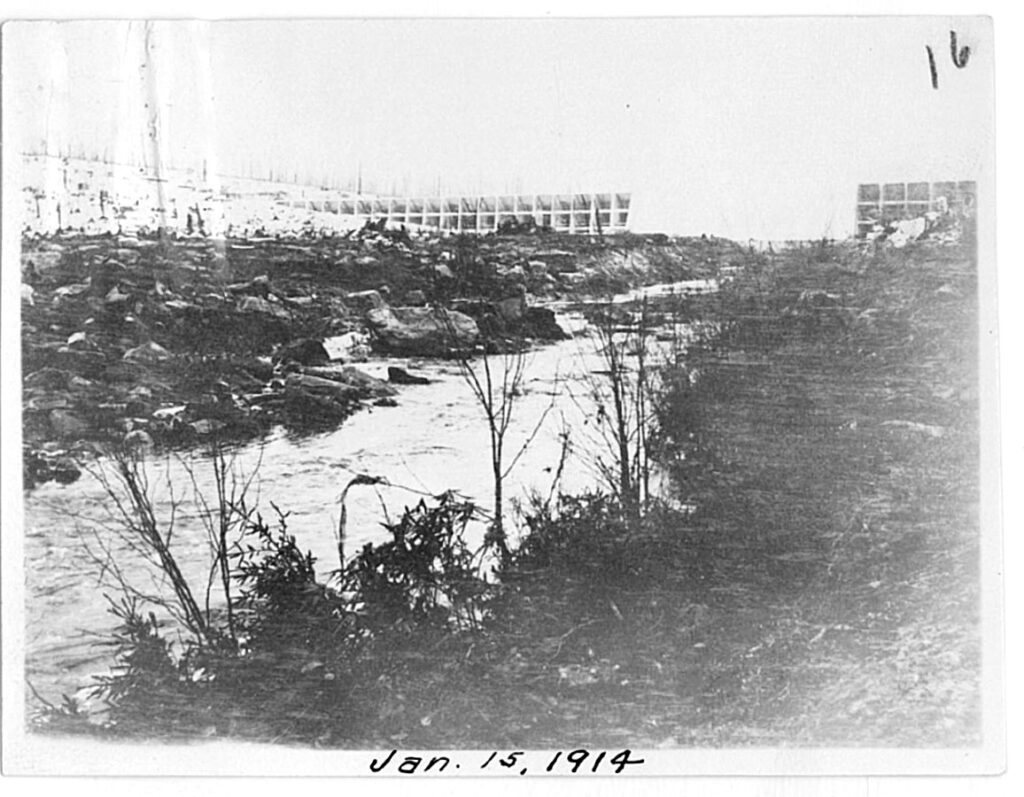
Fire bells rang out in Schell and then, thanks to this chain of calls, in communities down the North Branch: Blaine, Shaw, and Barnum in West Virginia, and, farther downriver, the towns of Luke, Piedmont, and Westernport in Maryland. Residents moved quickly to escape the flood waters. “Their flight was not an instant too soon,” the New York Times later relayed. The article described a wall of water making its way down the North Branch, quickly overcoming the town of Schell and spreading disaster throughout the Potomac Valley.
In a gripping retelling of the flood’s progression, the Times laid out the harrowing path of the wall of debris-filled water.
“At 4:25 o’clock the rise at Piedmont began, and in ten minutes the rise was five feet. At 6 o’clock the lower parts of three towns were flooded. Forty minutes later the flood reached Keyser, West V., where people along the waterfront had already moved to safety. At Barnum the rise was eight feet in fifteen minutes. The actual rise at Schell, where the flood joined the Potomac, was fifteen feet above the record.”
Fear flowed down the North Branch ahead of the flooding, the article continued, to Cumberland and beyond, that debris would destroy other dams along the river. The Western Maryland Railway placed a string of cars on the bridge at Luke, the report said, to weigh it down and prevent its dismantling by the force of the flood, and ice on the Potomac River was dynamited to give the floodwaters a free channel.
The Lead-Up to Disaster
The Stony River Dam had been built by the WVPPC less than six months before that fateful night. It was created to form a storage reservoir for the paper mill situated in Luke, Maryland, on the North Branch of the Potomac River. Built in 1889 and known by many names over the years, including West Virginia Pulp and Paper, Westvaco, MeadWestvaco, NewPage, and Verso, the paper mill relied on the flow of the river and suffered manufacturing and production losses during seasonal drought and low-water conditions. A dam would allow the WVPPC to make the flow of water more consistent.
To choose a site, the company had test pits dug and auger borings taken along the Stony River, a tributary that entered the North Branch some 25 river miles upstream of the paper mill. The engineers and the company chose the dam site they ultimately did over other potential sites due to the presence of commercial coal seams at one location and quicksand at another.
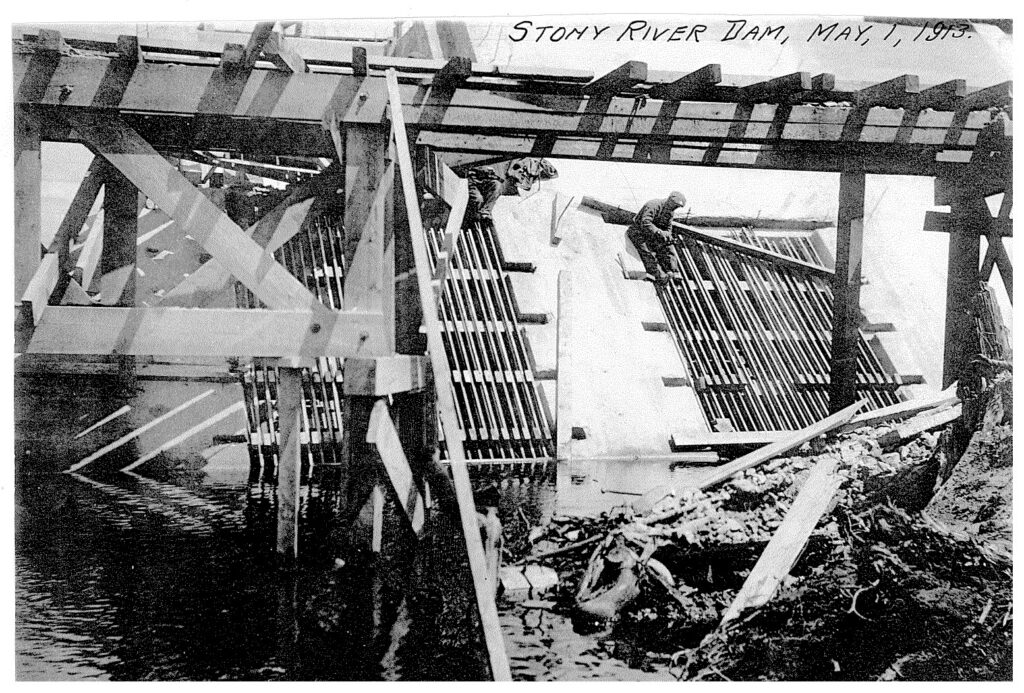
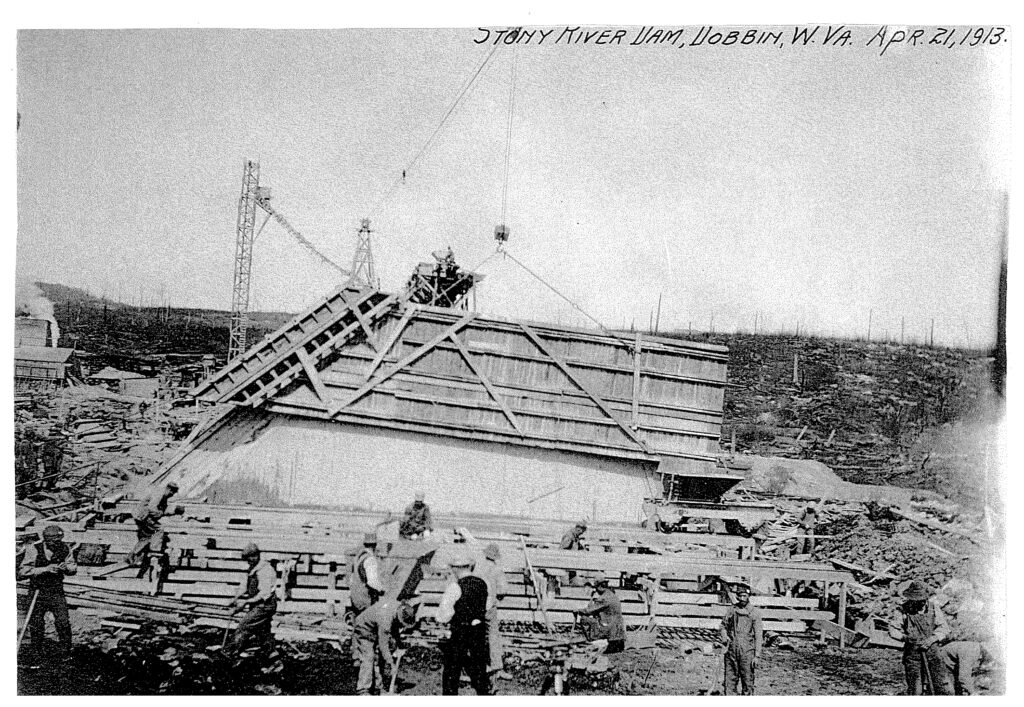
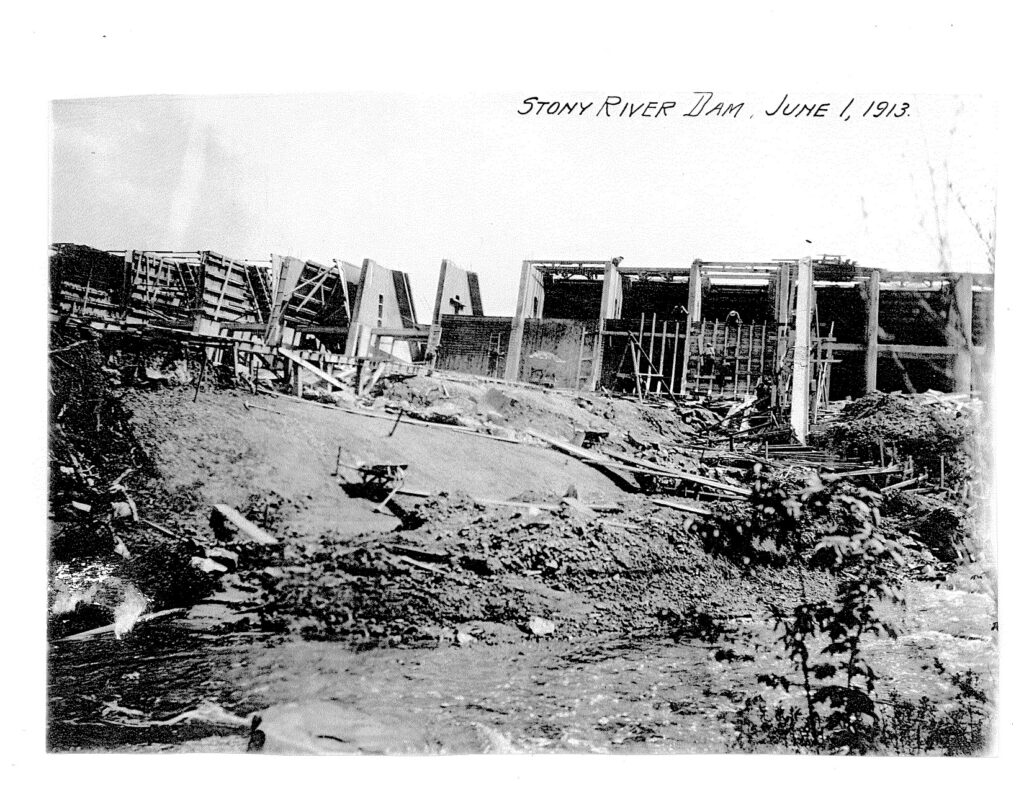
Although the dam was originally intended to be built as a solid masonry structure, it turned out that this design wasn’t right for this site. Instead, the company decided to build a hollow, reinforced concrete structure 50 feet high and 1,075 feet in length, with a capacity of a little over 1.5 million gallons. Webber Construction Company began work on the dam in June 1912 and continued until February 1913, when the WVPPC replaced Webber and contracted the Ambursen Hydraulic Construction Company to make certain changes and complete the work in July 1913.
As it would turn out, the engineers’ interpretation of the core samples from Stony River Valley had been wrong.
The Aftermath
“The great dam, which was completed only a few months ago at a cost of a quarter of a million dollars, is a total wreck,” a Times article stated following the flood.
While there was, surprisingly, no loss of life, it was reported that the value of property losses to citizens added up to approximately $200,000—about $6.5 million today. Thousands of dollars worth of WVPPC logs were carried away by the water as well, amounting to an estimated loss to the company of $175,000. Total damage to the dam and to the Western Maryland Railway system that served it was placed at upwards of $250,000—an amount that was thought to have been minimized, according to the Times, by the fact that the dam gave way in sections rather than all at once, allowing only part of the water to crash down the gorge at a time.
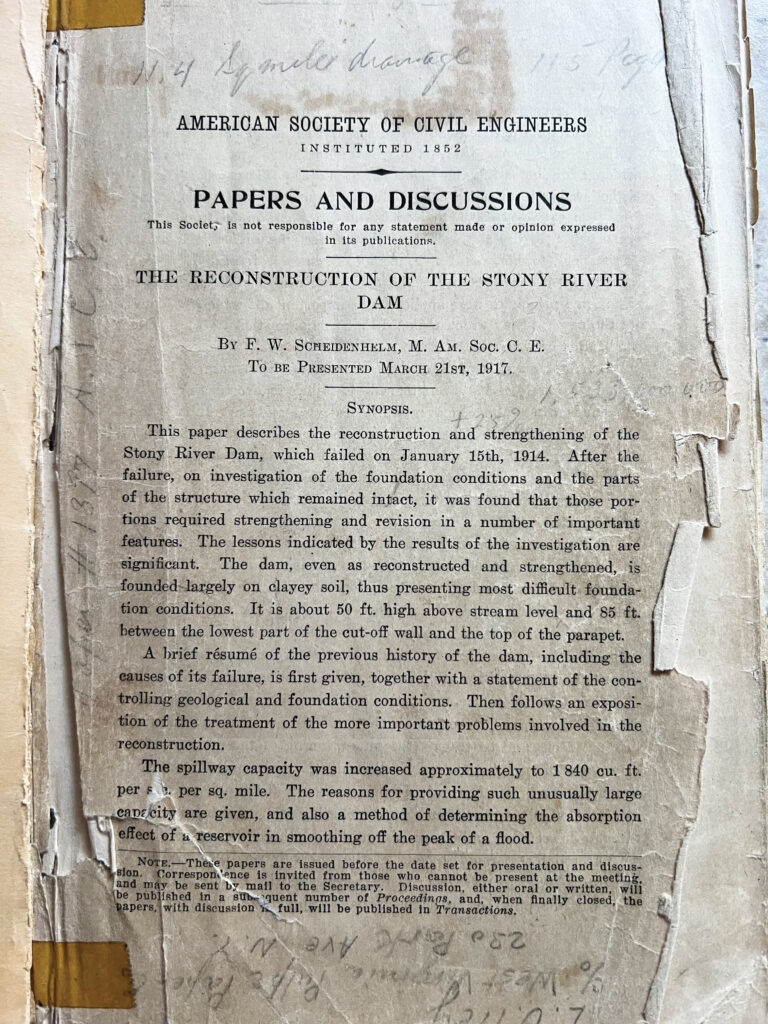
The Stony River Dam design was looked upon as the last word in concrete dam building, according to the Times, so its failure drew attention from the civil engineering community. In a 1917 report titled “The Reconstruction of the Stony River Dam,” the respected civil engineer F.W. Scheidenhelm expressed his opinion that “newspaper reports have grossly exaggerated the details of the collapse and the extent of the damage to property.” He concluded that the failure was caused by the washing out of foundation soil by leakage from the reservoir.
Even though engineers and scientists knew by the early 20th century about the permeable layers of sand, gravel, shale fragments, and boulders of the Carboniferous period that lay under the Stony River Valley, the core tests conducted for site analysis had been deceptive. The original engineers believed their samples had struck solid bedrock on which the dam could be safely built. But Scheidenhelm and other engineers who examined the failure theorized that what they’d hit were boulders that had fissured off of the overhanging cliffs over time due to frost and other natural forces, and that these boulders were mistaken for bedrock in the construction of the original dam. What lay beneath the boulders was, in reality, disintegrated coal, sandy clay, and gravel that had extremely low weight-bearing values and could not hold the water back.
The reconstructed dam was completed by May 1915. Differing greatly from the original hollow, reinforced concrete structure, it provided a new water barrier with ample margin against sliding and fracturing. And it held. The redesigned structure served the paper mill until 1965, when Mount Storm Power Station, currently owned by Dominion Energy, constructed a new dam downriver for the purpose of cooling the turbines used in the generating of power. MeadWestvaco decided to breach the dam at the turn of the 21st century, and the paper mill at Luke shut down completely in March 2019.
But time has yet to erase the memory of the first dam and reservoir that served the industrious valley far below and that cold winter scene in early 1914. And we should long remember Farmer Hanlin, who raced against the dark, frigid morning to set the telephones and fire bells ringing, arousing the citizens to race on foot or horseback to spread the alarm. Thanks to him and to the signal brigade of telephone girls in those tiny West Virginia and Maryland towns, the tale of the failure of the Stony River Dam has been retold by generations of survivors.

 By
By 

 By
By