 By
By 
The WVDNR’s State Wildlife Action Plan will kick off a third decade of conservation efforts and collaborations.
This story was originally published in the January 2026 issue of Wonderful West Virginia. To subscribe, visit wonderfulwv.com.
Written by Laura Jackson
Deep in a Greenbrier County cave, a West Virginia spring salamander is going about its day. It’s one of the last members of its species—only around 250 exist, and they all dwell in this single cavern.
When it comes to rare or endangered species, what can be done to boost the population? How can wildlife officials take species from threatened and struggling to protected and thriving?
The answer: Make a plan. And that’s exactly what the West Virginia Division of Natural Resources (WVDNR) is doing with its 10-year State Wildlife Action Plan (SWAP). And the spring salamander isn’t the only species getting help—the SWAP addresses conservation for many important species in the Mountain State.
Essentially, a SWAP means identifying problems and finding solutions. The program began in 2005, when a federal mandate directed all states and U.S. territories to examine their conservation needs. Funding has long existed for game species—most of which comes from the sale of hunting and fishing licenses and excise tax on hunting equipment—but only 5% of wildlife in West Virginia is considered game. The other 95% does not have specific funding.
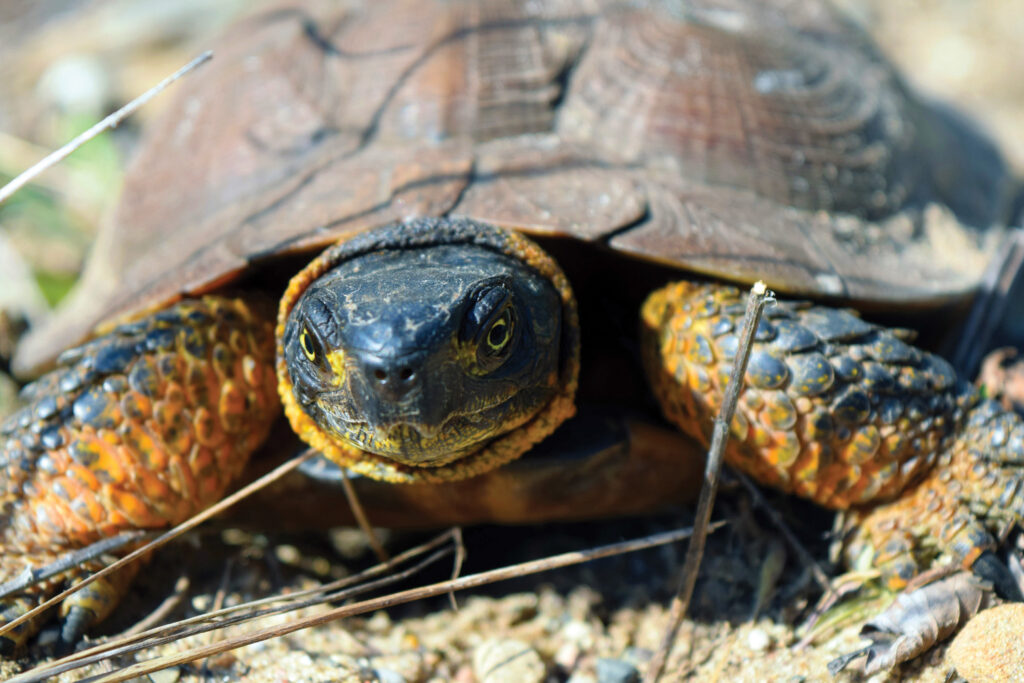
“Congress had money at the federal level to support conservation programs they felt were underfunded or needed some extra attention, like nongame wildlife,” says Scott Warner, assistant chief for the WVDNR’s Wildlife Diversity Program. “In 2005, we put together a state wildlife action plan so we could start receiving money, which was significant to support on-the-ground programs within the WVDNR. We used that money to go out and do monitoring and surveys and research—things we’ve always wanted to do.”
To qualify for funding, states must have a 10-year SWAP in place that identifies species with conservation needs and their habitats. The plans must be renewed every decade, Warner explains. “In order for us to continue to receive this money, we have to revise plans and update them based on what we’ve found. We did so in 2015, and now it’s time to update again.”
Kieran O’Malley, the program coordinator, is the man behind the 2025 plan.
“We do the surveys, we look at what’s happening,” he says. “We do research to see what’s causing the decline, and we take action. That’s a SWAP.”
Feathers and Fins
O’Malley says the original plan emphasized things like inventory and monitoring. The Wildlife Diversity Program staff collected and developed information on wildlife and plant species.
Now comes the work of conservation and monitoring for results, which is an ongoing effort. “If we create songbird habitat, we have to continue to monitor that, to make sure the songbirds are coming back. We identify air and water quality threats and invasive species like cats.” When it’s done, he says, they consider how the habitat is responding. “Are the birds coming back? Is the wildlife responding positively? We are in that phase now.”
The plan has also benefitted aquatic species like the candy darter, a small, vibrantly colored fish found only in the Gauley, Greenbrier, and New River watersheds, all part of the Kanawha River system. As a middle link in the food chain, the finger-length darter serves as both predator and prey and is an integral part of stream habitat. However, candy darter numbers, which had held steady for a century, began to decline in the early 1990s.
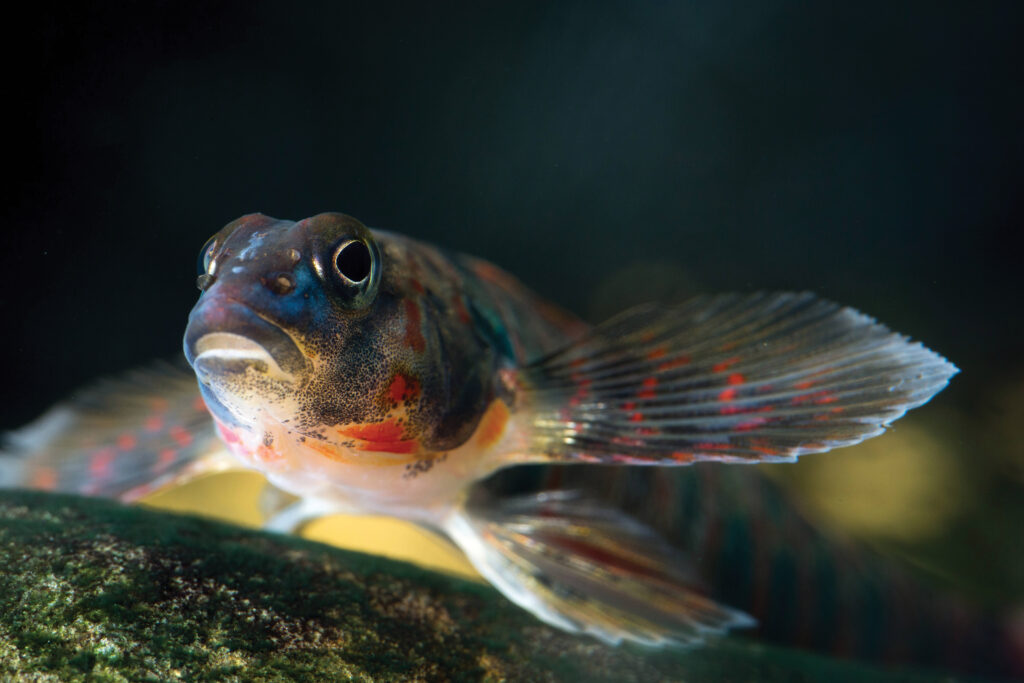
Per the SWAP, the WVDNR conducted research and learned that candy darters were breeding with the variegate darter, an invasive species likely introduced through the disposal of live bait into the water.
“We investigated and discovered that hybridization was the threat or the stress to the species,” O’Malley recalls. “We collected pure strain candy darters and relocated some to recipient streams and others we propagated in a hatchery and then stocked the young out in recipient streams.”
In so doing, the team has created a self-sustaining, redundant population of candy darters that are better equipped to meet the challenges in their habitat.
“This population is viable,” he says. “We stock them, and we monitor the populations that we’ve created. We’re finding that they’ve expanded up and down the stream, and they’re reproducing. This is a good example of how the process is supposed to work.”
Uncharted Territory
Across the country, SWAPs—including the WVDNR’s 2015 plan—usually address terrestrial and aquatic habitats. But unlike most states, West Virginia has a significant number of caves, too, and comparatively little is known about the diversity of subterranean species like the West Virginia spring salamander.
O’Malley wants to change that with the 2025 plan.
“It’s a subject we don’t address adequately enough,” he says. “Caves have microclimates, they have microhabitats, and they have unique species like the salamander and the Greenbrier cave crayfish. Right now, we can walk through a forest and identify a blueberry or a pitch pine, but we can’t do that with a cave. All we can say is, ‘That’s a dry cave or a wet cave.’”
The newest plan will shine a proverbial light on these hidden ecosystems, where around 70 species endemic to West Virginia live. Over 50 of these are invertebrates, and many species dwell only in a single cave.
“They’re only found one place in the world—in this cave system,” O’Malley says. “That’s a conservation priority for us. We want to improve our understanding of subterranean habitats and take steps to manage them better.”
The SWAP will also focus on bats. Most of the federally endangered Virginia big-eared bat population lives in West Virginia, as do 13,000 endangered Indiana bats. The WVDNR would like to know why certain species return to the same cave each year, whether those caves are wet or dry, and which bat populations are succumbing to white-nose syndrome, a fungus that is wiping out colonies across North America.
As with many aspects of conservation, the effort will take a village. Managing a cave is complicated—there are often multiple points of entry and exit, and many cave systems also have water flowing through them. With such a complex habitat, O’Malley and his team will be including cave explorers and members of the caving community in their efforts.
Expanding the Team
More than 1,000 different plants and animals in West Virginia qualify as species of greatest conservation need, making them eligible for federal funding. But such big numbers can be a challenge, so in 2015, O’Malley and his team identified multiple, smaller conservation focus areas around the state. Each location was chosen for its high diversity of species, where the WVDNR’s concentrated efforts can have an impact on multiple populations. Or, as O’Malley puts it, “We can get more bang for our buck in these smaller areas.”
Each area comes with its own ecosystem and environmental challenges, and the WVDNR sought input from outside groups on how best to manage them. They held stakeholder meetings in each focus area with groups whose work matched the needs of that particular ecosystem. This included groups that manage the forest, the streams, and the habitat as well as those who work with wildlife.
Warner adds that West Virginia has been the only state in the region to host open house meetings, not only with the general public but also with stakeholders. “We sat down with private industry—lumber and coal, for example—and with public ownership, including the Monongahela National Forest, the Army Corps of Engineers, the U.S. Fish and Wildlife Service, and State Parks. We also have meetings with environmental groups and watershed associations as well as academics to find out what they think. Because we don’t know it all.”
Big Picture Solutions
This collaborative effort will go one step further with the 2025 plan. The natural world doesn’t recognize state borders, so the new SWAP will look at West Virginia’s role in the central Appalachians and evaluate the potential for collaboration with neighboring states.
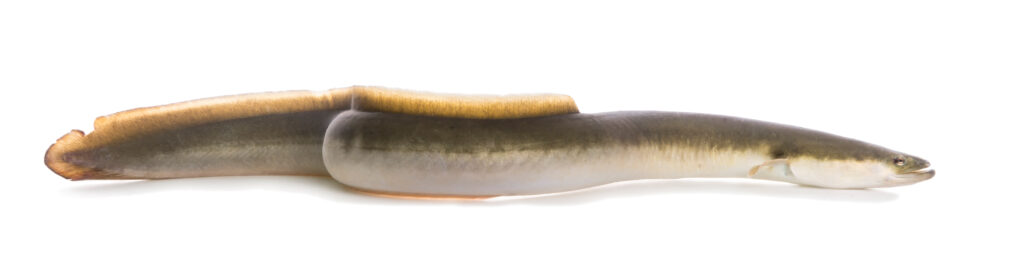
“We don’t want to have habitat destruction for species that depend on West Virginia for part of their life cycle,” O’Malley explains. “Migrating birds pass through West Virginia, going to the southern states or South America. We also have resident winter birds that stay here—we’ve got the largest population of golden eagles in eastern North America in the wintertime. So, we have to consider our role.”
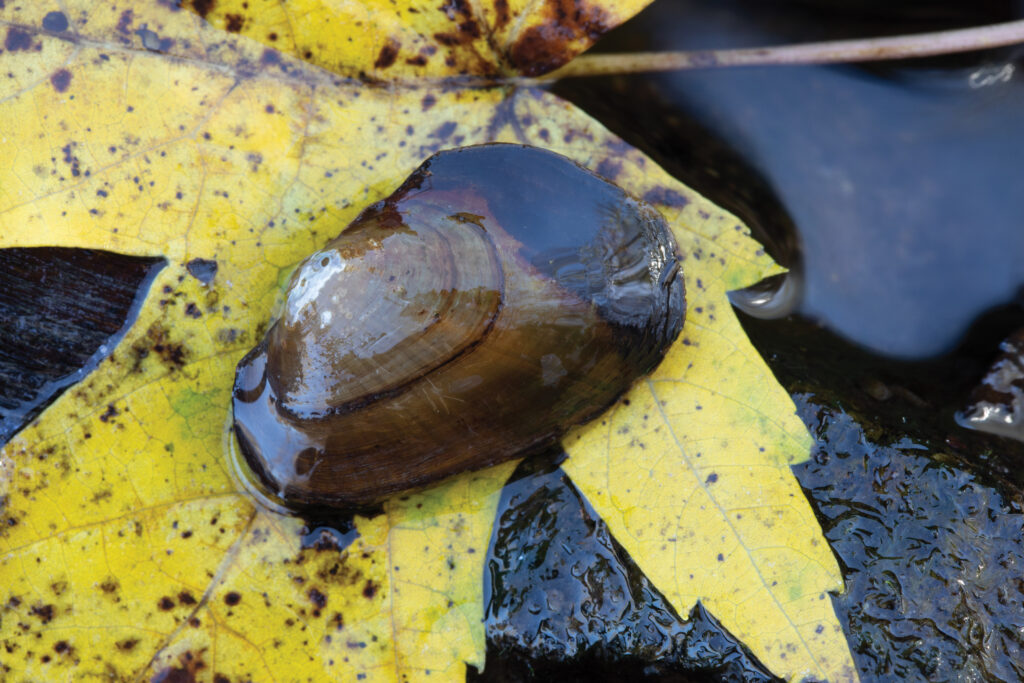
This is landscape-scale conservation, which focuses on habitat connectivity, both terrestrial and aquatic. In aquatic environments, habitat connectivity means eliminating barriers that prevent aquatic life such as fish, mussels, and crayfish from traveling up- and downstream and allowing species to move and multiply within the watershed.
Connectivity is also important for genetics, as a small population within an isolated habitat—like the cave salamander—will have limited genetic diversity without new genes moving in. Moreover, habitat connectivity means species can move higher in elevation in response to climate shifts or fluctuations in weather like changing rainfall conditions.
O’Malley acknowledges that, from the outside, past work might have looked like little more than data collection. But the 2025 plan calls for boots on the ground and shovels in the dirt.
“It’s an incredible amount of work,” he says. “We have had great success, and we’d like to keep our momentum going. Within five years you should see even greater improvement.”
 By
By