 By
By 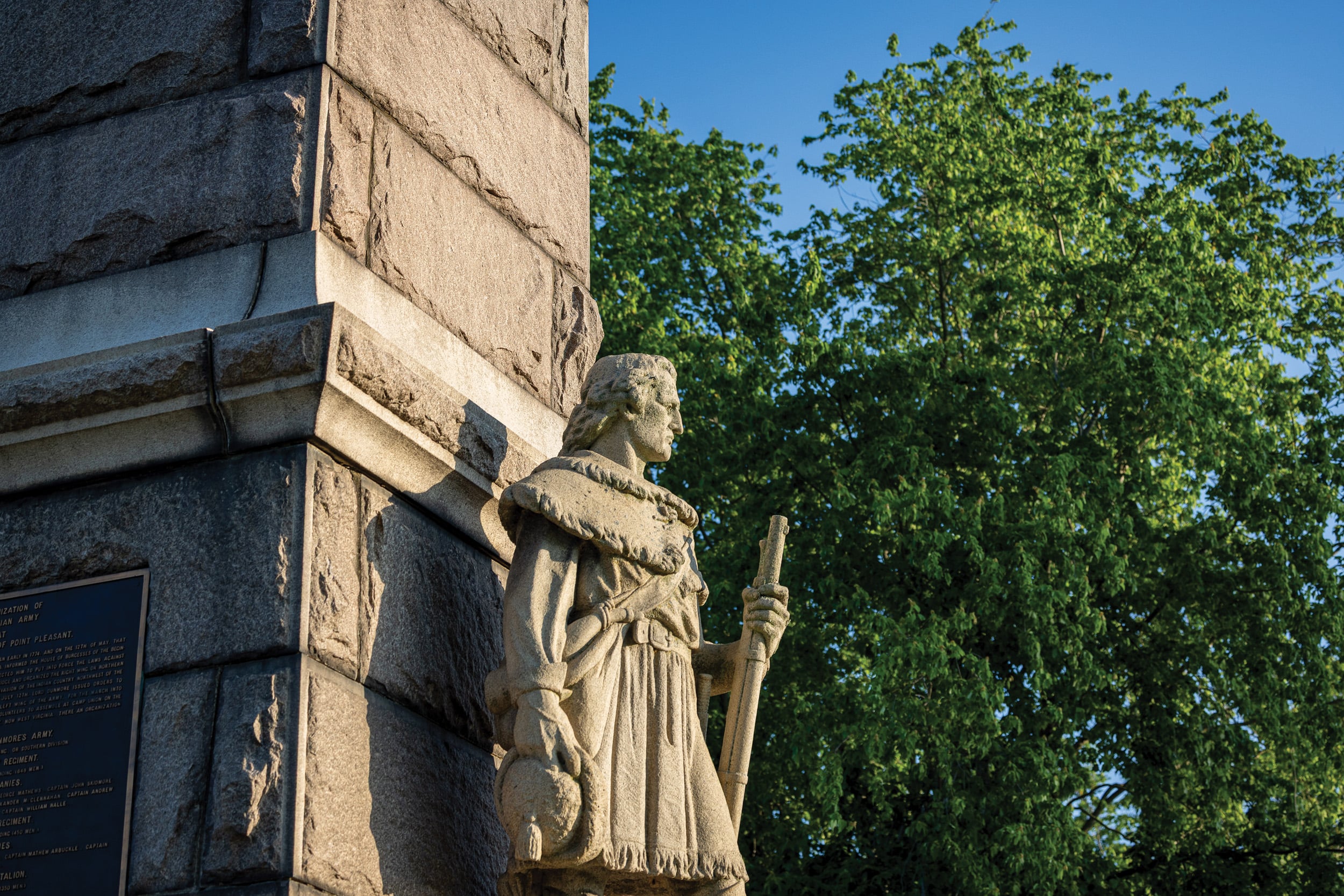
The Native American soul of Point Pleasant.
This story was originally published in the June / July 2026 issue of Wonderful West Virginia.
Subscribe here.
Written by Mason Jack
Images Courtesy of West Virginia Department of Commerce
There is a place in Mason County where two rivers become one, where the Kanawha flows into the Ohio in a quiet confluence that has drawn human eyes and history for thousands of years. The native Wyandot people called it Tu-Endie-Wei, or the point between two waters. Today, it is a four-acre state park tucked into downtown Point Pleasant, and it stands as one of the most richly historic sites in the Mountain State. Although the granite obelisk and the frontier museum standing there today preserve a lot of that history, the ground beneath their feet tells a far older story—one of Indigenous peoples, contested land, and a war chief whose courage and tragic death changed the course of the American frontier.
“To truly experience what actually makes the park special, you have to be there,” says Steven Browning. As superintendent of Tu-Endie-Wei State Park, he has spent enough time on these four acres to understand the quiet power they carry. “The park is inside town, but in my opinion, it’s more peaceful than being in the middle of the woods.”
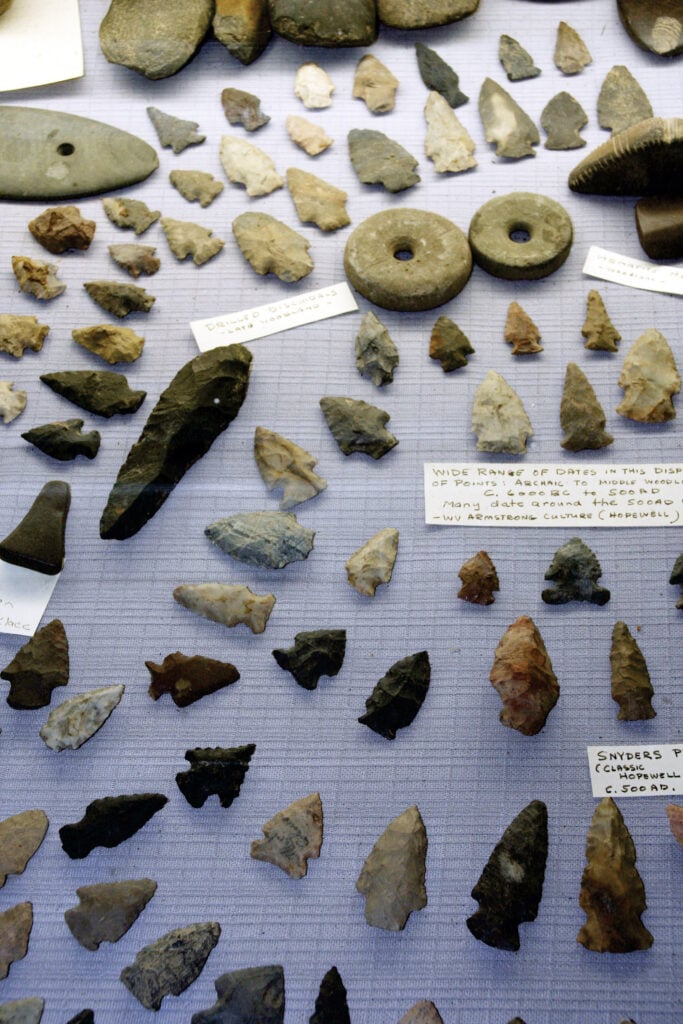
Long before colonial settlers mapped the Ohio Valley, the confluence at present-day Point Pleasant was understood as a place of spiritual and practical significance. The Shawnee, the Mingo, the Delaware, and the Wyandot all moved through the territory, using the rivers as natural highways and the land south and east of the Ohio River as prized hunting ground.
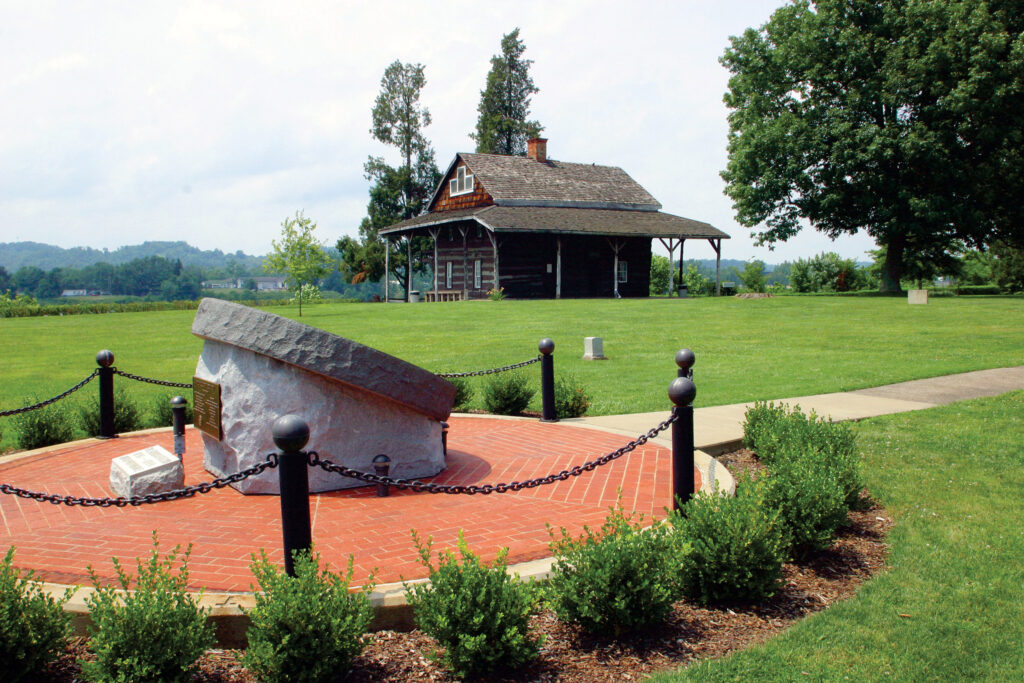
Evidence of their presence persists. Sheltered on the grounds is the Water Panther Stone, a boulder showing a carved image that archaeologists believe dates to the prehistoric era. Discovered some dozen miles to the east along Thirteenmile Creek near Leon, West Virginia, the stone was moved to Tu-Endie-Wei for preservation. Researchers theorize that the engraving depicts an Underwater Panther, a powerful figure in the spiritual life of Great Lakes and Ohio Valley peoples, an opposing force to the Thunderbird that governed the sky.
The park’s connection to history runs even deeper than the monuments that mark it. Among Tu-Endie-Wei’s most unusual features are its trees. Browning notes that, while fewer than 20 individual trees grow across the four acres, several have extraordinary origins. “We have six French oak trees in the park. The acorns they were grown from were gifted to West Virginia by the people of France after World War II. This is the only park in the state that grows them. We also have a very large sycamore at the park that was brought as a seedling from Liberty Island and planted here.”
Lord Dunmore’s War and The Battle of Point Pleasant
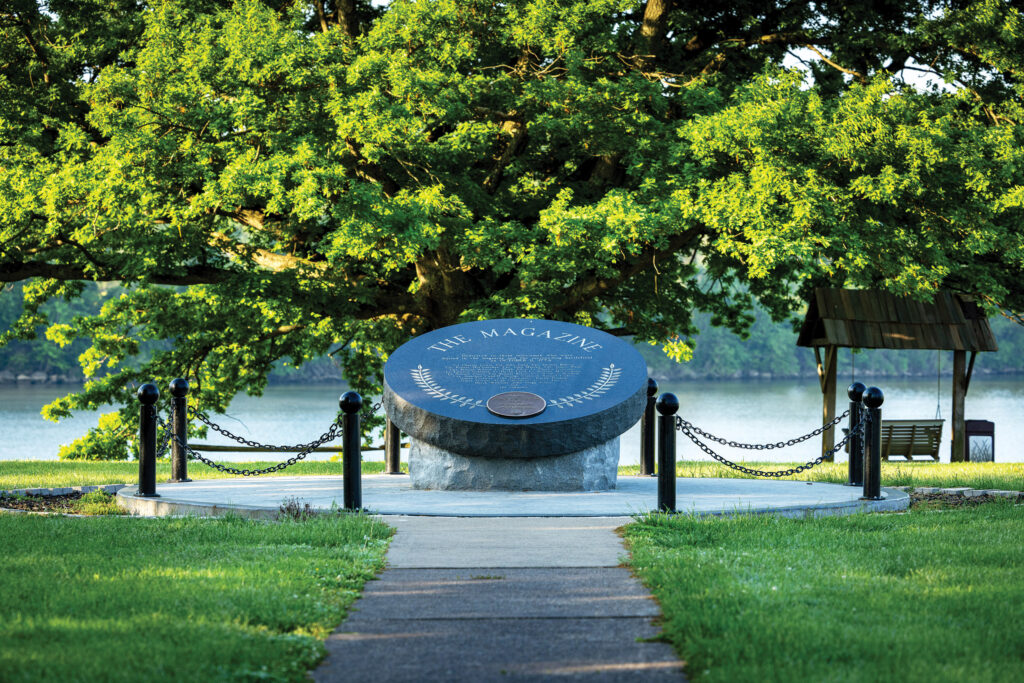
By the early 1770s, the lands around Point Pleasant had become a flashpoint on the continent. The 1768 Treaty of Fort Stanwix, negotiated between the British Crown and the Iroquois Confederacy, opened a vast swath of territory, including much of present-day West Virginia, to colonial expansion. The trouble was that the Shawnee, who had long hunted and lived across this land, had not been consulted in those negotiations. They were not bound, in their own view, by a treaty they had never signed.
Browning puts the friction in a broader context. “The tensions along the frontier had been steadily rising since the French–Indian War ended a decade earlier. The Treaty of Paris, signed at the end of the war, signaled the end of French power in what would become America—but it also affected many Native American groups that weren’t involved. Everything to the east of the Ohio River was ceded to the British. As the Ohio River flows 981 miles from the northern tip of West Virginia to the western tip of Kentucky, this affected a multitude of tribes not involved in the war.”
These tensions turned into open conflict in 1774 when a series of violent incidents on the frontier, including the massacre of peaceful Mingo families at Yellow Creek, ignited what history calls Lord Dunmore’s War. Virginia’s royal governor, John Murray, the Earl of Dunmore, organized two colonial armies to march into the Ohio Valley. One force of roughly 1,100 men under Colonel Andrew Lewis—later the namesake of Lewisburg, West Virginia—worked its way westward through the Kanawha Valley. The other, commanded by Dunmore himself, moved south from Fort Pitt.
The Shawnee war chief Cornstalk recognized the danger of allowing the two armies to unite. Cornstalk was more than a war leader who was defined by this moment. Born around 1720, likely in present-day Pennsylvania, he first rose as a formidable warrior before evolving into a chief who increasingly sought peace. “The biggest misunderstanding is that he was a peaceful, not a violent, Shawnee chief,” Browning explains. In truth, he was capable in battle, yet often urged restraint.
On the morning of October 10, 1774, Cornstalk’s warriors crossed the Ohio River and struck Lewis’s encampment at the edge of the two rivers. What followed was a furious, daylong battle that would go down as one of the bloodiest frontier engagements in pre-Revolutionary America. The Shawnee fought with discipline and ferocity, and Cornstalk’s voice was reportedly heard above the noise, urging his warriors to “be strong.” But Lewis’s men held and launched a flanking maneuver, and by nightfall, Cornstalk’s forces withdrew back across the Ohio River.
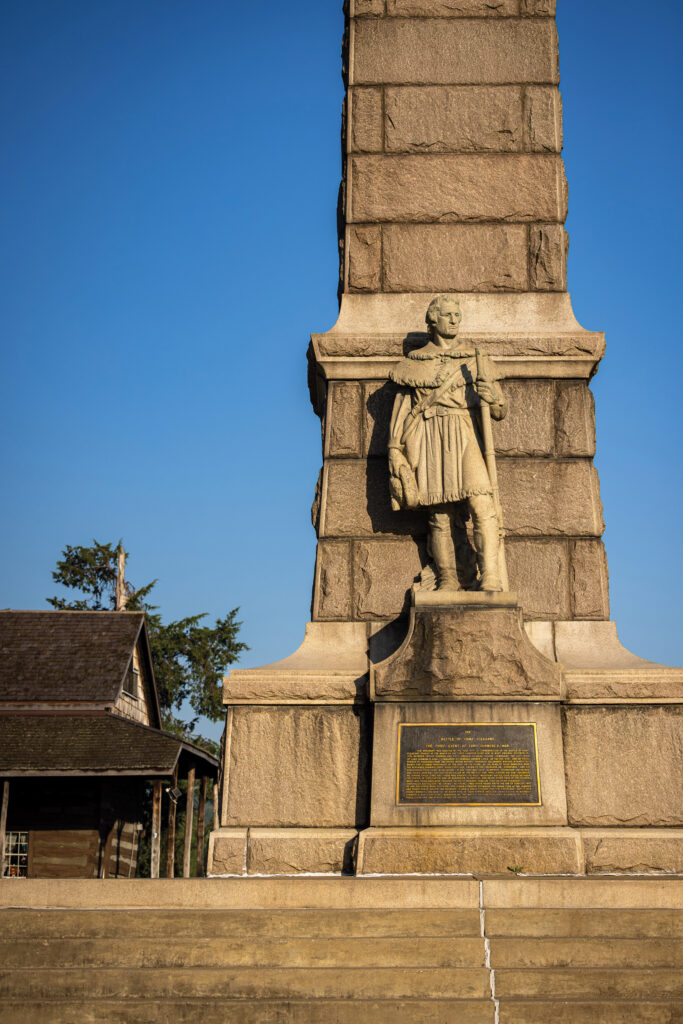
The human cost was severe on both sides. Shawnee casualties could not be precisely counted, as their fighters carried away the wounded and, by some accounts, committed the dead to the river. Colonial losses topped 75 killed and 140 wounded. Among the dead was Colonel Charles Lewis, the commanding officer’s brother, for whom a monument now stands in Tu-Endie-Wei State Park.
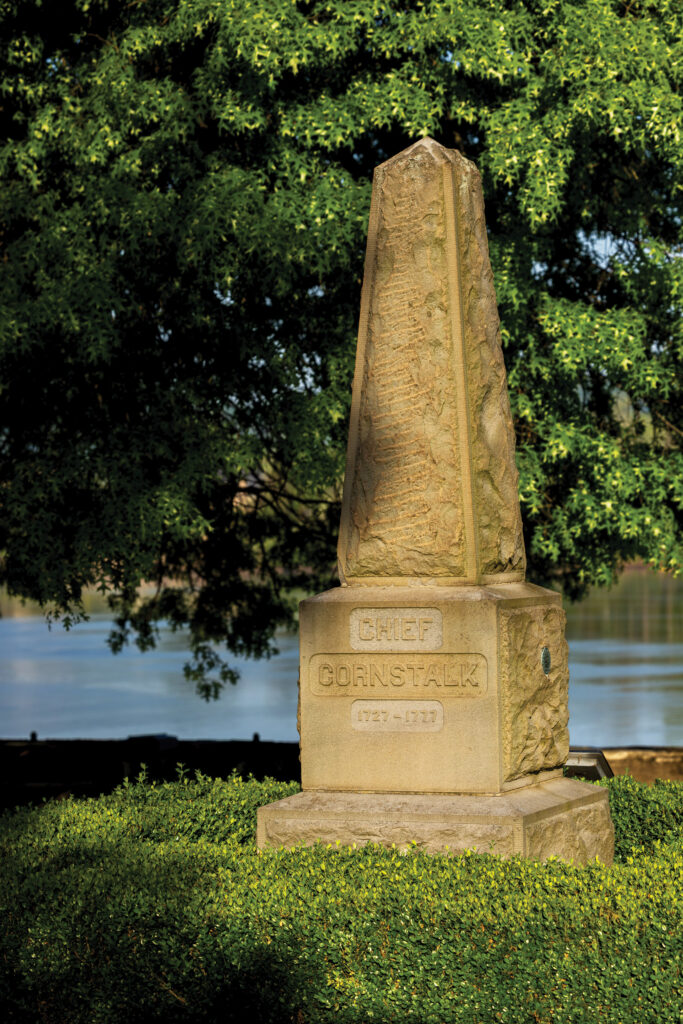
Within days, Dunmore’s combined force marched into the Shawnee homeland in present-day Ohio. Facing an army now three times the size of his own, Cornstalk had little choice. At the Treaty of Camp Charlotte, the Shawnee ceded their claims to all lands south and east of the Ohio River. Three years later, in 1777, Chief Cornstalk visited Fort Randolph at the confluence of the rivers on a diplomatic mission but was taken hostage. When violence broke out nearby, soldiers killed him and his party, ending what many saw as the best hope for peace.
Where History and Memory Meet
Part of what makes Point Pleasant so compelling as a historical site is that it refuses to sit still in the historical record. West Virginians have long argued over what the Battle of Point Pleasant meant. Some, led by turn-of-the-century historian Livia Poffenbarger, insisted it was the first battle of the American Revolution, a claim rooted in the argument that Lord Dunmore had deliberately provoked the war to distract colonists from their growing tension with the Crown. In 1908, Congress appropriated funds to erect a monument on that basis, and the 84-foot granite obelisk that now dominates the state park was dedicated in 1909. The National Society of the Daughters of the American Revolution has formally recognized the battle as the Revolution’s opening engagement, allowing female descendants of veterans from Point Pleasant to claim DAR membership.
Most historians, however, regard the battle as the decisive engagement of Lord Dunmore’s War—a colonial conflict, not a revolutionary one, and that debate has never been fully resolved. What both sides agree on is this: The battle broke the Shawnee’s resistance in the area, freed Virginia’s western forces to cross the Allegheny Mountains and join the continental cause, and prevented the British from securing an Indigenous alliance that might have dramatically altered the Revolution’s outcome.
Walking in the park today, visitors will move through a dense concentration of memory on just four acres. The obelisk anchors the center of the grounds, but the monuments around it tell a more complex story. There is the memorial to Colonel Charles Lewis, the highest-ranking colonial officer killed in the battle. There is a grave and monument for “Mad” Ann Bailey, the frontier scout and spy whose husband died at Point Pleasant and who became a celebrated figure in the Revolutionary War years that followed. And there is a monument to Chief Cornstalk himself, the man who led the warriors who fought here and who was murdered on this very ground three years later.
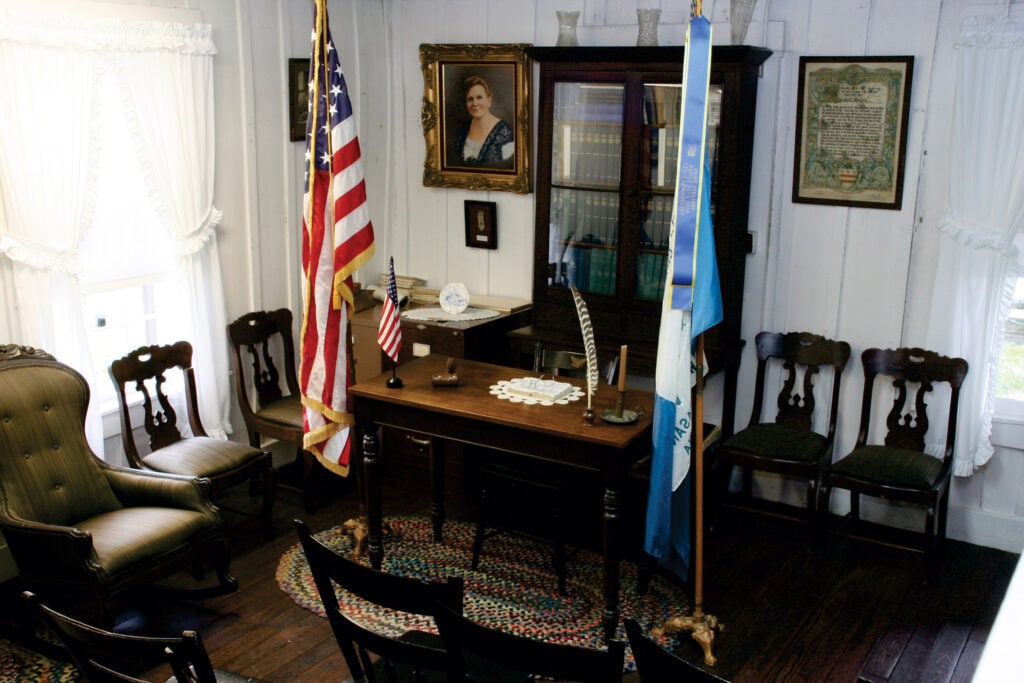
The Mansion House, a log structure built in 1796, serves as the park’s museum. Open seasonally, it holds artifacts and documents from the frontier era, providing a window into the cultural collision that defined this region’s early history to Tu-Endie-Wei’s many visitors. “The park has been a cornerstone of the town for decades,” Browning says. “It was a gathering place in the early 1900s, and citizens of Point Pleasant still use it every day.”
For all its modesty—four acres, just a short walk from downtown—Tu-Endie-Wei State Park carries extraordinary historical weight. It is a place where the full, tangled complexity of the American founding and expansion comes into focus. The two rivers still meet here, just as they always have, running together toward the wider horizon, indifferent to the human drama that has played out on their banks, but carrying it forward all the same.

 By
By