 By
By 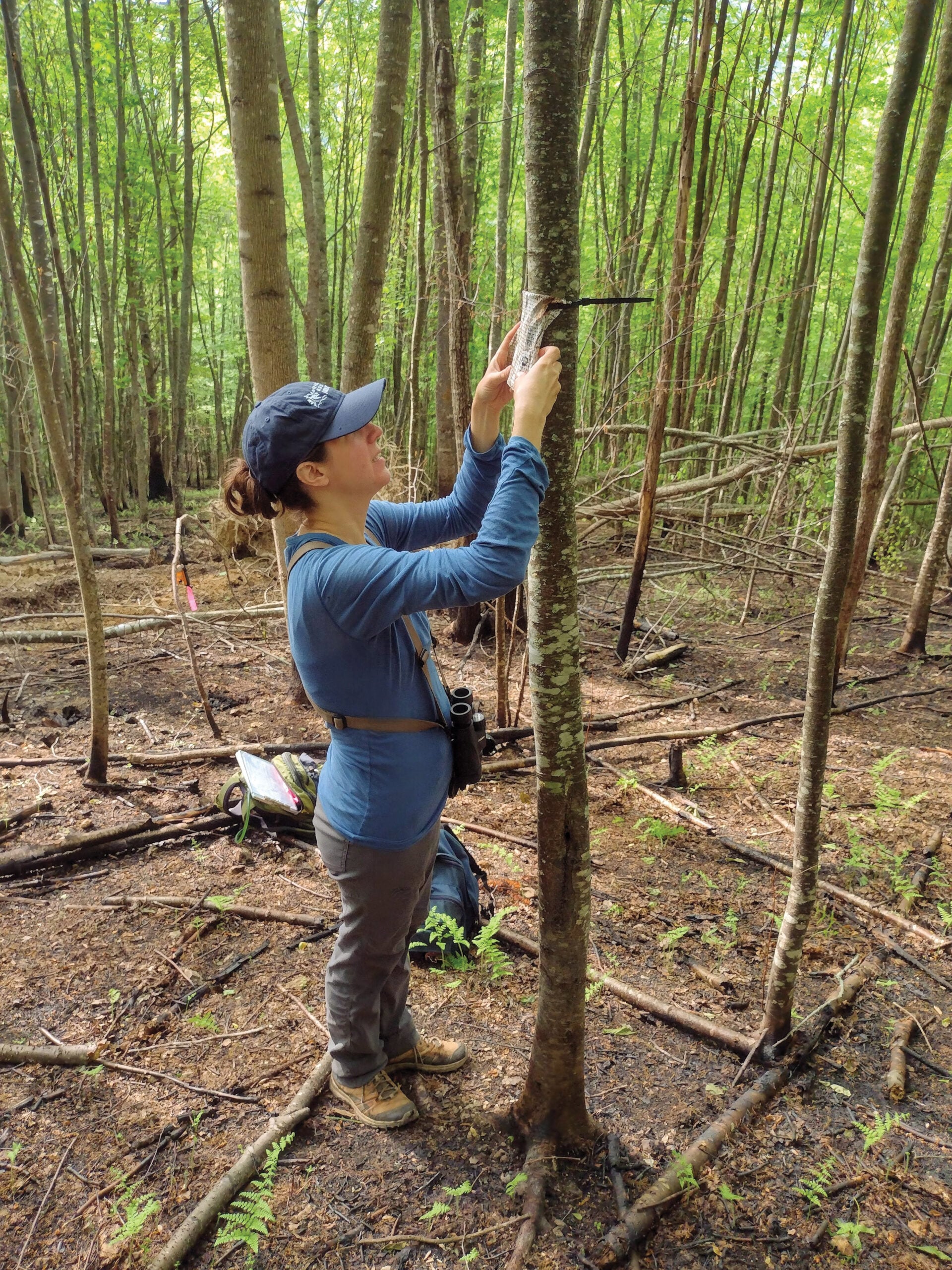
A new era of avian research is here.
This story was originally published in the January 2026 issue of Wonderful West Virginia. To subscribe, visit wonderfulwv.com.
Written by Taylor Maple
Birdsong melodies make up a familiar soundtrack to anyone who has walked the hills and hollows of West Virginia. But a new technology might make those sounds easier than ever to collect and analyze—and open up a world of possibility for researchers as they study and work to protect the region’s bird populations.
This year, the West Virginia Division of Natural Resources (WVDNR), in partnership with the Appalachian Mountains Joint Venture (AMJV), implemented a pilot study of autonomous recording units (ARUs) on multiple private properties throughout the state. Though not all results have been analyzed yet, these “birdsong recorders,” as Ashley Peele, avian ecologist and science integration coordinator for the AMJV, likes to call them, are showing early signs of success and could change the way birds are monitored for years to come.
An Eye to the Skies
Traditionally, the WVDNR monitors bird populations using boots-on-the-ground observation: A biologist or technician heads outside and surveys the birds with their eyes and ears.
“It’s human time out in the habitat, counting birds,” says Richard Bailey, state ornithologist with the WVDNR. “It’s really great—it’s really enjoyable. But also, as you might guess, it’s just a massive undertaking in time and money to do that.” And, as enjoyable as it might be for these folks who love to be out and about in nature, after many dozen stops along an observation route, the task loses a bit of its luster. “It’s an undertaking,” Bailey says. “And it’s exhausting.”
This workload becomes even more top-of-mind when trying to monitor whether habitat interventions, particularly on private lands, are having a positive impact on the bird populations. Landowners are able to reach out to the Natural Resources Conservation Service (NRCS), indicate that they are interested in being good stewards of the habitats on their land, and take advantage of cost-share assistance when it comes to implementing certain interventions that might be beneficial to the local species. The WVDNR has been pleased with how many folks have participated in these kinds of programs, and that participation has been essential to its work. But even with the landowner cooperation, it’s still not so simple to gather robust data on habitats both before and after management interventions, especially when the data collection relies on human visits to the sites. “It’s not just about getting the habitat management on the ground—that’s obviously vital,” Peele says. “But then a final piece that’s often harder to get at is, ‘What are the outcomes? Did it have the impact we wanted? Are we seeing birds and other wildlife species responding to the management in the way that we want?’”
One begins to wonder, as Bailey puts it, “Can we put something out in the woods and leave it?”
Testing the Tech
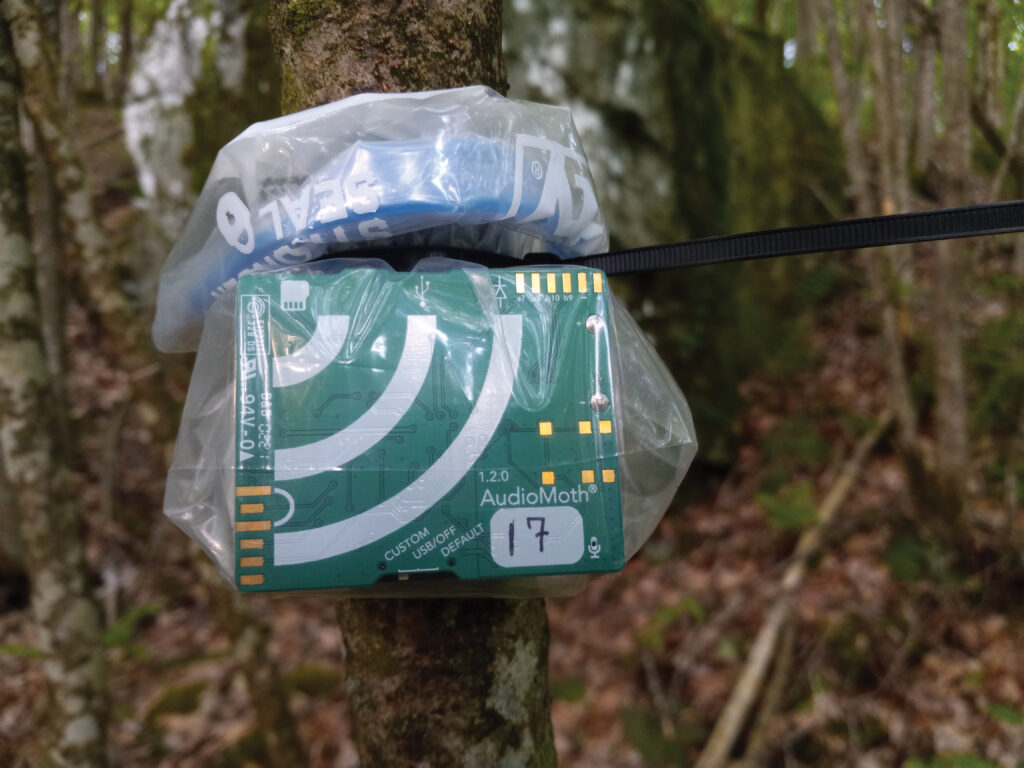
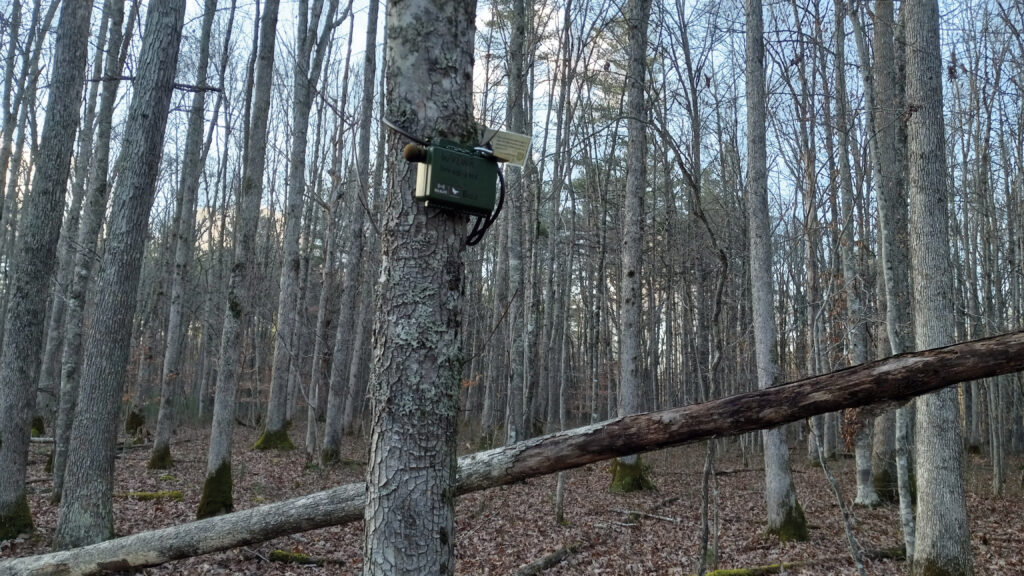
ARUs are small audio recorders about the size of a smoke detector. The ones the WVDNR is using run on AAA batteries and can go four to six weeks, depending on their recording schedule, before needing a battery swap, according to Peele.
“For this project, what we decided to do is basically a pilot study and proof of concept to demonstrate that this methodology—using birdsong recorders for wildlife monitoring needs on private lands in West Virginia—is something that we can use effectively,” she says. “What we’re trying to do is collect data across a lot of different types of properties where a lot of different types of management are occurring, just to illustrate that this can work much more broadly and that it can be an effective tool for NRCS, the WVDNR, et cetera.”
For about six weeks during the breeding season, approximately 30 ARUs were deployed on about 15 private properties of landowners who had agreed to cooperate in the study. The ARUs were placed strategically both where habitat management had been implemented and in areas where not as much intervention had yet taken place. “We did have some mix of ‘this has been managed’ versus ‘this has not been touched yet,’” Peele says.
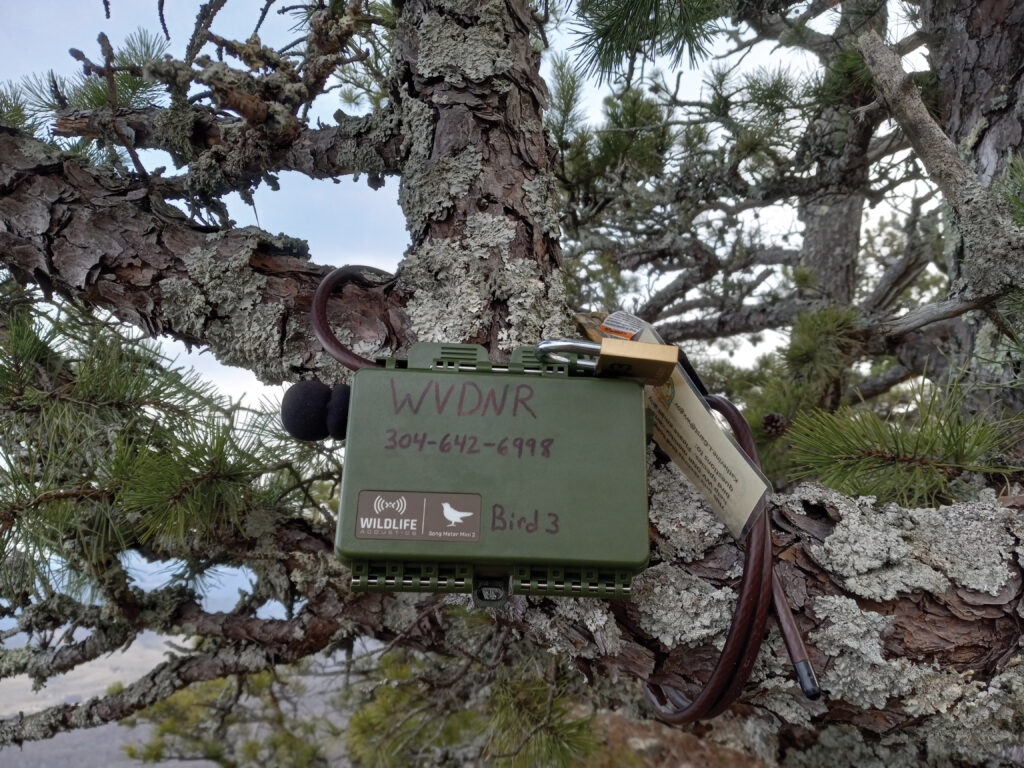
There were a few measures of success that Peele, Bailey, and their teams were looking for. Could they get enough landowners to agree to the use of this technology on their property? Could the units withstand being left out in the elements, especially in areas where there are high populations of bears and other animals that may inadvertently disturb them? And would the devices successfully pick up the noises of enough birds to make them a reliable substitute for human monitoring?
The recordings have been collected from the ARUs and, as of October 2025, the team is putting them through software that helps identify and classify the birds that were picked up. These classifications are reviewed and checked by humans, Bailey says, to ensure accuracy. So far, according to Peele, the results of the pilot study show promise—and only three devices met their demise due to nosy animals.
“Even though we’re not doing the really intensive validation yet, we’ve been reviewing the species list and kind of checking to make sure nothing wonky is coming up,” she says. “And so far, the recordings and the analysis software are performing better than we expected, which really also kind of illustrates how far his technology has come.”
There are some expected caveats—the devices only pick up birds that are making sounds, and some birds just don’t call that often. But generally, the success of these machines could mark a turning point. “I think this is just the very beginning of using this tech,” Bailey says. “I think it’s going to definitely be the way for the future. There are already new innovations that are definitely more prevalent in the future.”
Looking Ahead
If the results of the pilot study continue to confirm that these birdsong recorders can be reliably used to pick up the species of birds living on these sites, it opens up a world of possibility in terms of what researchers can monitor.
The results of habitat intervention can be more effectively measured, signaling more concretely either that the management strategy is working or that it needs to change. All information is good information, according to Bailey. “If we visit sites where it’s just not working, we use ARU data to help us better understand why it’s not working,” he says.
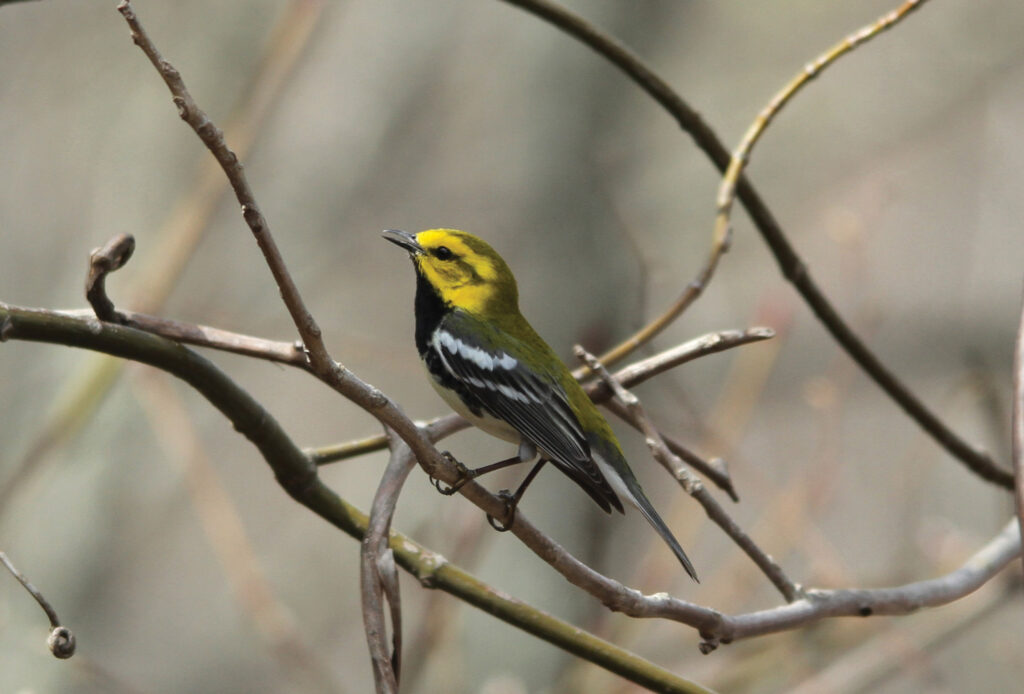
Beyond routine habitat intervention and monitoring, this kind of passive data collection could help researchers learn more about the migration patterns of birds. Given West Virginia’s unique setting—it’s the only state that lies completely within the Appalachian region as defined by the Appalachian Regional Commission—we play a necessary role in bird migration. Peele says these devices could help monitor that migration. “Are birds using some of these sites during that really important stopover stage when they need to come down from their long journey and find food and forage before they continue on?” she asks. There are birds that winter in West Virginia that don’t breed here, she adds, and data about those species is “a big black hole.” “That would be on my more distant wish list, but the technology could, in theory, get at that.”
The advancements likely won’t stop with these recorders—Bailey notes that he’s heard of colleagues in other states considering aerial drones for their bird monitoring, pre-programming them to drop into certain spots, record the birdsong in the area for a set amount of time, and then fly to the next set destination. “Particularly if it’s challenging terrain, things like that could obviate a lot of the human effort in collecting this data,” he says, though he notes that these kinds of ideas, while intriguing, may not yet have a viable path forward.
That’s not to say that these technological advances will replace the need for good old-fashioned human expertise. “There’s other field work that we do that actually involves the handling of birds, like banding birds or collecting feather samples, where obviously we’re going to have to be out there capturing the birds,” he says. “I look at technology more as a tool that’s going to enhance our work and make our work more speedy and more efficient and less error-prone, but there’s still a lot of work that we have to do ourselves.”
A Circle of Sustainability
All of this work is being done to help habitats remain healthy and hospitable for years to come, but it also feeds into a more sustainable future for us all, Peele says. Investment in private lands and federal cost-sharing programs that allow landowners to take part in studies like this lead not only to a better understanding of wildlife, but oftentimes to a better understanding of forest management as a whole, which can benefit folks on many levels.
“Obviously my stake in this is the bird populations, but we work really hard to understand the folks on the ground, the landowners, even some of the industrial partners we have in the region, like the timber industry,” she says, “to understand what’s going to make for sustainable relationships and sustainable ways of helping to manage for both wildlife and for these really important economic considerations.”

 By
By