 By
By 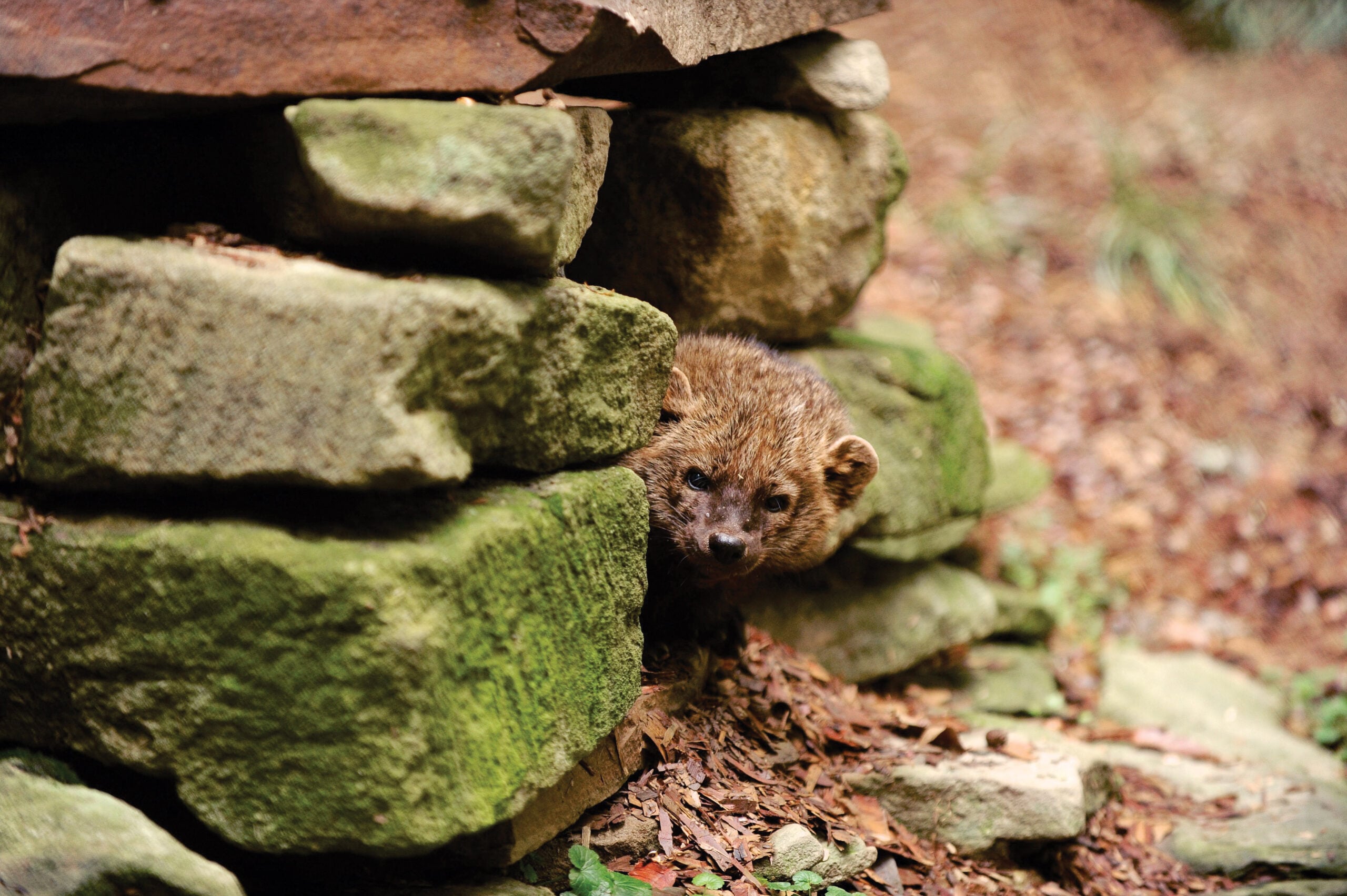
The secret life of West Virginia’s fishers.
Written by Laura Jackson
Photos Courtesy of West Virginia Department of Commerce
Somewhere in the woods, a weasel goes walking. Or more likely, the weasel is climbing, hopping, and slinking—after all, it’s what they do best.
Weasels are part of the mustelid family. The Mustelidae clan is a large and diverse group of carnivorous mammals that includes weasels, otters, badgers, martens, minks, ferrets, and even wolverines. Several mustelids lurk in West Virginia’s woodlands, including the least weasel, the long-tailed weasel, the American mink, and the North American river otter. But of all the wild, wonderful weasels darting through the shadows, none may be as shy—or as secretive—as the fisher.
Fishers are a tenacious and aggressive bunch, and their natural curiosity makes them both excellent hunters and some of West Virginia’s most entertaining residents. That is, if you can find one.
Wild Weasels of the Woods
Fishers are one of the largest North American weasels. These dark brown hunters stretch 30 to 47 inches long and move low to the ground, with dense coats that insulate them against harsh northern winters. Despite the name, fishers don’t fish. Early settlers noticed the fisher’s resemblance to the European polecat, also known as a “fiche,” and repurposed the name for the North American counterpart.
These agile omnivores are excellent scroungers—they’ve been spotted raiding fruit trees, berry bushes, and beehives. When it comes to hunting, they prey on animals like chipmunks, rabbits, and snowshoe hares. But it’s their special skills that set them apart from other forest stalkers.
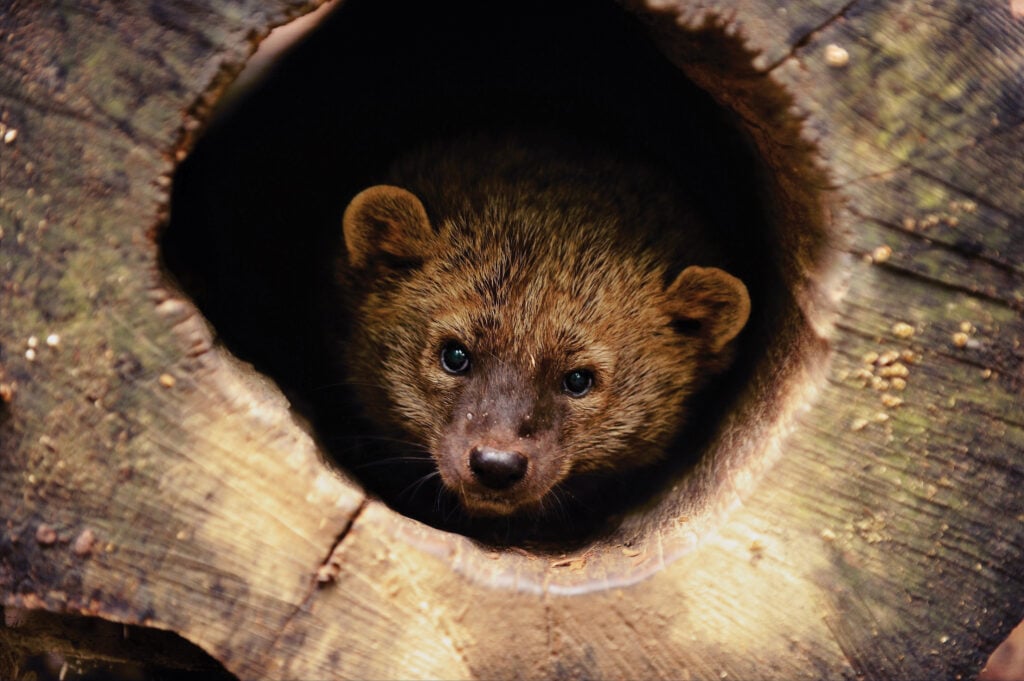
Nobody wants to tangle with a porcupine—except fishers, which have learned to bite at the porcupines’ faces and flip them over to reach their victims’ underbellies. In West Virginia, fishers and porcupines share the same range, and the weasels keep the population of their quilled prey under control. Were the fishers to give up the chase, the porcupines would make quick work of tender shoots and strip the bark away from young trees.
The mustelids are natural climbers, too, and may be spotted high in the canopy. An unusual and helpful adaptation allows them to rotate their hind feet almost completely backward to climb down trees headfirst.
Unfortunately, you’re unlikely to spot one. Fishers are solitary and shy, avoiding human settlements and sticking to remote forests.
“You might have a chance of seeing one during breeding season, when animals are actually dispersing,” says Holly Morris, a furbearer biologist with the West Virginia Division of Natural Resources (WVDNR). “But it’s rare.” Fishers only come together to mate and otherwise live secretive, solitary lives.
Forests for Fishers
While adaptable animals like coyotes, foxes, and raccoons thrive in suburbs and farmland, fishers are much more selective. They need a deep, layered forest—the older, the better—and not just any patch of woods will do. A mature, unbroken forest landscape with both structure and cover is essential because fishers use every part of the wooded world around them. They hunt on the forest floor, climb trees to escape predators or chase tree-dwelling prey, and use cavities in decaying, hollowed-out trees and snags for dens and giving birth.
But heavily logged forests, as well as new growth, lack these essential features. It’s no wonder that, as West Virginia’s logging industry grew, fisher populations dwindled.
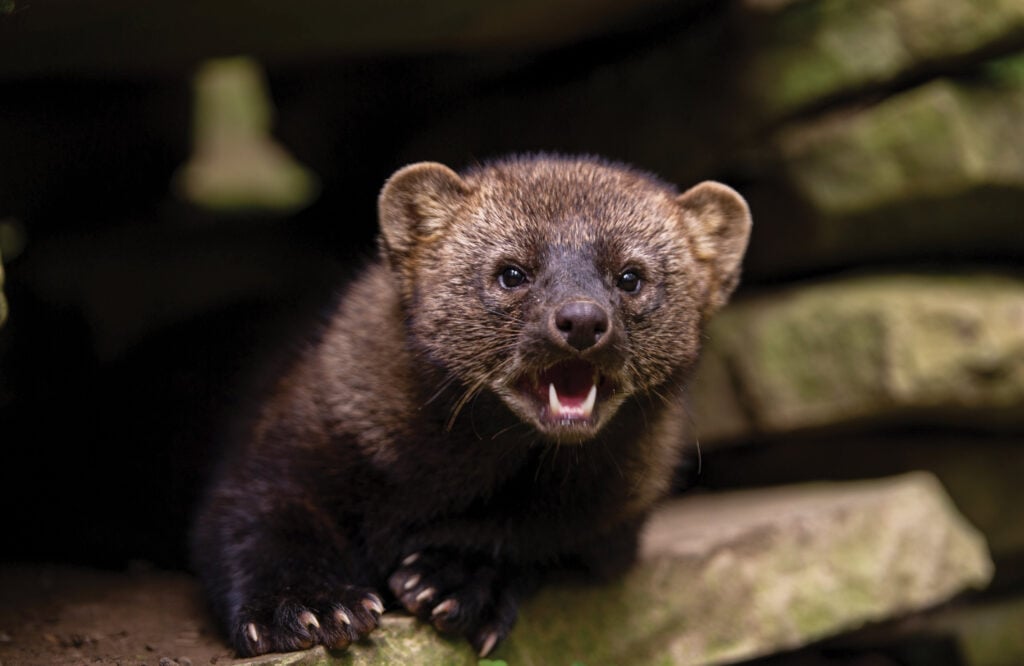
A dense, old-growth forest suits a shy and secretive animal well. Covered by a thick canopy, a fisher can roam about its habitat without encountering predators—bobcats, for example—as well as threats like dogs, humans, and vehicles. Roads are especially troublesome, as they both fragment habitat and leave fishers vulnerable to injury and accidental death.
Where the Weasel Wasn’t
Finding fishers may be a challenge now, but it was nearly impossible in the 20th century. They were highly prized for their soft, dense coats, and by the early 1900s, the mustelids had become scarce in Appalachia due to over-trapping and habitat loss. West Virginia’s last fishers remained hidden in the high red spruce forests. Yet even those animals all but vanished as logging continued in the mountains, and the species was believed to have been extirpated from West Virginia—gone from the state. “Their populations were reduced to the point where we thought they were no longer present here,” Morris says.
Recovery efforts began in 1969, when the New Hampshire Fish and Game Department sent 23 fishers to the WVDNR in exchange for wild turkeys. Fifteen fishers were released on Canaan Mountain, in Tucker County, and the remaining eight were sent into Cranberry Glades in Pocahontas County. The efforts were met with mixed reactions: Tucker County residents responded with anger, doubt, and fear that the returning weasels might be aggressive or dangerous, but no one in Pocahontas County saw the new residents as a threat.
Biologists kept tabs on the fishers as the animals settled into their former stomping grounds. Data showed that the Tucker County fishers expanded their range within the Monongahela National Forest and also moved northward, into Maryland. Farther south, the Cranberry fishers still maintain a limited range.
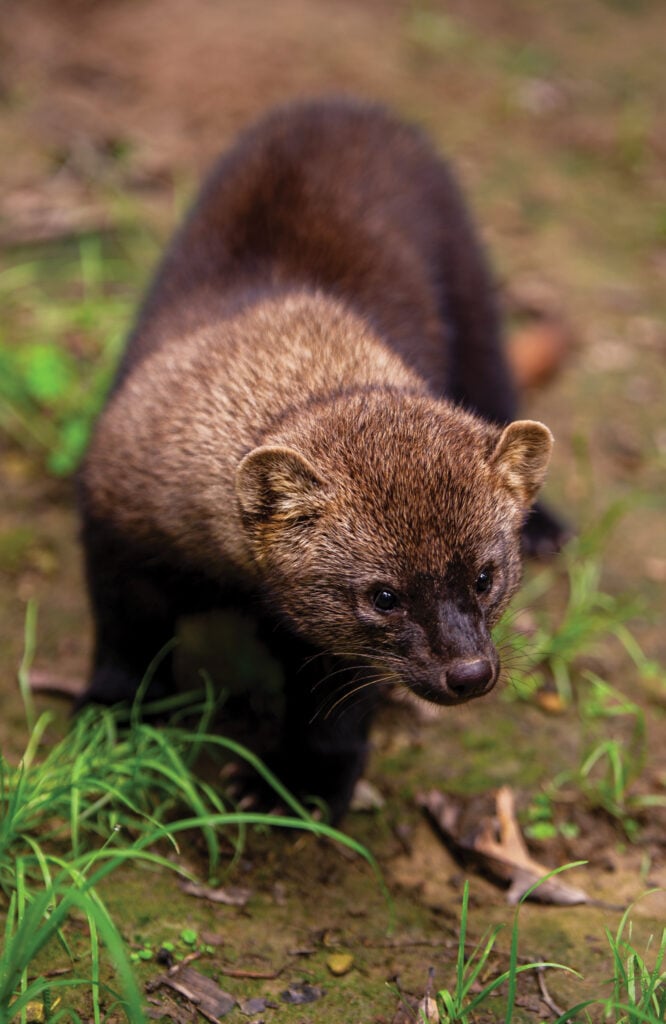
An expanding fisher population needs resources as well as genetic diversity to ensure the animals’ health going forward. Without variation in their DNA, a population may become more vulnerable to disease and threats arising from climate and environmental conditions.
Despite the reintroduction efforts, only recently have scientists in West Virginia gotten a clear picture of how genetically healthy today’s population is. A 2021 study took DNA samples from fishers across West Virginia, Pennsylvania, New York, and New Hampshire to measure the genetic diversity of fishers in the Mountain State.
The surprising data revealed that a small number of the native fishers must have survived in West Virginia, despite the pressure from trapping and habitat loss.
“We determined that we did not extirpate fishers,” Morris explains. The discovery indicates that the modern population wasn’t built solely on the reintroduced animals but also included descendants of West Virginia’s original fishers, the survivors of the logging era.
“We did have a relic population, although small. And we’ve also got some mixing from neighboring states. So, across West Virginia, we’ve got three distinct populations of fishers when it comes to genetics.”
The study revealed that West Virginia’s fishers have lower genetic diversity than those in Pennsylvania and New York. That’s likely due to the small number of reintroduced animals and the isolated nature of fisher habitat.
Though hunting fishers remains illegal in West Virginia, the WVDNR has opened a regulated trapping season. In 2025, that season will run from November 1 through January 31, 2026, with a one-animal limit. “The trapping season with fishers ends a little bit earlier than some of our other furbearers, like raccoons or river otters,” Morris says. “That’s because their reproductive cycle starts a little bit earlier, and females could potentially have young in February.”
The WVDNR is making every effort to preserve and encourage the fisher population, and while trends look good, it’s tough to collect data on such an elusive animal.
“We don’t have a true estimate on how many fishers are in the state,” Morris says. “It’s a solid population. We use trend data from trapper surveys and trapper harvest, and it’s been relatively consistent throughout time.”
Biologists hope that continued research and occasional genetic supplementation will help keep the state’s fisher population strong, so the stealthiest of West Virginia weasels will continue to slink through the mountain forests. And whether or not you spot a fisher, one might be watching you.
Weasels of West Virginia
You might not know it, but you could be sharing the woods with these native mustelids.
Fisher
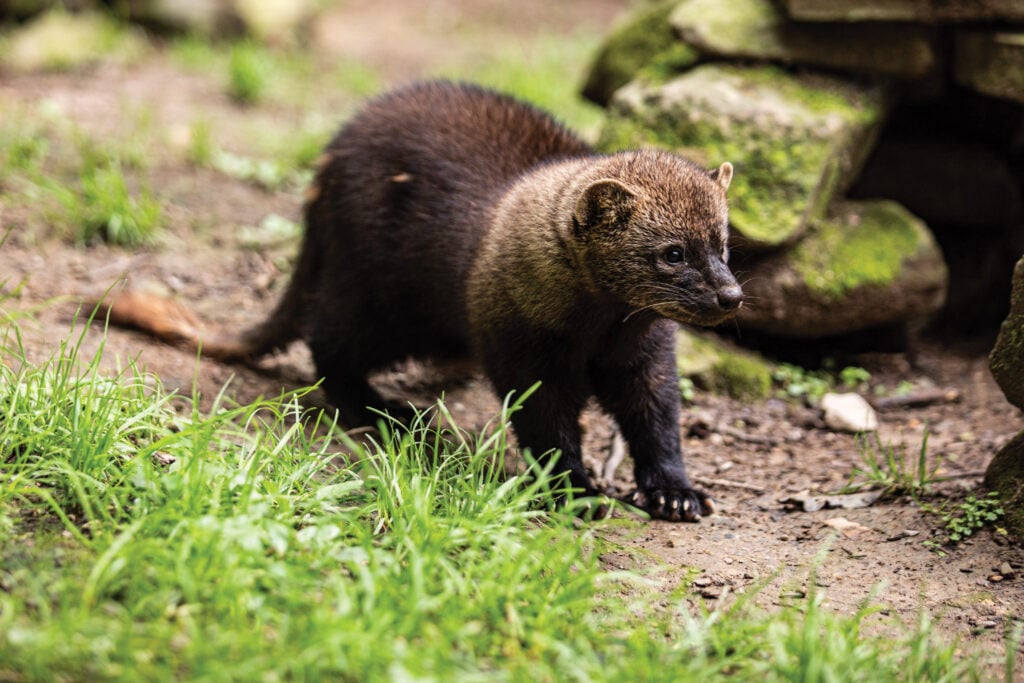
Size: Large house cat
Habitat: Dense, mature forests
Status: Reintroduced and recovering
Fun Fact: Fishers have been accused of being noisy neighbors. Forest tales recount eerie screams from the trees and blame “fisher cats” for the vocals. In reality, foxes and barn owls are a far likelier source of midnight barks and wails.
American Mink
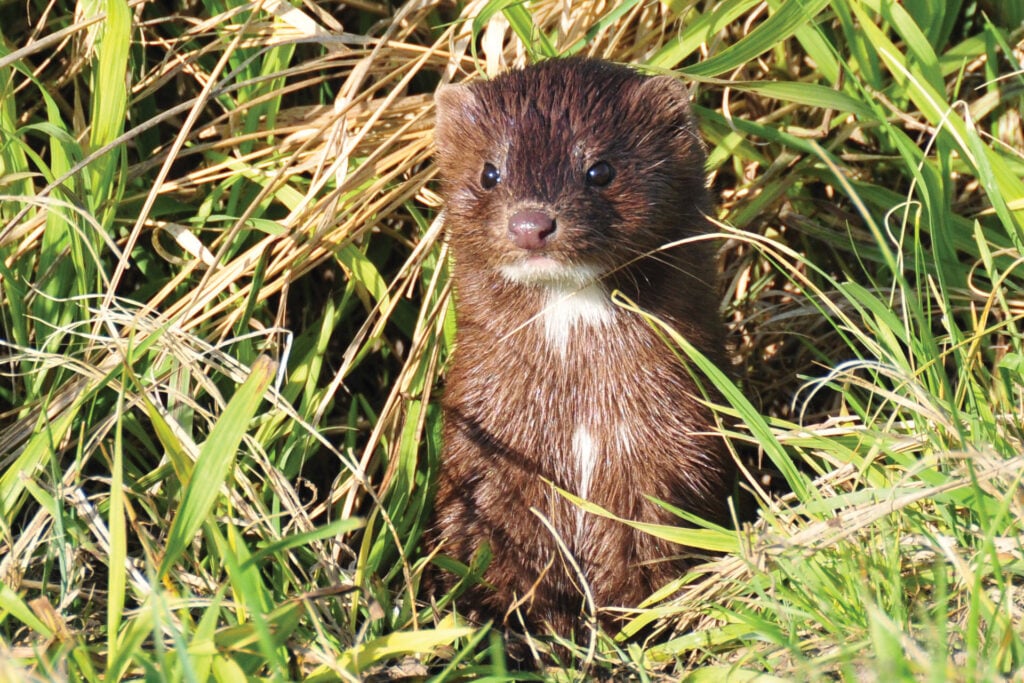
Size: Slightly smaller than a cat
Habitat: Wetlands, streambanks, lakes
Status: Common but secretive
Fun fact: Can swim underwater for up to a minute to catch fish. Prized for their soft fur coat.
Long-tailed Weasel
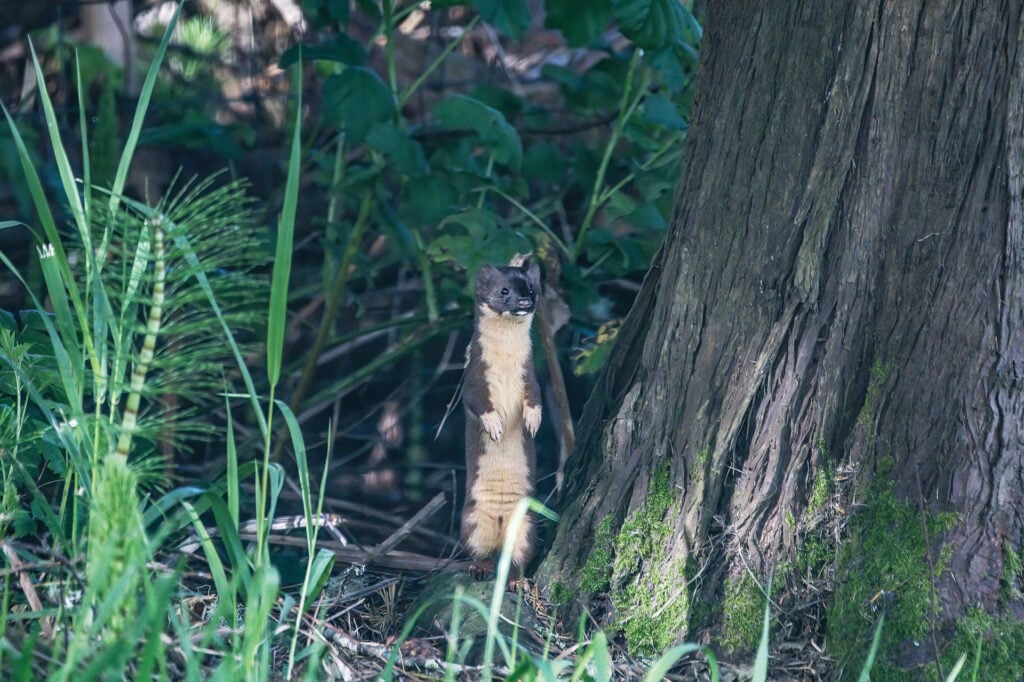
Size: Small and slender, 8–12 inches long, in addition to the tail
Habitat: Fields, woodlands, brushy areas
Status: Widespread but elusive
Fun fact: Can take down prey much larger than themselves, including rabbits. Eyes glow green at night.
Short-tailed Weasel
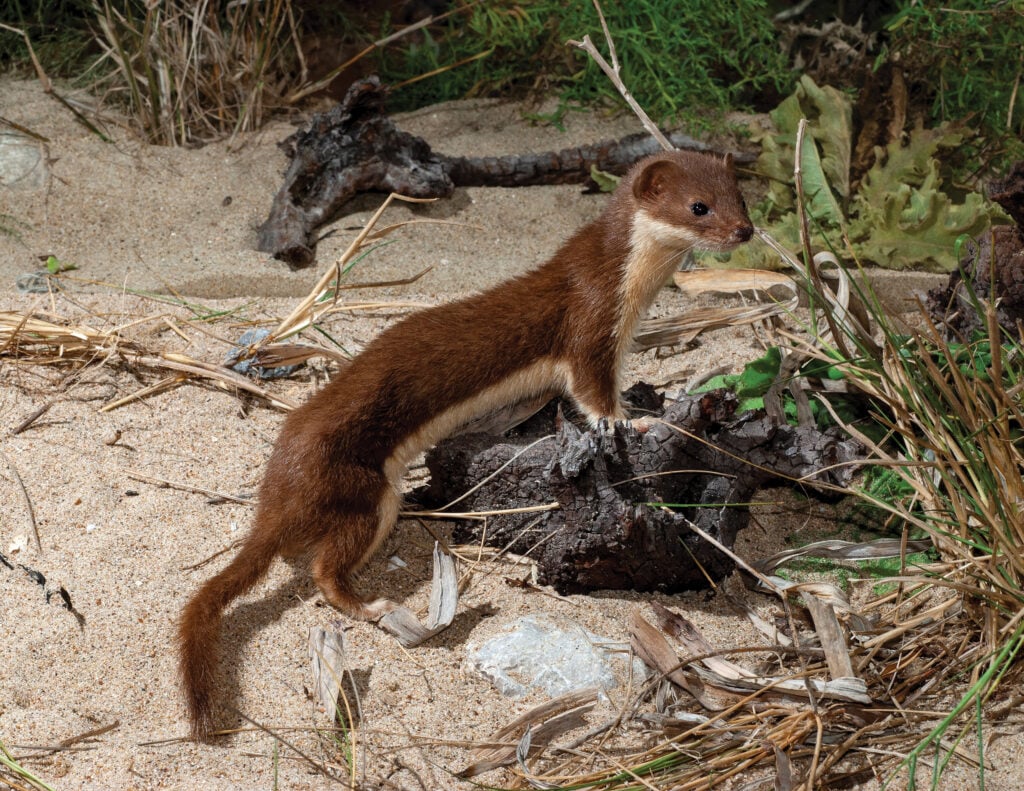
Size: Even smaller, at 6–9 inches long
Habitat: Higher elevations and northern forests
Status: Uncommon and localized
Fun fact: Turns pure white in winter, except for its black-tipped tail.
North American River Otter
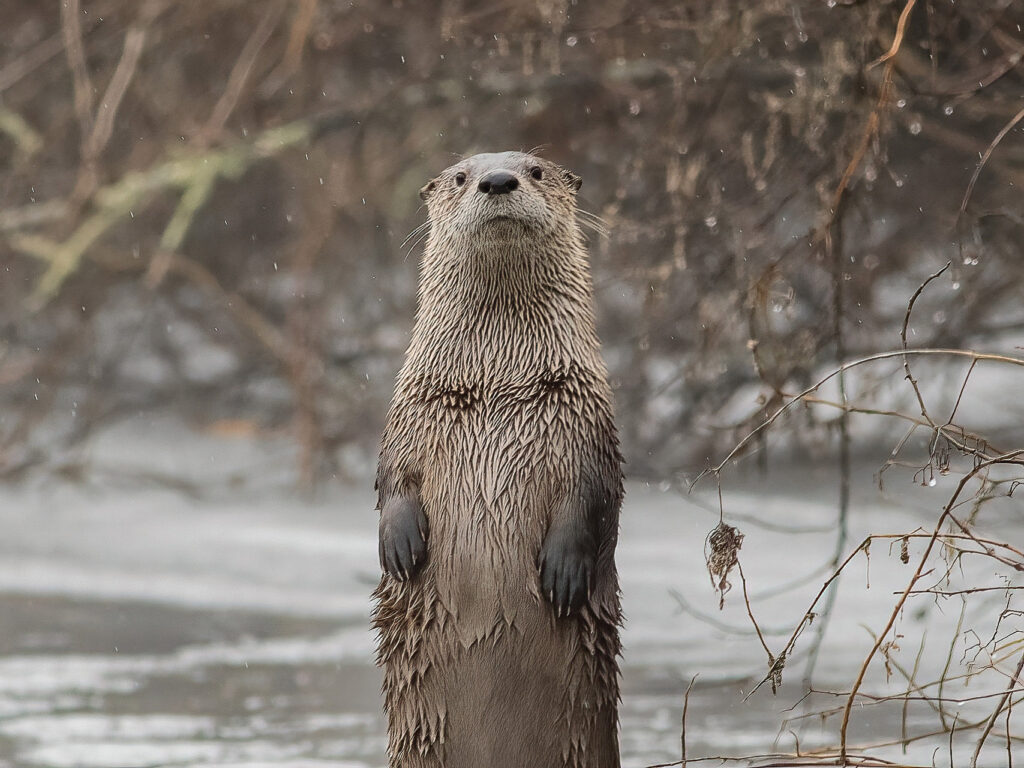
Size: Up to 30 pounds
Habitat: Rivers, streams, marshes
Status: Reintroduced; population stable and growing
Fun fact: Once nearly gone from the state due to trapping and water pollution, otters were reintroduced in the 1980s and are now thriving in clean waterways.
Skunk, striped and spotted
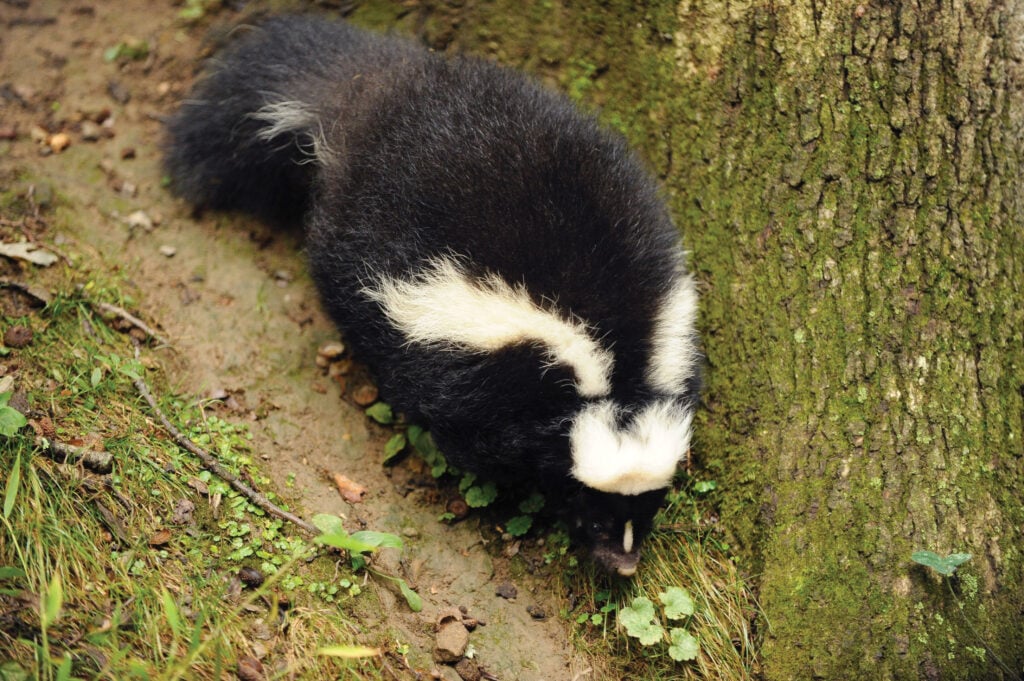
Size: House cat–sized
Habitat: Fields, forests, suburbs
Status: Widespread
Fun fact: Skunks were once grouped with mustelids but are now in their own family (Mephitidae), though still closely related. Striped skunks are more common than spotted.

 By
By 
 By
By