 By
By 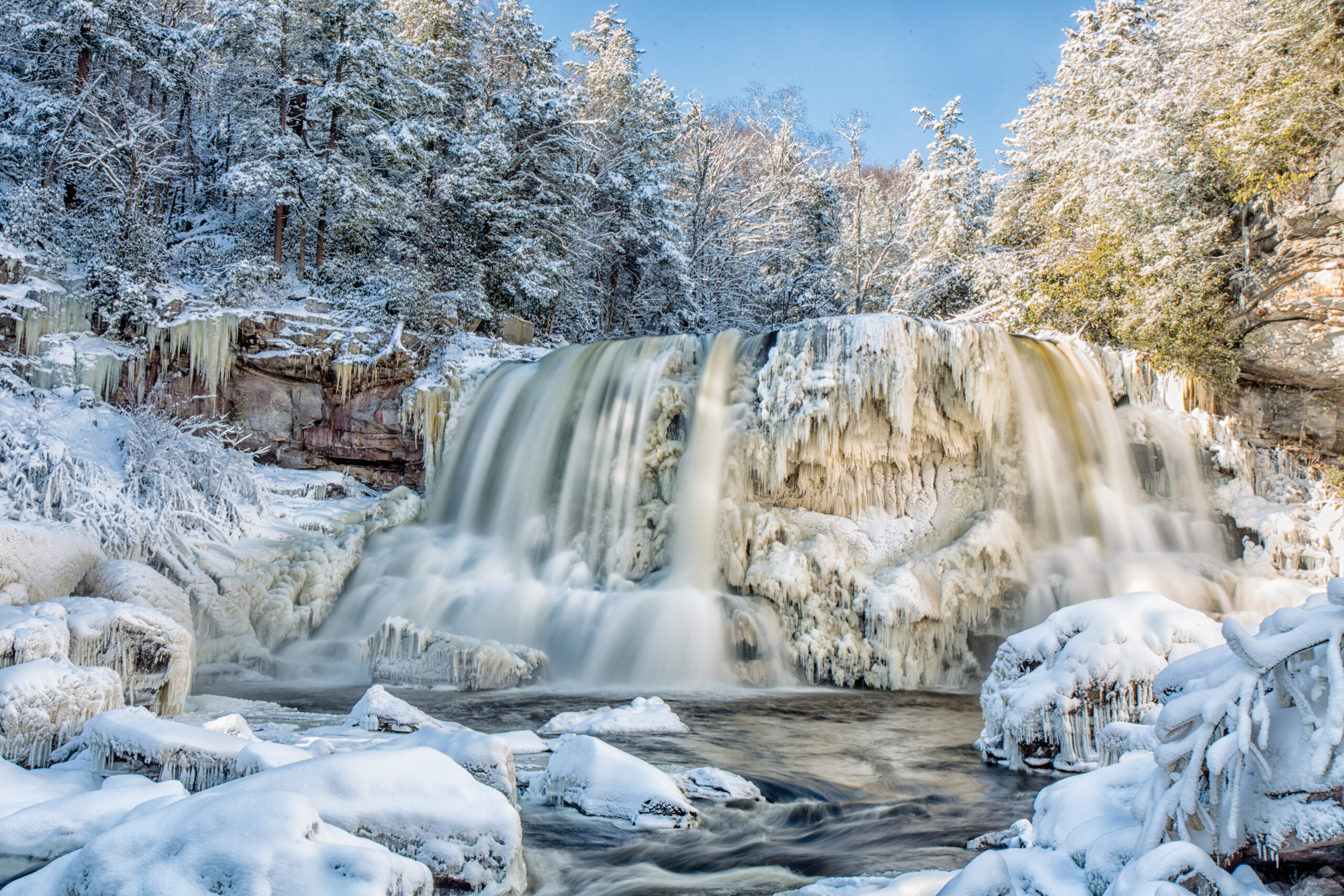
For seasoned winter hikers and curious weekend wanderers, chasing frozen waterfalls offers an unforgettable glimpse of nature’s artistry.
This story was originally published in the December 2025 issue of Wonderful West Virginia. To subscribe, visit wonderfulwv.com.
Written by Laura Jackson
Photographed by Frank Ceravalo
We can’t help but gawk at waterfalls. While beautiful and often delicate, they also remind us of the power of water and the age of the rock beneath it. West Virginia was born of that water and rock, and with over 30,000 miles of streams and rivers here in the Mountain State—more than almost anywhere else in North America—we’re never far from a waterfall. We seek them out, photograph them, and revere these churning cascades in the warmer months.
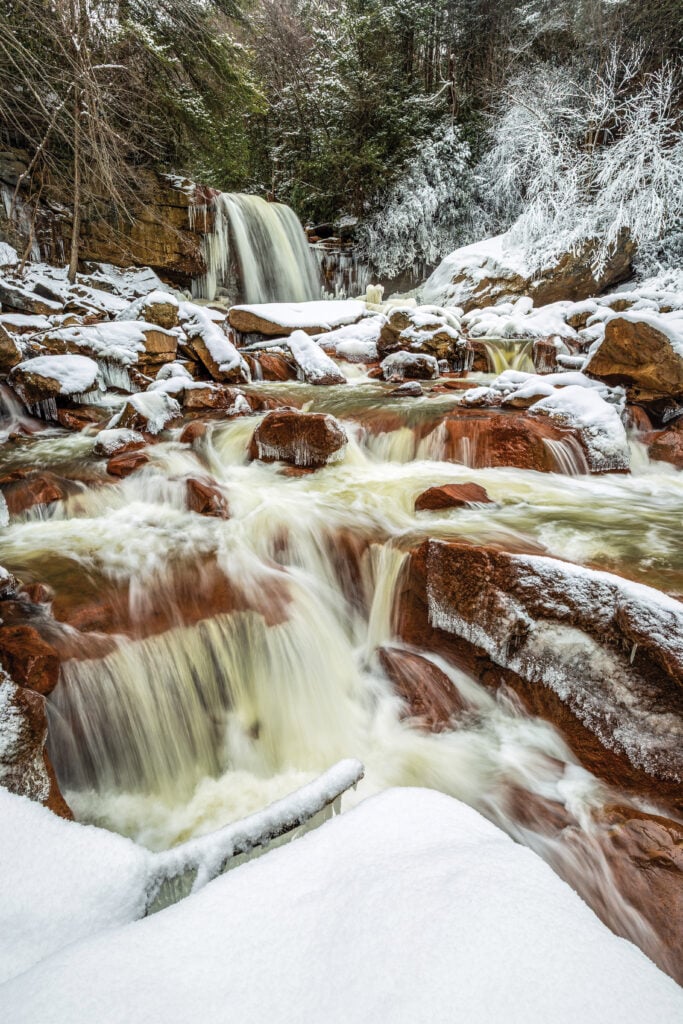
But in the heart of the Appalachian winter, West Virginia’s waterfalls transform into different creatures. This is the story of West Virginia’s frozen cascades—where to find them, what makes them magical, and how to chase them safely.
The Icon
Tucker County’s Blackwater Falls State Park and its eponymous waterfall may be one of West Virginia’s most recognizable sites. In warmer months, the falls thunder with energy as thousands of gallons of dark water, stained by tannins from surrounding hemlock and spruce trees, tumble over the sandstone ledge. This thick sandstone is known as the Kanawha Formation and formed during the Carboniferous Period, 350 million years ago.
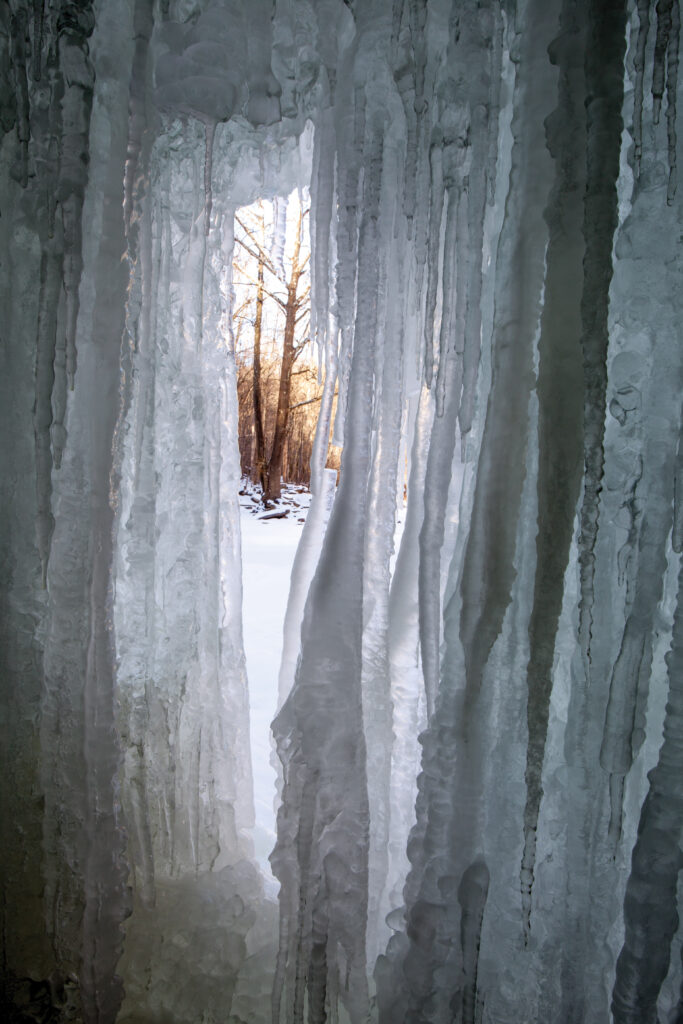
On cold winter days, however, the falls may be locked into 60-foot columns of ice.
Blackwater Canyon feels different in the winter. Park visitors are sparse, and when sub-freezing temperatures silence them, bird calls that would otherwise be overpowered by the river’s roar suddenly stand out. Visitors may also encounter deer, bobcat, coyote, and red and gray foxes, and on a warmer day, black bears may emerge from their winter slumber. River otters remain active throughout the cold months and may be spotted playing on the ice.
The falls are dressed in their best at this time of year, and fortunately, they’re easy to access, even in the snow. Most visitors reach them from the parking lot on the north side of Blackwater Canyon, where a wooden boardwalk and stairs lead about 320 feet down to the viewing platform. On the south side of the Blackwater River, those who have mobility considerations can take the Gentle Trail. The paved path offers an elevated view of the waterfall.
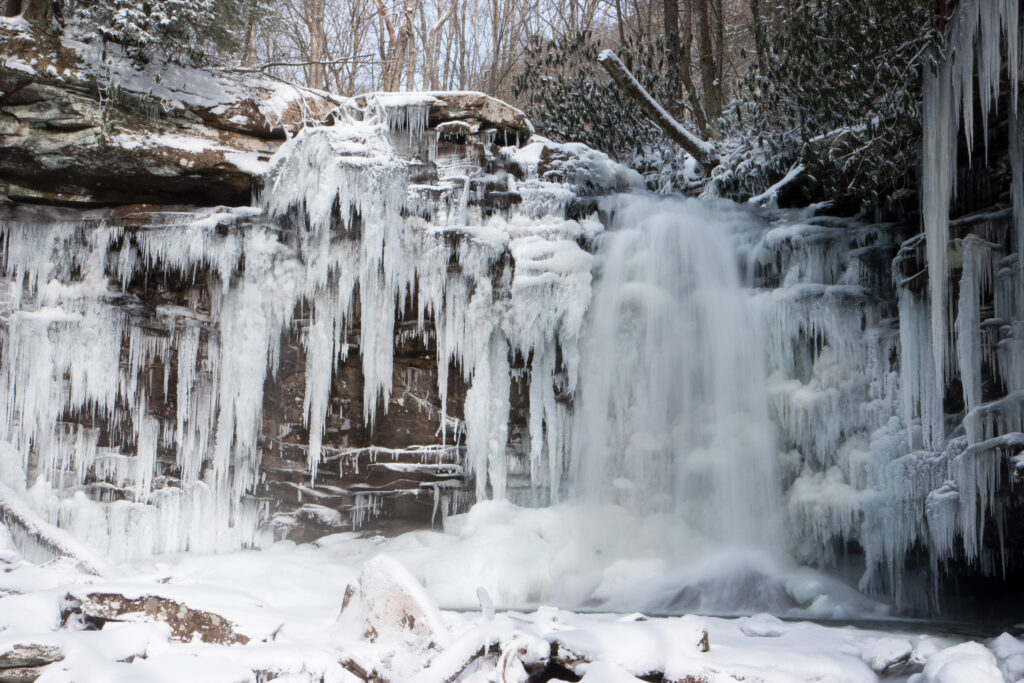
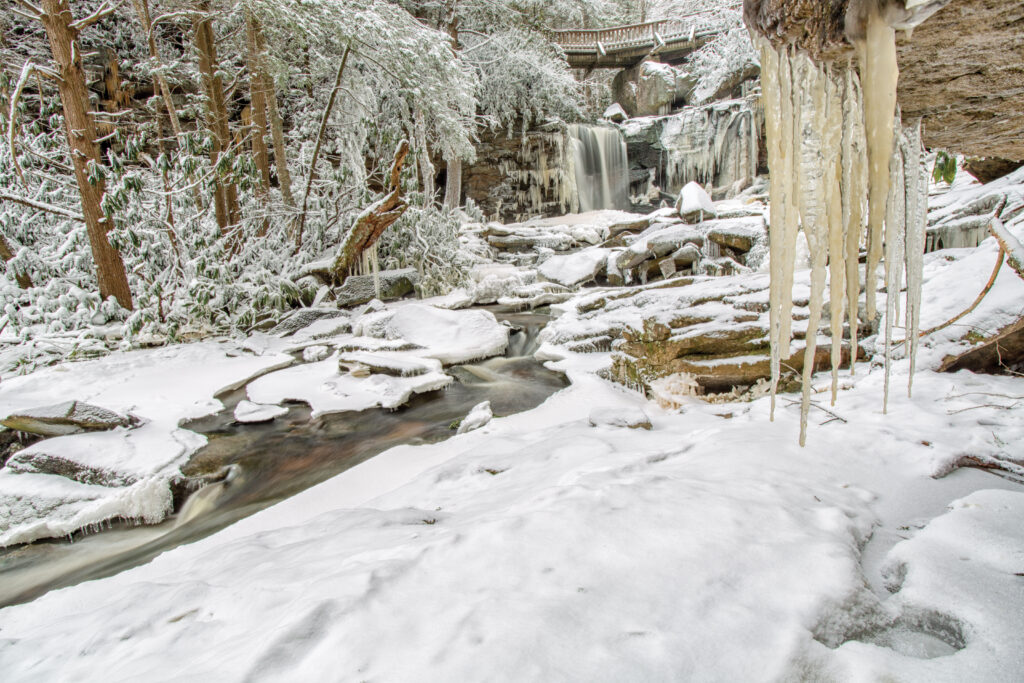
The great thing about winter is that, if one waterfall is frozen, they’re probably all frozen. Blackwater Falls is not Tucker County’s only treasure—Elakala Falls, near the Blackwater Falls State Park Lodge, spills over four ledges in the shade of a hemlock stand before tumbling over the rim of the canyon. The first of four cascades on Shay’s Run is relatively easy to access, and in deep winter, it’s hung with icicles.
Near the adjacent town of Thomas, the North Fork of the Blackwater River takes a series of leaps over Albert, Teresa, Douglas, and Kennedy falls. While they’re not as easy to reach as Blackwater Falls, the trip is worthwhile for winter- lovers who have the ability to safely explore.
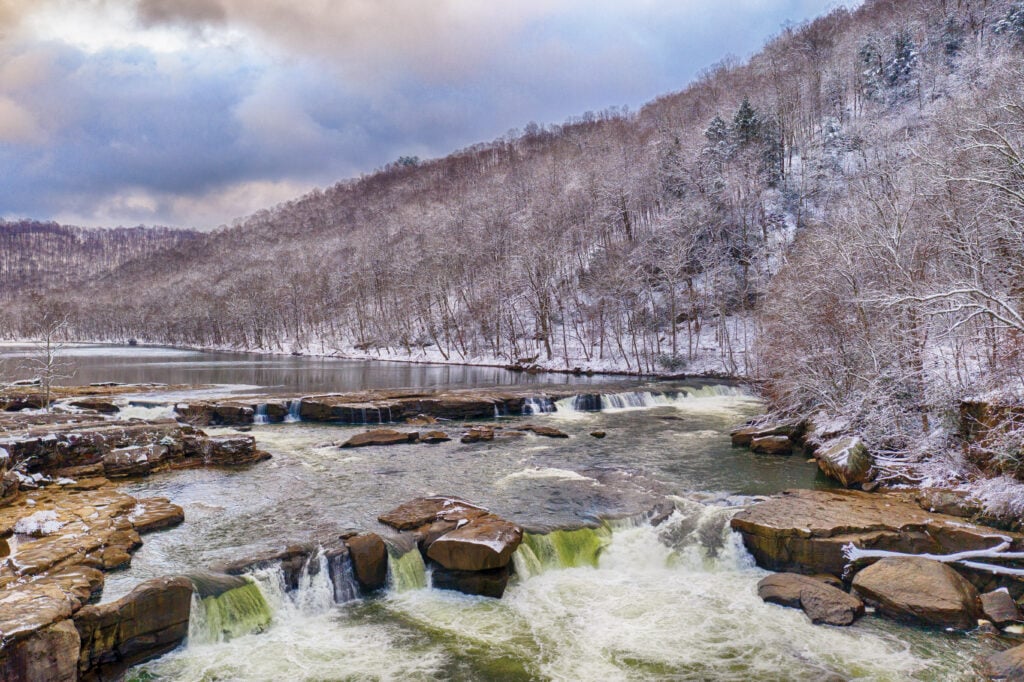
Valley Falls State Park, near Fairmont, also offers drama in winter. The waterfalls on the Tygart Valley River rarely freeze entirely, but ice crusts along the rocky ledges and river boulders. On frigid mornings, mist rises from the falls and crystallizes in the air.
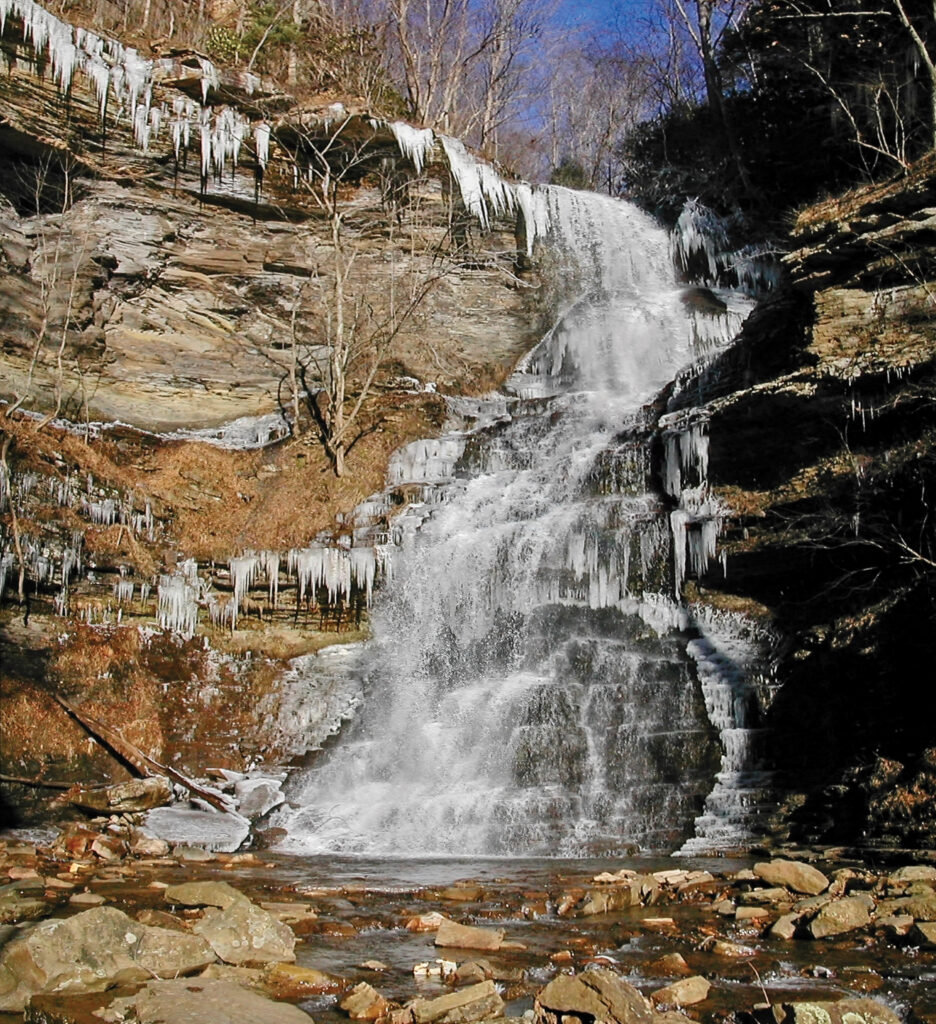
Southern West Virginia’s waterfalls are no less stunning. The delicate and lacy Cathedral Falls, just off Route 60 in Gauley Bridge, drops 60 feet and is easy to spot from the road or within the warmth of a toasty vehicle. The waterfall freezes in layers, sometimes leaving just a ribbon of water trickling down the icy face.
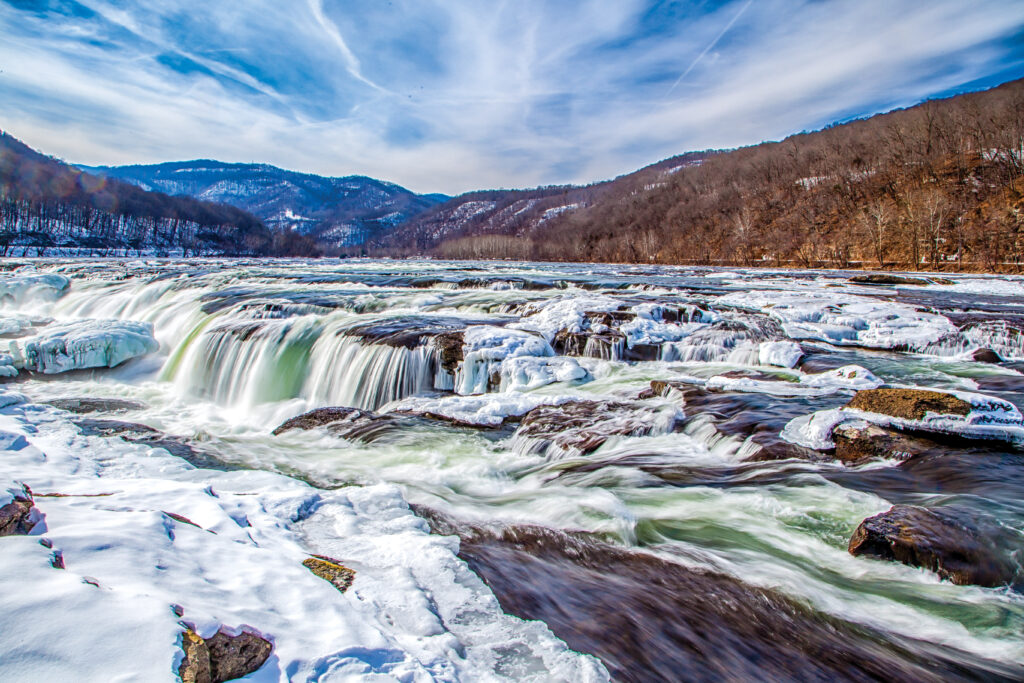
Sandstone Falls, the largest waterfall on the New River, stretches nearly 1,500 feet across. While it doesn’t freeze solid, the edges glaze with ice and mist, creating surreal frozen islands and crystal-coated trees along the riverbanks. The contrast of rushing whitewater against frozen stillness creates one of the most dynamic winter waterfall scenes in the state.
On the Hunt
While winter may be the most striking of seasons, people chase waterfalls in the Mountain State year ’round. In response, the West Virginia Department of Tourism launched the West Virginia Waterfall Trail in 2022. Visitors can check in on their phones at each site and earn prizes like stickers, water bottles, and shirts. Those who bag all 43 falls earn a limited edition art print.
Lesley Thompson and Kevin Simpkins, of Charleston, have spent the past two years completing the waterfall trail.
“It’s a fantastic way to see parts of the state you might not ordinarily see,” Thompson says. “We began picking groups of waterfalls that were close together and planning weekend trips around hiking the trails and visiting local restaurants, cafes, and breweries.”
Timing is Everything
The best times to see frozen waterfalls in West Virginia
Late December through February Most reliable window for frozen cascades, especially after several days of below-freezing temperatures.
Early mornings Colder air keeps ice intact and creates dramatic light for photography.
After a cold snap Even a day or two of frigid weather can transform smaller waterfalls into frozen sculptures.
Safe road conditions Mountain terrain can be icy, so monitor weather and check for park updates before you go.
Thompson’s favorite falls were Glade Creek Falls and Seneca Creek Falls. The latter, in Pendleton County, sits at the end of a 5-mile hike and is the most secluded falls on the list.
Simpkins enjoyed renowned Sandstone Falls on the New River in Summers County near Hinton, as well as Brush Creek Falls, where water cascades 30 feet as part of a tributary of the Bluestone River in Mercer County. The former is accessible by boardwalk and the latter by a dirt and gravel path; both are easy to walk and photograph.
5 Easy-to-Access Frozen Falls Without the Big Hike
Blackwater Falls, Davis
The showstopper. Iconic, with boardwalk and Gentle Trail access.
Cathedral Falls, Gauley Bridge
Roadside magic off Route 60. Tall and graceful, easy to see from the road.
Kanawha Falls, Gauley Bridge
A wide, photogenic cascade you can view from the warmth of your car.
Sandstone Falls, Hinton
Short boardwalk stroll, huge winter payoff in the New River Gorge National Park and Preserve.
Upper Falls of Hills Creek, Hillsboro
Easy boardwalk access, stunning in ice.
Since its launch, the trail has received more than 125,000 visitor check-ins from all 50 states and 48 countries. And when winter changes the landscape, the falls change, too. Because the waterfalls freeze differently depending on temperature and flow, no two visits are ever the same. A January cold snap might lock a cascade in thick ice, while a February thaw frames rushing water with icicles.
“It opens your eyes to just how beautiful, interesting, and fun our state really is,” says Thompson. “There are endless adventures out there if you’re willing to explore.”
“Also,” she adds, “we love a good checklist.”
Stay Warm, Stay Safe
Despite the thrill of a winter waterfall hunt, travel during the coldest season means a few extra considerations. Conditions—especially in the mountains—can shift quickly, and frozen waterfalls are as dangerous as they are beautiful.
Always check the weather before heading out on a waterfall hunt. Rain at lower elevations may be an indication of snow, sleet, or ice at higher ones. Be sure your vehicle is in proper condition—four-wheel drive can be the difference between an easy day and a visit from a tow truck.
However, weather doesn’t have to dictate the success or failure of an outing—the proper gear is a vital factor on extreme days. Layers are key. Start with a moisture-wicking base layer like wool or synthetic fabric, add an insulating mid-layer like fleece or down, and finish with a protective outer shell. The idea is to stay warm and dry, so avoid cotton, which absorbs moisture and sweat and can make you cold. Hypothermia is always a concern.
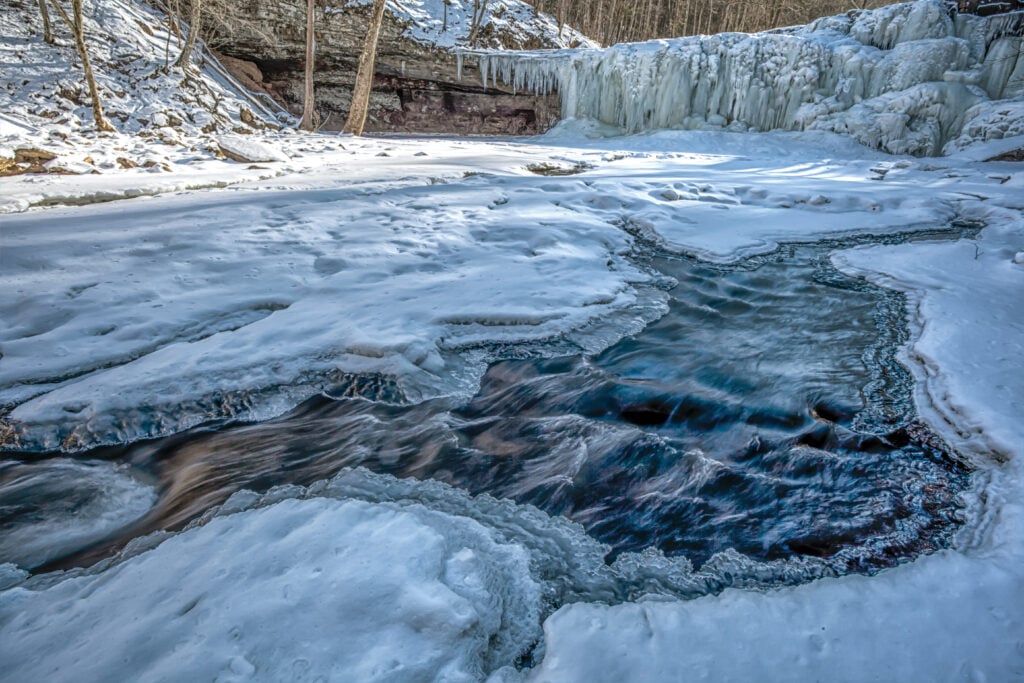
Likewise, proper footwear will not only keep you warm—it will also keep you safe. When trails and boardwalks are snowy, a waterproof, insulated shoe with treads can help prevent slipping. Out on trails and in deeper snow, consider snowshoes, and if you’re going to encounter ice, bring a device that will help with traction: trekking poles or crampons that slip over boots.
Be sure to prepare for the possibility of variable weather, as well. With ever-changing climate conditions, it’s possible that today’s silent, frozen sculpture will be tomorrow’s roaring cascade. Stay on designated trails, check signs, and use your head. Frozen landscapes are fragile, so leave no trace. Never climb on ice formations, which can collapse without warning—and cell service is spotty in many of the state’s more remote areas.
Lastly, when it comes to winter waterfall hunting, always bring a buddy. Not only for safety, but because West Virginia’s frozen wonders are meant to be shared. Winter is here, so make the most of it. Visit WVtourism.com/west-virginia-waterfall-trail to start your adventure.

 By
By 


 By
By