 By
By 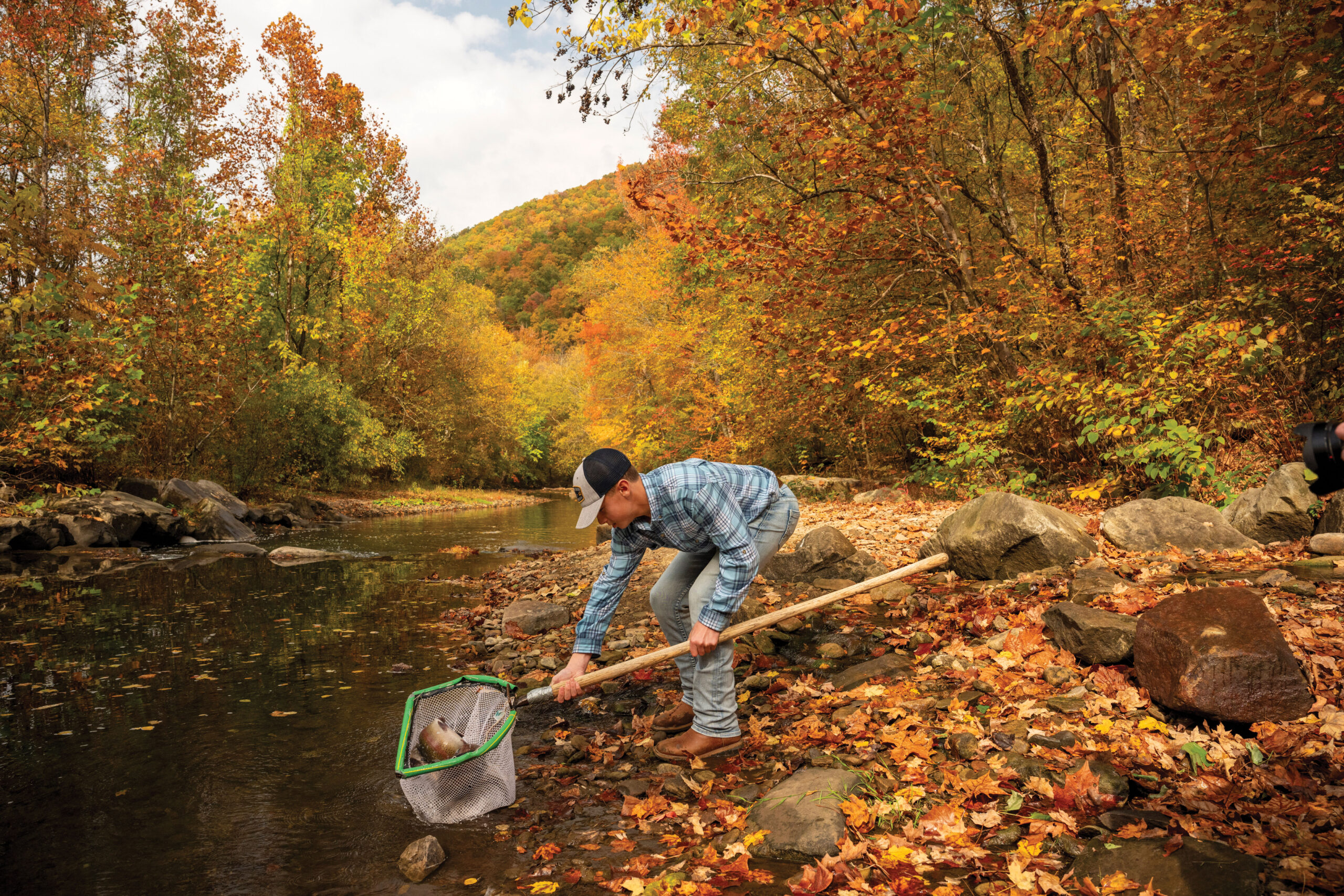
Twenty-two species of fish stand between West Virginia anglers and the coveted Master Angler Award.
This story was originally published in the August 2025 issue of Wonderful West Virginia. To subscribe, visit wonderfulwv.com.
Written by Laura Jackson
Photos Courtesy of West Virginia Department of Commerce
A bad day fishing beats a good day working, as the saying goes, and on any one of those days, West Virginia anglers are bound to agree. The Mountain State has over 32,000 miles of streams and rivers as well as several hundred lakes. That’s a lot of room to fish, a lot of fish to catch, and a whole lot of fun to share.
The West Virginia Master Angler Program began in 2022 to promote fishing in West Virginia and to recognize anglers who go the extra mile. And in fact, extra miles are an important part of the journey—master anglers will take many trips and cast many lines before their quest is finished. But with the support of the West Virginia Division of Natural Resources (WVDNR), people around the state are rising—like the trout they seek—to the challenge.
Slam Dunk
“The West Virginia Master Angler Program is made up of what we call fish slams,” says David Wellman, assistant chief of Fish Management for the WVDNR. “The six slams are black bass, catfish, non-game fish, panfish, predator, and trout, and three to five species make up each slam.”
Once an angler starts a slam, all the fish in that category must meet size requirements and be caught within one year. However, anglers have an unlimited amount of time to finish all six slams.
“It can be done over the entire course of your life, if you so choose,” Wellman says. “Some folks get it done relatively quickly. It may take a couple years, but it shows a lot of dedication. These anglers have to fish very specifically for certain species of fish, so it also shows a level of expertise that sets them apart.”
While it’s not always easy to land bass, trout, or panfish, it takes more than a little skill to land some of the species on the Master Angler list. Musky—large, long, and toothy predators related to pike—are a notorious challenge to hook and land. But Wellman says the “fish of a thousand casts” isn’t the most elusive species on the list, in part because angling technology, like fish finders and underwater cameras, has come a long way.
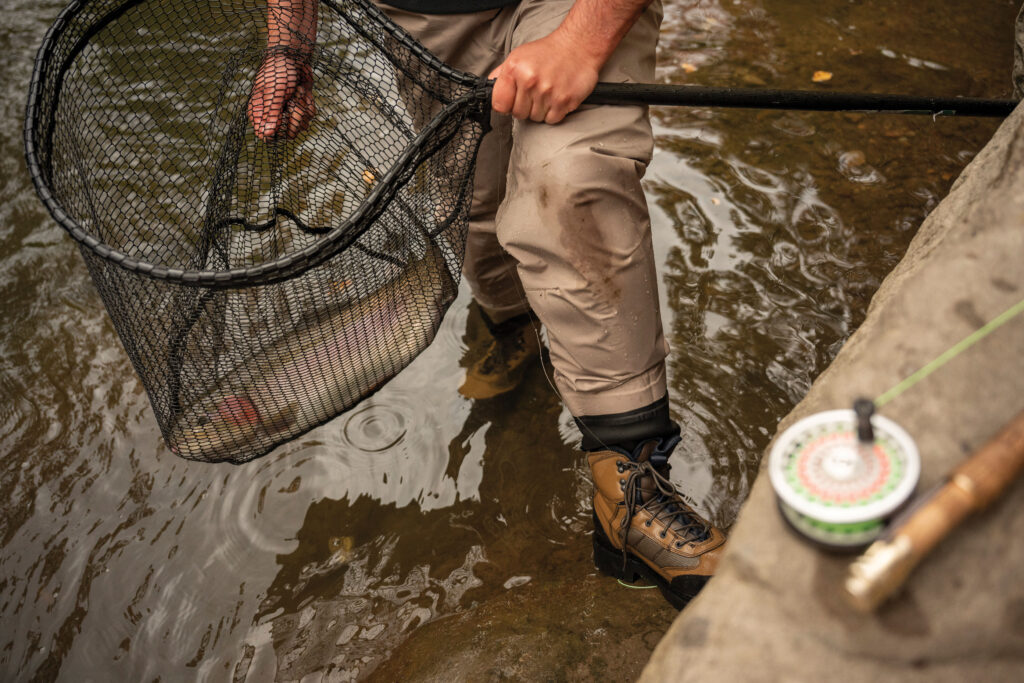
The toughest catches, however, may surprise anglers.
“I think the non-game slam would be the most difficult,” Wellman says. “Most people don’t know what a fallfish is. It looks like a large creek chub, but it’s only found in the Eastern Panhandle. A lot of people really don’t fish for them. And freshwater drum and common carp don’t have as large a following as bass and catfish do.”
The program has been popular, most of all with what Wellman calls “goal-oriented” anglers, and while a trophy fish citation is an accomplishment worth celebrating, the Master Angler distinction is harder to attain. Moreover, the challenge has elevated some species people may not commonly seek and given anglers a chance to visit places in the state they might not normally see. Brook trout, for example, are usually found in the Monongahela National Forest, while blue catfish were reintroduced to the state around 20 years ago and can be caught in the Ohio and Kanawha rivers.
Just as location matters, so too does method.
“You’ve got to adjust your technique and your gear to each of the species,” Wellman says. “You’re not going to go out and fish for large flathead catfish with the same rods that you’re using for bluegill. You have to be diverse in your approach as well as your knowledge of the areas that you fish. That’s why we call it the Master Angler.”
Wellman and the district fish biologists are available to answer any questions anglers might have. “We’re here to manage our fisheries so our folks, West Virginians, can get out there and enjoy.”
Togetherness
When Wellman isn’t performing his duties as chief, he’s often fishing with his own kids, because while a trophy is a great goal, family time is the real prize.
Steven Cooper and his son, Logan, 10, echo that sentiment. They spend a lot of time on the water together. It’s tradition—Cooper grew up just outside of Canaan Valley, in Dry Fork, where he fished for trout with his own dad.
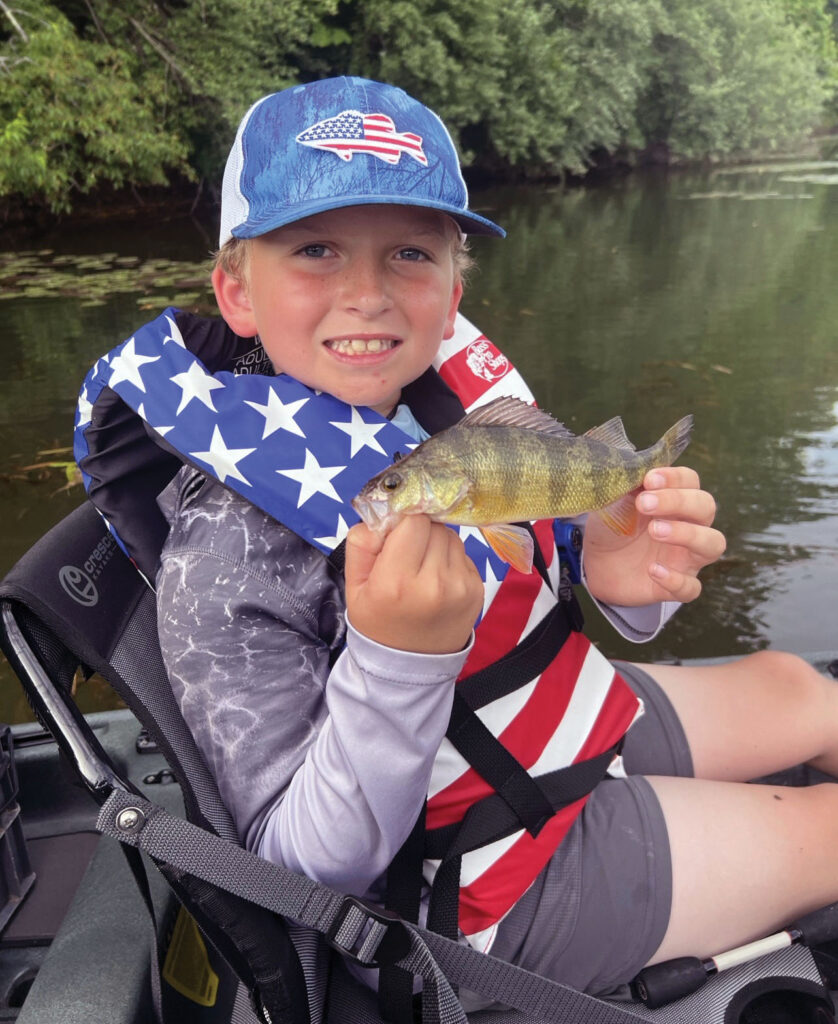
“Once I got old enough to get my driver’s license, I started going bass fishing with my buddies on the Cheat River, near Parsons,” he says. “After college, I got a bass boat and started doing bass tournaments. Then, once Logan came along, everything changed. He started fishing with me.”
Cooper family photo albums contain images of Logan as a toddler, holding a bass in a boat. Logan has completed two slams, while Cooper has attained Master Angler status.
“It forces you to try for different fish, ones I’d never fished before,” Cooper says. “For the blue catfish, we had to go to the Ohio River. And we had to go to the Potomac River to find the drum and fallfish. It forces you to do things you’re not used to, to travel and learn how to fish for different fish, and I enjoy it.”
As many anglers have done, Cooper worked especially hard to catch the fallfish. To prepare, he spent a day with Logan in the Buckhannon River catching their bait—around 50 crayfish—before a tough but ultimately successful day in the Eastern Panhandle. However, even when they’re not traveling around the state, the Coopers fish in their own neck of the woods. Logan completed his panfish and catfish slams at Stonecoal Lake Wildlife Management Area, near Buckhannon, where he and his father often fish and kayak together.
“Wherever I went, he went,” Cooper says. “I took him catfishing, and he’s hoping to do the bass slam this year.” Logan is still unsure about catching a musky, but the young fisherman has already brought in a 25-pound blue catfish from the Ohio River, near St. Marys, West Virginia.
“My arms were tired,” Logan says of the exciting fight.
Cooper says he likes the mystery of fishing—an angler never knows what they’re going to hook, let alone land. He also appreciates the unpredictability, as a productive hole on a Saturday can be fruitless on a Sunday.
“We’re out in nature, and it’s just fun being out there with Logan.”
The First of His Kind
At age 14, Carson Shock, of Putnam County, became West Virginia’s first youth Master Angler Award winner. He was recognized by former Governor Jim Justice after catching all
22 species, the culmination of a long and dedicated effort.
“I started about two and a half years ago,” Shock says. “I’ve always loved fishing, so I was really interested when my dad told me they started this program.”
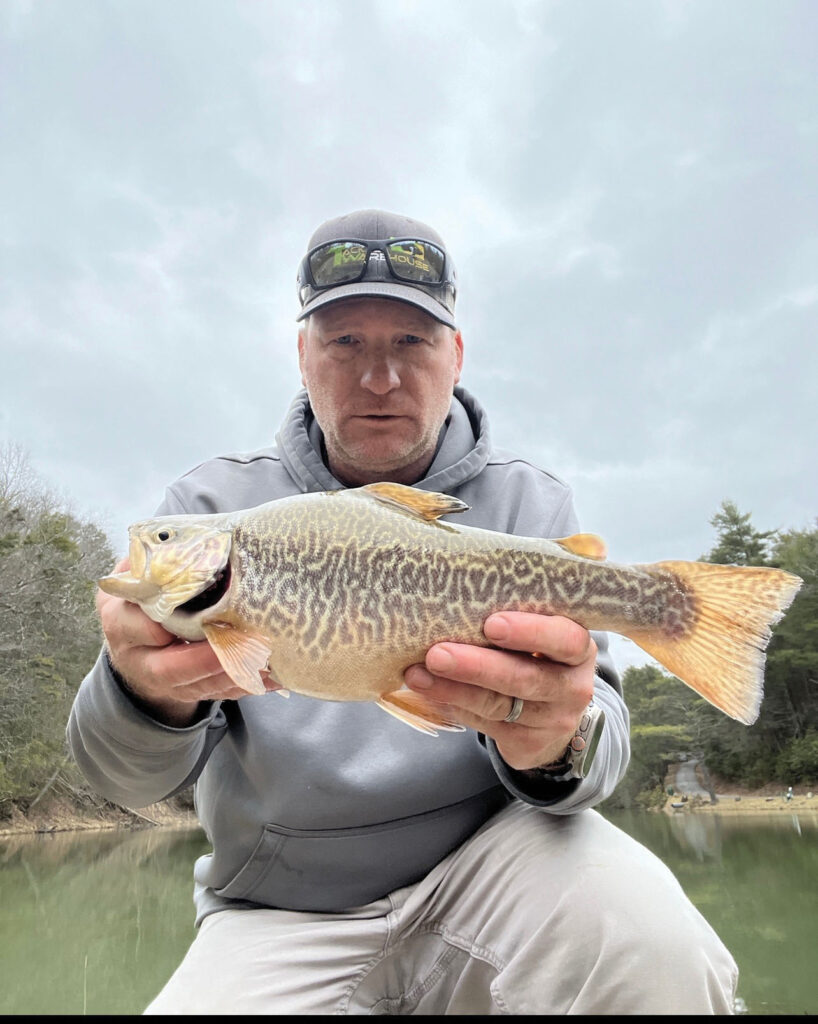
Shock began with the easy slams and worked his way up through the more difficult ones, like the tiger trout, which he found especially challenging—it took several tries and was almost the one that got away.

“We had fished three weekends up in the Eastern Panhandle,” Shock says. “We were about to leave, and I asked my dad if I could try one more spot, and on the first cast, I hooked up with the tiger trout. When I got the fish about a foot away from me, my brother Isaac went to net it. At first, he missed it, but then he jumped in the water and came out with the fish.”
Some species were easy to find near his home, but like many Master Angler Award seekers, Shock and his father had to log many miles to earn the title. They particularly enjoyed their visits to the Eastern Panhandle—a region they weren’t familiar with—and a trip to Greenbrier County as well.
The bullhead catfish was the toughest of the bunch.
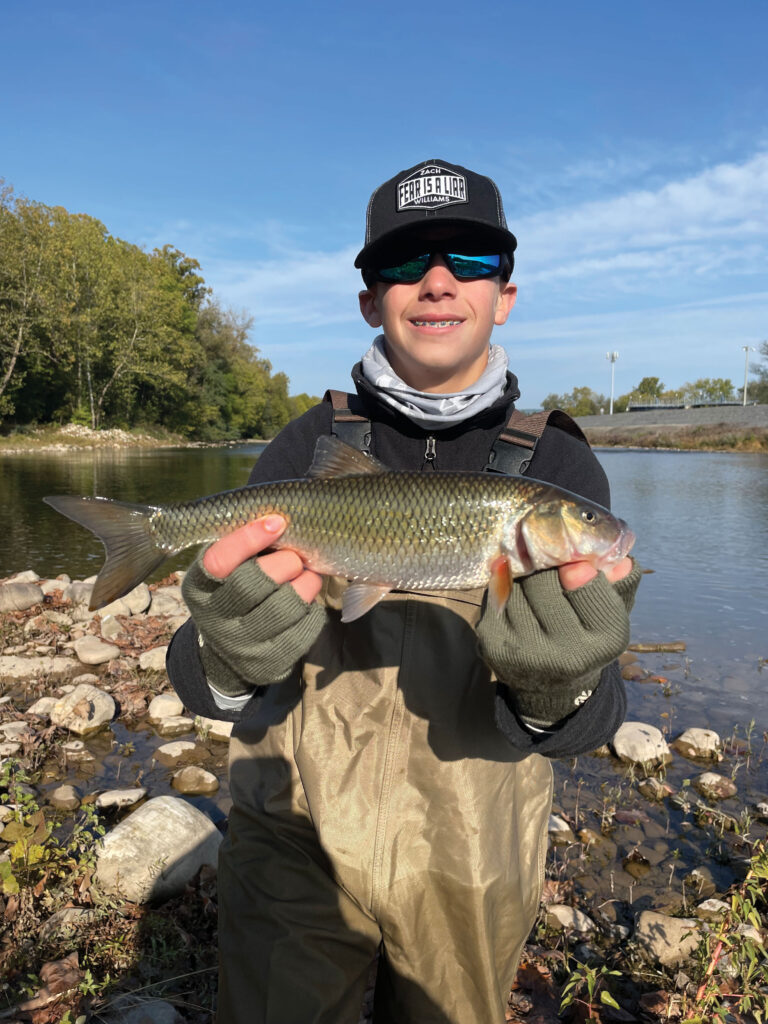
“I think he caught seven of them, and the first six were all too short,” Eric Shock says. “They’re hard to find, in creeks in the woods.”
On a different venture, the young fisherman pulled a winning blue catfish out of the Kanawha River, near St. Albans. At 34 pounds, the impressive deep-river fish also earned him a fishing citation.
Eric Shock is proud of his son’s determination and sees the endeavor as a challenging but realistic goal for any focused angler. “If you dial into it, it’s attainable,” he says. “When you see how many fish aren’t in your county, you realize you’re going to have to make a sacrifice and really dig into it. I’m hoping you’ll see more people do this. Maybe Carson stoked the fire a little bit in some of these young kids. It taught him about the different species, and it taught him to fish a lot of different ways.”
The younger Shock agrees with his father.
“It’s made me a much better fisherman,” he says.
Get Slammin’
The West Virginia Master Angler Program involves six different slams with a variety of species—and sizes—to reel in. Each individual slam must be completed within one calendar year and each fish must meet or exceed the minimum size requirement in order to count towards your Master Angler Award. Don’t forget to take time-stamped photos with each qualifying catch and submit them with your Master Angler Application! Find it at WVdnr.gov/master-angler-pro-tips.
Black Bass Slam
Largemouth – 12″
Smallmouth – 12″
Spotted – 12″
Catfish Slam
Blue – 20″
Channel – 16″
Flathead – 20″
Non-Game Slam
Bullhead – 12″
Common Carp – 20″
Fallfish – 12″
Freshwater Drum – 12″
Panfish Slam
Black or White Crappie – 8″
Rock Bass – 7″
Sunfish – 6″
Yellow Perch – 8″
Predator Slam
Musky – 30″
Striped or Hybrid Striped Bass – 15″
Walleye – 15″
Trout Slam
Brook – 12″
Brown – 12″
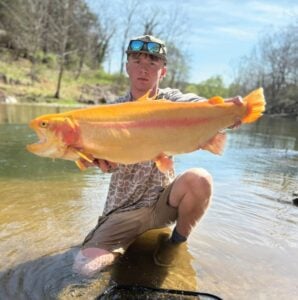
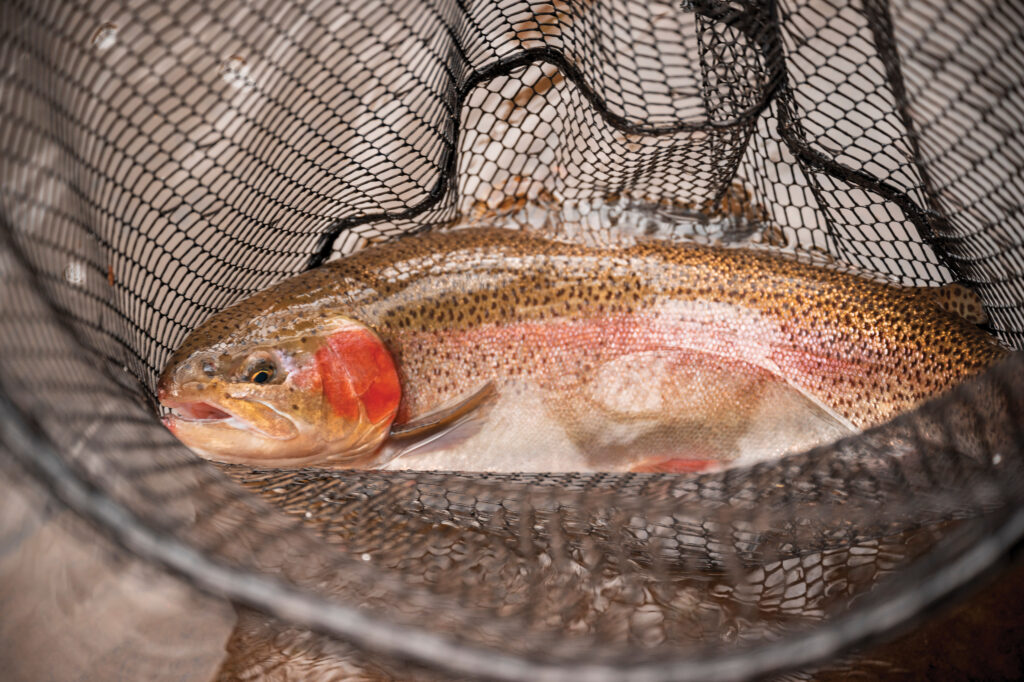
Golden Rainbow – 12″
Rainbow – 12″
Tiger – 12″
 By
By