 By
By 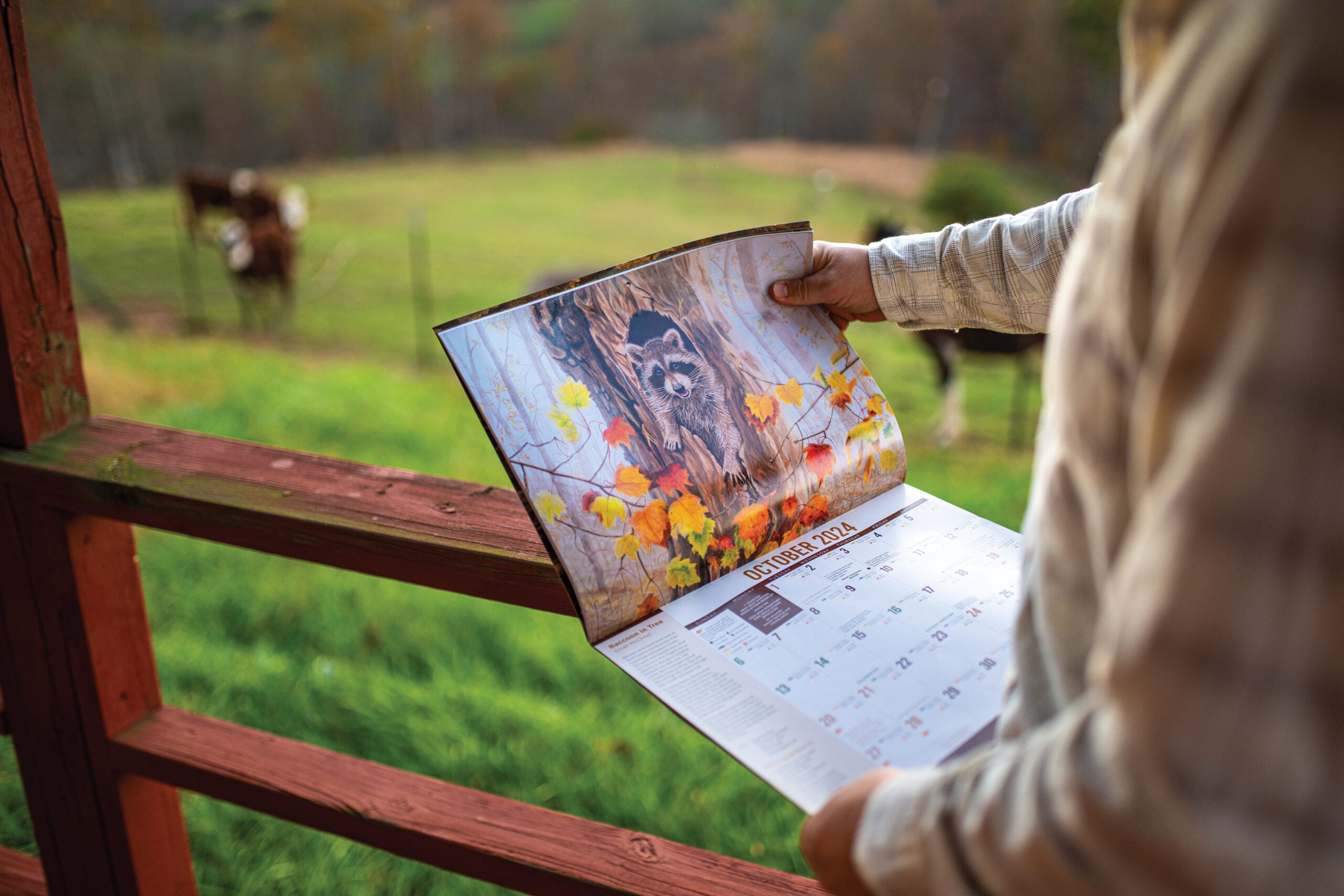
Celebrating 40 years of the West Virginia Wildlife Calendar.
This story was originally published in the December 2025 issue of Wonderful West Virginia. To subscribe, visit wonderfulwv.com.
Written by Stan Bumgardner
Photos Courtesy of West Virginia Department of Commerce
The late crooner Andy Williams used to sing about “the most wonderful time of the year,” naming just about everything we could possibly love about the holidays. Well, for fans of West Virginia wildlife, he left out a big one: the West Virginia Wildlife Calendar—a holiday tradition that’s become both a collectible and a gift to treasure. This year’s edition is extra special, because the calendar is celebrating its 40th anniversary, marking nearly 500 original works of art since its inception.
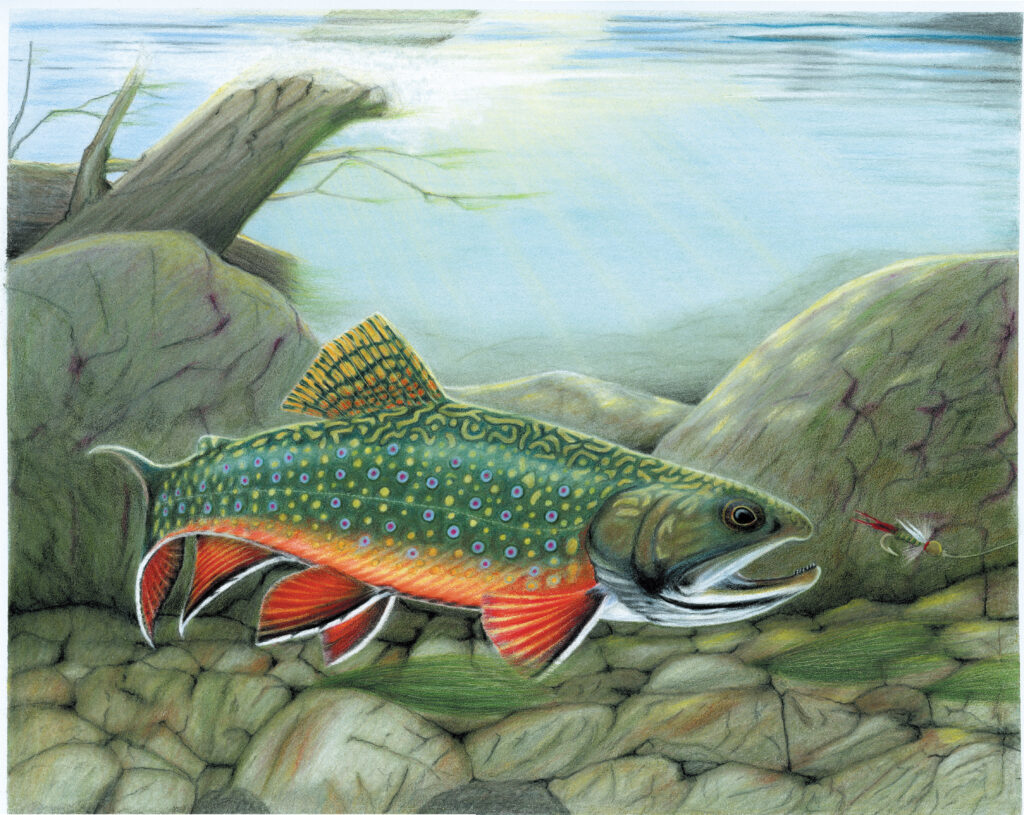
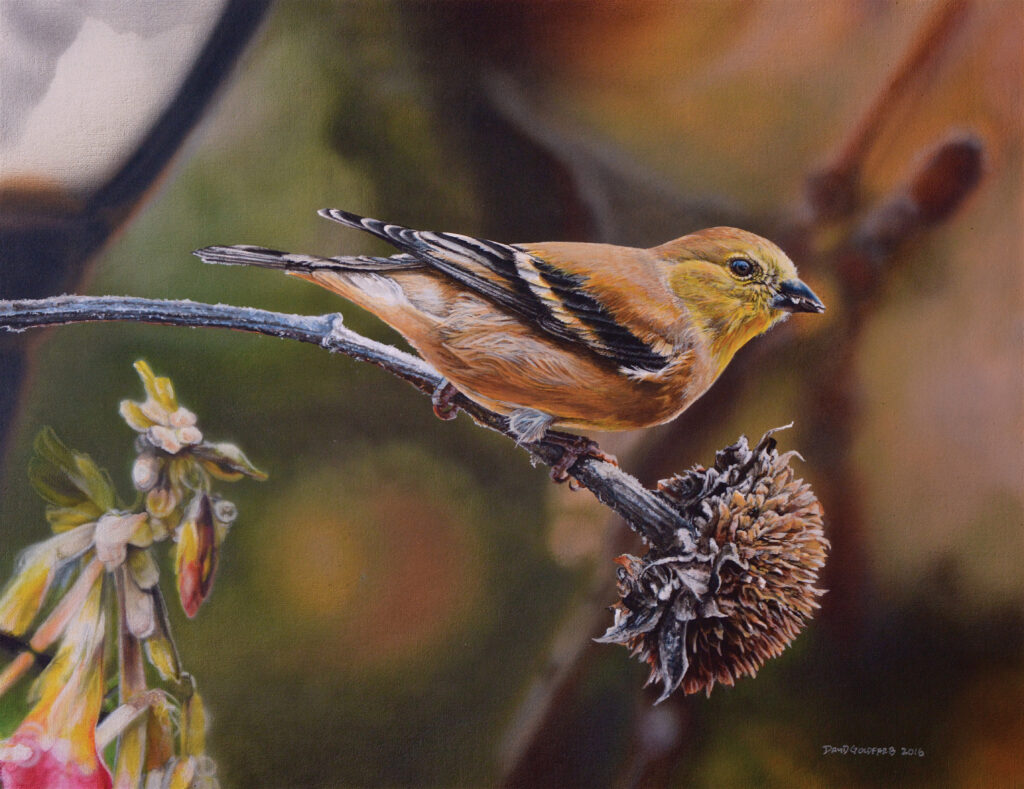
For four decades, the West Virginia Division of Natural Resources (WVDNR) has produced a calendar to showcase the best artistic depictions of West Virginia’s animals and landscapes. From sweeping mountain vistas to close-up portraits of native species, each page captures moments anglers, hunters, nature hikers, or birdwatchers love to experience.
One of those West Virginians who eagerly looks forward to each year’s calendar is Steve Simms of Pinch, in Kanawha County. “I’ve been buying them since the early ’90s,” he says. “I really like the wildlife images, plus the information about fishing conditions and the seasons is always nice to see at a glance. I buy multiple copies for my family as gifts.”
More Than Just a Calendar
While most buyers pick up a copy for the artwork and information inside, the calendars serve a bigger purpose. Sales directly support the West Virginia Wildlife Diversity and Natural Heritage Program.
Scott Warner, the program’s assistant chief, who has worked with the WVDNR for 28 years—including the last 10 in his current role—explains that the calendar began in the mid-1980s as a way to educate the public about nongame species, which commonly get less attention than game animals. While many people associate the WVDNR primarily with hunting and fishing regulations and licenses, Warner emphasizes that the agency is responsible for all wildlife—and even some plant species.
The Wildlife Calendar also brings in a lot more than its cover price. Through federal grants, WVDNR receives a 3-to-1-dollar match to fund conservation programs. In any given year, calendar sales generate $125,000 to $150,000. With the federal match, that means, when you buy one West Virginia Wildlife Calendar, you’re actually bringing nearly $50 into the Mountain State. If the calendars sell out, that adds up to nearly half a million dollars in federal support for West Virginia conservation. Or as Warner says, “It goes back into the woods and waters to support on-the-ground conservation.”
Specifically, sales fund educational programs in schools and youth organizations; the Wild Yard Program, which encourages landowners to create native wildlife habitats; technical assistance for farmers with everything from handling wildlife problems to building barn owl nesting boxes; and support for state parks and forests in monitoring rare species and eliminating invasive plants that choke out our native grasses and flowers.
By buying a calendar, customers not only get a precious keepsake but also help conserve the environment. “After 40 years of calendar sales, you can tell it’s making a difference,” says Warner.
The Art Behind the Pages
Unlike most wildlife calendars, this one features artwork, not photography. Some 400 pieces of art are juried by a team of biologists, who also write interesting tidbits about the real-life species that
are featured.
The production of each year’s calendar is virtually a two-year process. Production manager Sanya George, based in Elkins, oversees the work. So far, her 2024–25 schedule—for the 2026 calendar—has run something like this:
Fall/Winter 2024 She sends out a press release calling for artwork. Submissions arrive in both physical and digital formats, with no charge for the submission. You can re-enter as many times as you want, whether you’ve been selected before or not, and George also reaches out to art centers and universities to scout new talent.

February 2025 Some 40 or 50 WVDNR biologists review entries for accuracy and artistic quality, narrowing hundreds down to about 25 or 30. While always professional, jurors sometimes have distinct but polite differences of opinion on both the biology and the art. Those 25 or 30 selected artists then send in originals for closer examination.
April 2025 Biologists choose the final 12 and arrange the images by the month most appropriate to each species. The goal of the dozen selections is species diversity, so that’s why some of your favorites—white-tailed deer, black bears, turkeys—usually make only one or two appearances per year. As for the cover, it goes to whichever piece has the most overall votes—unless the design would obscure the animal’s face, in which case the choice bumps to the number-two vote-getter. The selected artists are then paid for their contributions.
Summer/Fall 2025 The calendars are printed and released in retail outlets. George spends much of this time promoting them in person at fairs and festivals, all the while writing the 2027 calendar’s call for entries in her head.
April–June 2025 George works with designers and printers to finalize the calendar, carefully considering how many to produce. At the moment, 25,000 copies seems like the sweet spot, according to George.
George jokes that she works so far ahead, she rarely knows what time of the year it is. She also admits that narrowing more than 400 submissions down to 12 is the hardest part. She always encourages artists who don’t make it in the calendar to try again, reminding them that final selections might be the right mix for that year but not necessarily reflect the absolute “best” art submitted.
A Tradition That Lasts
Perhaps the most amazing thing about the Wildlife Calendar is that it still exists—and thrives—in the 2020s. Most of us keep our schedules on electronic devices these days. How often have you asked someone if they’re available at a certain time, and they pull a wall calendar, instead of a cellphone, out of their pocket? Yet at a time when physical calendars are seemingly on the brink of extinction, the West Virginia Wildlife Calendar is more popular than ever.
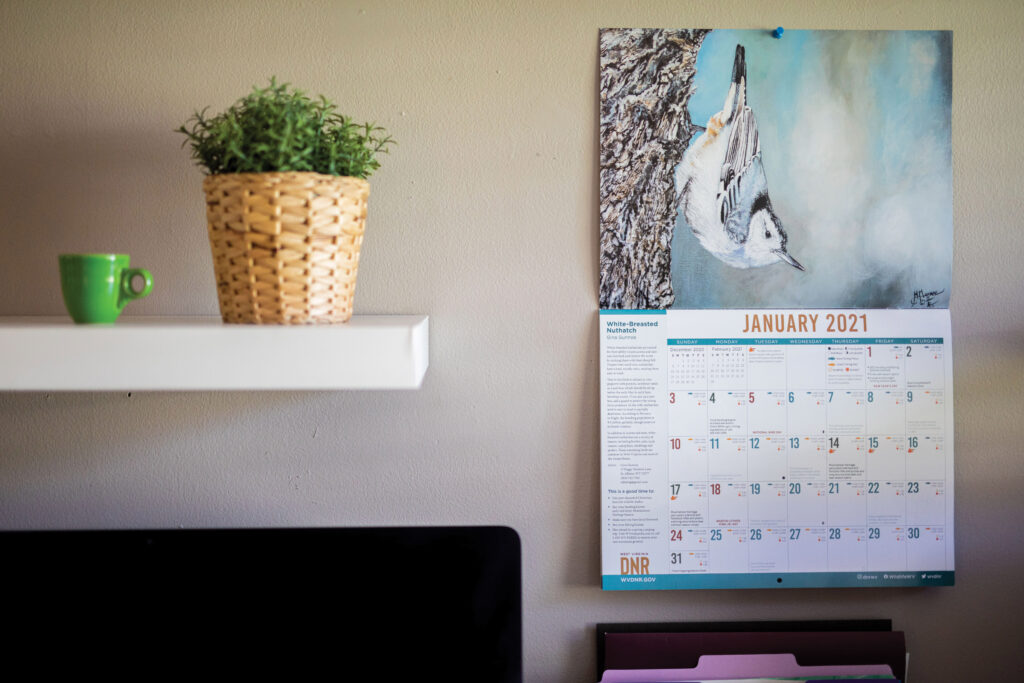
Warner and George credit the detailed artwork and the extra touches the WVDNR includes. Each calendar features dates for hunting and fishing seasons, best times to fish, updated regulations, and handy tips, such as when to put out your hummingbird feeders. The 2026 calendar includes articles on protecting native turtle species, a retrospective on the trap-and-transfer program that restored the state’s wild turkey population, and a profile of a wildlife education coordinator who turned a childhood dream into a career.
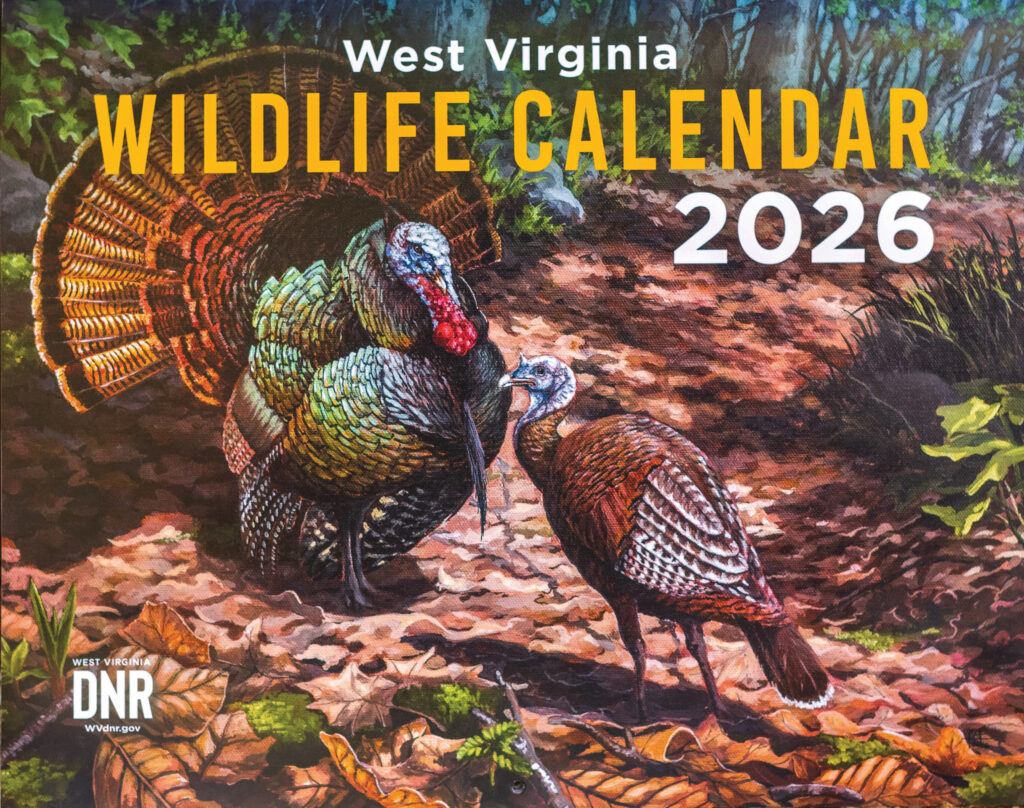
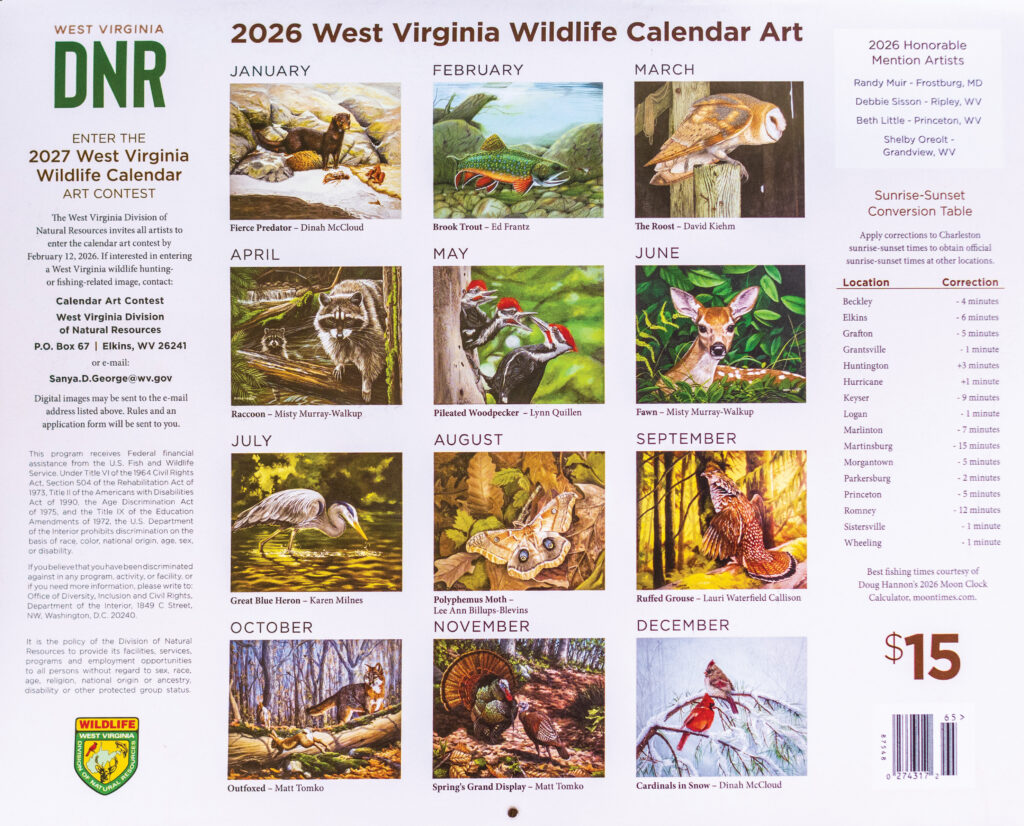
Many West Virginians save past editions as coffee-table keepsakes, enjoying the artwork long after the year ends. Warner believes its staying power comes down to one simple fact: “It looks a lot different from any calendar out there, just the quality of the artwork alone, and that’s why it’s so popular.”
And it doesn’t hurt that so many of us grew up with and still love nice-looking wall calendars. Nothing beats writing down birthdays or anniversaries on a physical calendar. Doctor appointments are a lot harder to forget when you see them every time you go to the fridge.
Get Yours Before They’re Gone
The Wildlife Calendar sells for about $15 and can be found in state park and forest gift shops, at many retail locations, or directly through the WVDNR. Supplies are limited, since printing too few risks a sellout, while printing too many leaves an unsold surplus once January passes. However, in many years, all 25,000 calendars are gone by Christmas. It’s limited artwork, so don’t wait.
Go out and get them while you can, or order one without leaving your house at WVstateparks.com.
For bulk orders, call 304.637.0245 or email Sanya.D.George@wv.gov.
The Artists of 2026
The artists selected for the 2026 West Virginia Wildlife Calendar include Dinah McCloud, Ed Frantz, David Kiehm, Misty Murray-Walkup, Lynn Quillen, Karen Milnes, Lee Ann Billups-Blevins, Lauri Waterfield Callison, and Matt Tomko, with some contributing multiple entries. As for the animals—the main thing we all look forward to—that part remains a surprise, but rest assured, it’s a diverse and fascinating crowd of walkers, swimmers, and flyers.

 By
By